 Power Conversion Engineering
Talk to an engineer (888) 597-9255
Products Power Conversion Engineering Engineered for Japanese commercial environments, 60Hz grid compatibility, low ripple noise, and high isolation standards.
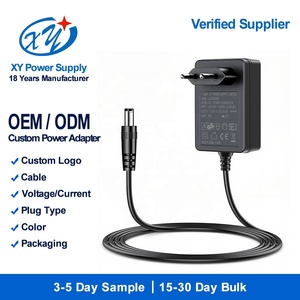
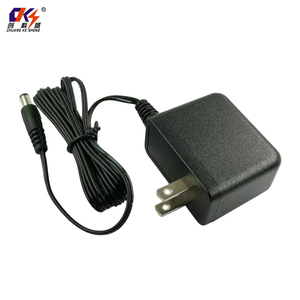
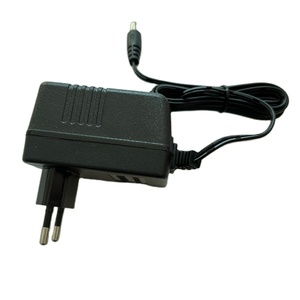
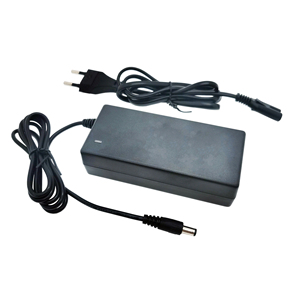
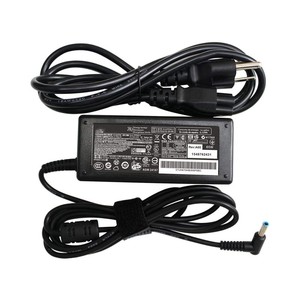
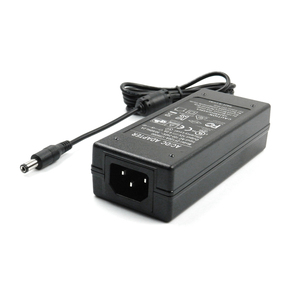
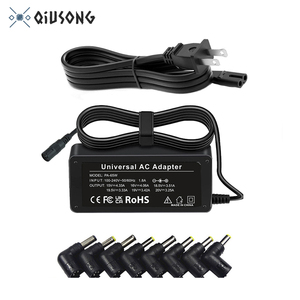
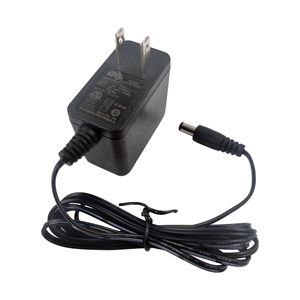
As the economic heart of Japan’s Kansai region, Osaka represents one of the world's most advanced clusters for high-precision manufacturing, industrial automation, robotics, electrical grid infrastructure, and medical device innovation. From the dense SME precision machine shops of Higashiosaka to the heavy industrial zones of the Sakai-Senboku coastal plain and the cutting-edge biomedical facilities at Nakanoshima, electrical reliability is paramount. Delivering stable power within this ecosystem requires an acute understanding of both local utility grid behaviors and high-performance power conversion topologies.
Voltage regulation is not merely about maintaining a nominal DC output; it is about protecting sensitive microprocessor control loops, servomotors, optical sensors, and clinical equipment from line transients, harmonic distortion, thermal derating, and magnetic interference. When sourcing voltage regulators and AC/DC power supplies for Osaka-bound export or local integration, global purchasing managers and design engineers must navigate complex technical trade-offs between linear regulation stability, high-efficiency switching architectures, and regional safety standard compliance.
Information Gain Insight for Kansai Procurement: Unlike Tokyo and Eastern Japan, which operate on a 50Hz utility frequency, Osaka and Western Japan operate on a 60Hz utility grid at 100V (residential/light commercial) and 200V 3-phase (industrial). High-frequency switching voltage regulators exported to Osaka must maintain low total harmonic distortion (THD) and tight line regulation across wide universal input ranges (85VAC–264VAC) to ensure seamless operation despite industrial grid switching spikes in heavy coastal manufacturing centers.
Modern voltage regulators supplied to the Osaka market fall into two distinct engineering paradigms: linear regulators and switching-mode regulators (SMPS). Each topology offers specific structural advantages depending on the sensitivity of the downstream load:
1. Linear Voltage Regulation Platforms: Linear regulators function by employing a controlled active pass element (such as a BJT or MOSFET) operating in its linear region to dissipate excess voltage as heat. As demonstrated in transformer-based wall adapters, linear AC/AC and AC/DC regulators generate zero high-frequency switching noise. This makes them the gold standard for high-fidelity audio equipment, laboratory measurement instrumentation, and high-sensitivity biomedical sensors deployed in Osaka’s clinical research institutes. However, their efficiency is proportional to the input-to-output voltage differential, making them suitable primarily for low-power or noise-critical applications.
2. Switched-Mode Power Supply (SMPS) Regulators: For industrial equipment drawing medium to high wattage (from 30W up to 3,600W), switching voltage regulators utilize pulse-width modulation (PWM) or pulse-frequency modulation (PFM) to achieve operating efficiencies exceeding 90-95%. Utilizing buck, boost, buck-boost, flyback, or LLC resonant topologies, these units rapidly switch energy storage elements (inductors and capacitors). The result is a dramatically smaller footprint and reduced thermal footprint—vital for compact control enclosures, DIN-rail automation systems, and cobots deployed in Higashiosaka assembly facilities.
| Regulator Topology | Typical Efficiency | Ripple & Noise | Isolation Level | Best Suited Osaka Industry |
|---|---|---|---|---|
| Linear Regulated Adapters | 40% – 60% | < 5 mVp-p (Ultra Low) | 1.5kV AC – 3kV AC | Sensors & Audio Medical Instrumentation, Precision Metrology |
| Flyback Switching Regulators | 78% – 88% | < 100 mVp-p | 3kV AC – 4kV AC | Industrial Automation Routers, Network Edge, IoT Controls |
| LLC Resonant Converters | 90% – 96% | < 50 mVp-p | 4kV AC (2xMOPP) | High Wattage Robotics, Medical Devices, Telecom Rails |
| Encapsulated DC/DC Buck | 85% – 94% | < 30 mVp-p | Non-Isolated / 1.5kV DC | Embedded Control AGVs, Battery Energy Storage (ESS) |
Exporting power conversion equipment into Osaka requires absolute adherence to Japanese electrical standards. Electrical products imported into Japan are regulated by the Electrical Appliance and Material Safety Law (DENAN Law), enforced by the Ministry of Economy, Trade and Industry (METI). Regulated items must carry the PSE Mark (Diamond PSE for specified electrical appliances such as AC adapters, and Circle PSE for non-specified appliances).
Furthermore, electromagnetic interference (EMI) must comply with VCCI (Voluntary Control Council for Interference) regulations, which align closely with CISPR 32 / EN 55032 standards. High-quality voltage regulators exported to Osaka incorporate internal multi-stage EMI filtering—comprising common-mode chokes, X/Y safety capacitors, and metal oxide varistors (MOVs)—to prevent high-frequency noise from feeding back into the Kansai power grid or interfering with nearby radio and cellular communications.
Power conversion requirements vary drastically depending on the physical operating environment, duty cycle, and regulatory constraints of Osaka's major commercial hubs.
Higashiosaka is renowned for its high-density network of small-to-medium precision manufacturing plants. Space inside machine control cabinets is extremely constrained. DIN-rail mount and high-density PCB-mount switching voltage regulators supplying stable 24VDC logic power to PLCs, human-machine interfaces (HMIs), and pneumatic valves are essential to withstand severe machine vibration and ambient temperatures up to 70°C.
Osaka’s Nakanoshima medical zone and university hospital research laboratories demand medical-grade AC/DC power supplies meeting UL/IEC 60601-1 4th Edition. These voltage regulators require 2xMOPP (Means of Patient Protection), extremely low earth leakage current (<100µA), and high isolation (up to 4,000VAC) to power patient monitoring equipment, ultrasound scanners, and diagnostic analyzers safely.
In the expansive logistics warehouses located around the Osaka Bay and Sakai port areas, Automated Guided Vehicles (AGVs) and Autonomous Mobile Robots (AMRs) run continuously. Wide-input non-isolated DC/DC voltage regulators convert fluctuating 24V/48V lithium battery pack voltages into regulated 5V, 12V, and 19.5V rails for onboard navigation LIDAR, vision compute modules, and motor drive controllers.
Osaka serves as the primary railway hub for Western Japan, connected by JR West, Hanshin, Hankyu, and Kintetsu networks. Railway auxiliary equipment, display systems, and trackside signaling rely on ruggedized DC/DC converters built to EN 50155 design intent. These units absorb extreme input voltage surges (up to 4:1 wide input windows) and continuous mechanical shock without output interruption.
As Osaka prepares for global prominence with major infrastructure developments, including Expo 2025 Osaka, Kansai, two major technology trends are reshaping power conversion specifications across the region:
The Osaka Prefectural Government has launched aggressive carbon-neutral initiatives aimed at reducing industrial energy consumption. In response, local original equipment manufacturers (OEMs) are mandating external power adapters and internal voltage regulators that comply with stringent energy efficiency standards, such as DoE Level VI and EU CoC Tier 2. Modern synchronous rectification switching topologies achieve high active mode efficiency and ultra-low no-load power consumption (<0.075W), significantly lowering standby thermal emissions in large-scale automated facilities.
Osaka’s semiconductor and green tech research clusters are rapidly adopting Gallium Nitride (GaN) and Silicon Carbide (SiC) switching transistors within high-frequency voltage regulators. GaN-based power supplies deliver up to three times higher power density compared to traditional silicon-based architectures. This trend enables export suppliers to offer Osaka OEMs ultra-compact 45W, 60W, and 100W power adapters with reduced heat dissipation, allowing sleeker industrial product profiles without sacrificing reliability.
Partnering with an experienced, global power supply manufacturer provides distinct technical and supply chain advantages over standard off-the-shelf component distributors. Building upon decades of power conversion engineering, our organization delivers complete design and manufacturing capabilities tailored to international B2B requirements.
Since 1961, our power engineering teams have designed and manufactured over 3,000 standard, modified-standard, and fully custom AC/DC power supplies and DC/DC converters. This heritage guarantees deep institutional knowledge across flyback, forward, LLC, and linear circuit design.
Most industrial OEM projects in Osaka require tailored voltage trims, specific cable harness lengths, unique mounting brackets, or specialized conformal coating. Our modified-standard engineering process adjusts catalog platforms rapidly, minimizing qualification lead times and upfront tooling expenses.
For outdoor marine applications along Osaka Bay or high-temperature factory environments, we offer encapsulated, potted, and baseplate conduction-cooled designs capable of reliable operation across thermal extremes ranging from -55°C to +125°C without fan failure risk.
Consult with our senior applications engineering team today. Whether you require standard catalog AC adapters, modified-standard voltage regulators, or fully custom high-isolation power modules, we deliver proven engineering solutions within your timeline.