 Power Conversion Engineering
Talk to an engineer (888) 597-9255
Products Power Conversion Engineering Precision-engineered catalog and modified-standard power supplies optimized for continuous operation across rugged Canadian operating environments.
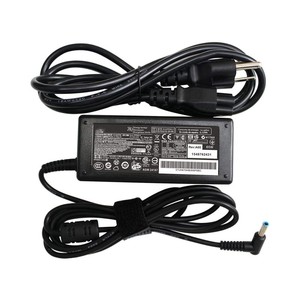
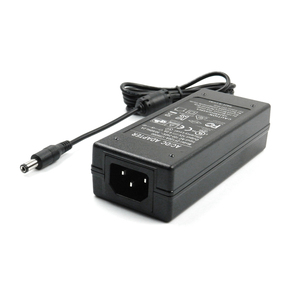
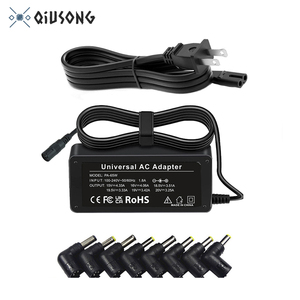
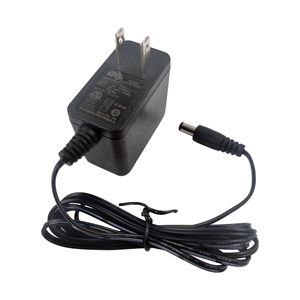
In modern industrial automation, electric vehicle (EV) fleet infrastructure, railway transportation systems, and clean energy microgrids across Canada, high voltage input DC-DC converters serve as the crucial power conversion backbone. System integrators and power electrical engineers operating in Ontario, Alberta, Quebec, and British Columbia face strict operational hurdles: wide primary DC bus voltage swings, severe sub-zero thermal extremes, stringent galvanic isolation requirements, and mandatory compliance with CSA, IEC, and MIL safety standards.
High voltage input DC-DC converters are specialized power supplies designed to step down elevated direct-current input voltages—typically ranging from 110VDC, 300VDC, 600VDC, up to 1200VDC—down to tightly regulated low-voltage DC logic rails (such as 3.3V, 5V, 12V, 24V, or 48V). These auxiliary rails power vital system components, including programmable logic controllers (PLCs), telemetry sensors, gate drivers, human-machine interfaces (HMIs), and communication nodes.
When selecting a high voltage input DC-DC conversion platform for heavy industrial equipment, engineers must carefully weigh switching topologies against power density, electromagnetic interference (EMI), and thermal dissipation efficiency:
| Topology Format | Input Voltage Window | Efficiency Range | Isolation Rating | Best Suited Canadian Application |
|---|---|---|---|---|
| Flyback (Active Clamp) | 100 VDC – 400 VDC | 85% – 89% | Up to 3,000 VDC | Remote RTUs, SCADA sensors, low-power telemetry (< 100W) |
| LLC Resonant Converter | 200 VDC – 800 VDC | 92% – 96% | 3,000 – 6,000 VDC | EV fast-charging stations, DC microgrids, industrial drives |
| Phase-Shift Full Bridge (PSFB) | 400 VDC – 1200 VDC | 90% – 95% | Up to 8,000 VDC | Heavy mining catenary systems, railway rolling stock, grid ESS |
| Non-Isolated Buck Regulator | 60 VDC – 150 VDC | 94% – 97% | None (Shared Ground) | Point-of-load (POL) motor driver logic, robotics controllers |
Canadian industrial environments demand elevated engineering standards due to geography, climate extremes, and heavy natural resource processing sectors. Our high voltage input DC-DC converters are specifically tailored to solve localized application bottlenecks:
Hard-rock underground mines in Sudbury, Ontario, and the Northwest Territories are rapidly replacing diesel equipment with battery electric vehicles (BEVs) and high-voltage DC trolley catenary systems operating at 600VDC to 1000VDC. Our ultra-wide input DC-DC converters step down these high DC buses to stable 24V vehicle logic and diagnostic node power, featuring fully potted encapsulation to withstand ambient dampness, explosive dust, and heavy shock/vibration per MIL-STD-810H.
Freight and passenger rail systems operating across Canadian Pacific (CPKC) and Canadian National (CN) networks endure severe freezing conditions. Railroad electronics rely on nominal 72V, 110V, or 300V internal DC distribution lines. Our railway-grade DC-DC converters deliver EN 50155 compliant surge protection, handling 8.5ms power interruptions and ambient temperatures down to -55°C without external heat-gun pre-warming.
Canada's expanding Electric Vehicle Availability Standard requires robust fast-charging networks (NEVI / ZEVIP funded) along highway corridors. Fast DC chargers utilize 800V internal DC buses. Our high voltage input auxiliary converters provide steady 12V/24V power to controller boards, liquid cooling pumps, and touchscreen billing kiosks, featuring high galvanic isolation (4kVDC+) to safeguard sensitive microprocessors from line surges.
Off-grid wellheads, pumping stations, and natural gas pipelines across Western Canada operate in uninhabited regions where maintenance access is costly. Powering remote terminal units (RTUs) from solar-plus-storage or high-voltage DC distribution requires DC-DC converters with ultra-low no-load quiescent currents, conformal coating against hydrogen sulfide exposure, and certified CSA C22.2 hazardous location suitability.
Sourcing managers and system architects in Canada must align component selection with evolving national technological and regulatory trends:
Since 1961, Wall Industries, Inc. has established an unassailable track record in designing, engineering, and manufacturing standard, modified-standard, and custom power conversion solutions. Operating from our dedicated engineering facility in Exeter, New Hampshire, USA, we serve top-tier OEM clients across Canada and globally.
Avoid expensive ground-up tooling costs. We can adapt catalog high-voltage DC-DC converters with custom voltage trim settings, tailored wiring harnesses, specialized potting compounds, or enhanced conformal coating to fit your mechanical envelope precisely.
When an off-the-shelf part cannot meet your compliance requirements, our power engineering team designs custom topologies from scratch—defining isolation barriers, EMI filtering (CISPR 32 Class B), and mechanical mounting directly around your specification.
Our power solutions are engineered to comply with major international and North American safety standards, including UL/IEC 60601-1 for medical equipment, MIL-STD-1275/461 for defense systems, EN 50155 for transit, and DoE Level VI energy efficiency rules.
Expert answers addressing regulatory compliance, thermal management, and customization options for high voltage input DC-DC converters.
In DC-DC converter terminology, high voltage input typically refers to nominal direct-current input buses exceeding standard 12V, 24V, or 48V telecom rails. Common high voltage input windows include 110VDC, 300VDC, 600VDC, and ultra-wide ranges up to 1000VDC or 1200VDC, frequently encountered in railway transit, industrial drives, EV battery systems, and power grid substations.
Our industrial and military-grade DC-DC converters are engineered with cold-start qualified semiconductors, specialized low-ESR solid capacitors, and stress-relieving encapsulation compounds. Standard models operate down to -40°C, while modified-standard and military options support extended storage and operation down to -55°C without voltage drift or startup delay.
A modified-standard converter starts from a proven, pre-qualified catalog design and alters minor electrical or mechanical parameters—such as output voltage trimming, connector pinouts, cable length, or potted enclosure sealing. This significantly reduces NRE costs and time-to-market. A fully custom converter is designed entirely from scratch around your unique PCB layout, mechanical constraints, and specialized compliance specs.
Yes. Our power conversion designs are engineered to satisfy North American safety requirements, incorporating recognized standards such as CSA C22.2 No. 62368-1 for audio/video and ICT equipment, UL/IEC 60601-1 for medical devices, and relevant safety clearances for high-voltage industrial installations across all Canadian provinces.
Our high voltage DC-DC converters integrate multi-stage input filtering, transient voltage suppression (TVS) diodes, metal oxide varistors (MOVs), and active clamping circuits designed to absorb severe voltage spikes (e.g., MIL-STD-1275 surge events or railway EN 50155 transients) without damaging downstream sensitive logic components.
Standard catalog samples are often available from stock or short factory build cycles (2 to 4 weeks). Modified-standard prototypes typically ship within 6 to 8 weeks, while full custom design projects follow a structured milestone timeline including preliminary design review (PDR), prototype testing, and compliance sign-off prior to volume manufacturing releases.
Have a complex high-voltage input DC-DC project or need a drop-in form-fit-function replacement for an end-of-life component? Talk directly to our senior power application engineers in Exeter, NH.
Inquire Now