 Power Conversion Engineering
Talk to an engineer (888) 597-9255
Products Power Conversion Engineering Engineered to comply with European and North African CE, IEC, and NMIS standards. Advanced multi-stage charging, thermal protection, and custom OEM/ODM parameters tailored for Moroccan industrial, automotive, and renewable applications.
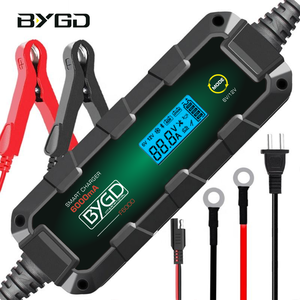
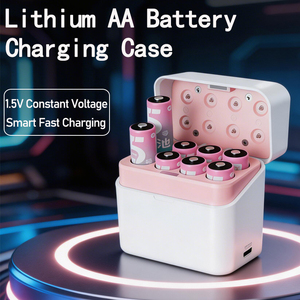
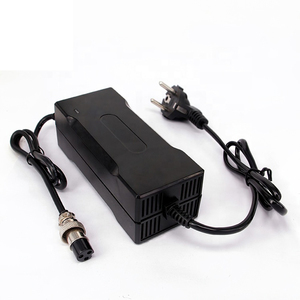
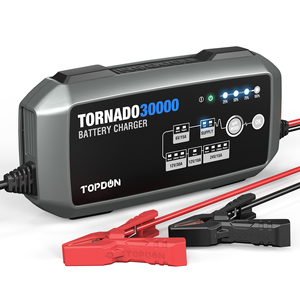
As the Kingdom of Morocco accelerates its national strategy toward green energy transition, automotive manufacturing dominance in North Africa, and electrification of urban mobility, the demand for industrial-grade, highly efficient, and climate-resilient battery charging infrastructure has hit an unprecedented peak. Operating at the strategic crossroad between Europe and Africa, Moroccan enterprise procurement teams, automotive OEMs, and logistics providers require battery charging solutions that meet rigorous international safety benchmarks while enduring regional operational complexities.
This technical report delivers a comprehensive analysis of power conversion engineering, localized application scenarios across Moroccan economic hubs (such as the Tangier Med industrial cluster, Casablanca automotive parks, and Marrakech green transit routes), grid-stability considerations, and manufacturing advantages offered by China's leading battery charger export enterprises.
Key Strategic Takeaway for Moroccan Importers: Deploying industrial battery chargers in Morocco demands designs tailored for wide input voltage swings (180V–264V AC), high ambient desert thermal derating (up to +75°C internal enclosure tolerance), and strict harmonic suppression under IEC 61000-3-2 standards to safeguard localized power distribution networks.
Morocco’s national energy vision—anchored by ambitious solar projects like the Noor Ouarzazate Complex and aggressive targets to generate over 52% of electricity from renewable sources by 2030—is fundamentally reshaping the energy consumption paradigm. This green transformation directly impacts several core industrial sectors:
With major global automotive OEMs expanding production in Tangier Automotive City and Kenitra, high-capacity 12V/24V smart battery diagnostic chargers (such as 30A to 90A ECU flashing units) are critical for assembly line pre-conditioning and dealership service networks.
Metropolitan areas including Casablanca, Rabat, and Marrakech are adopting electric moped fleets, e-bikes, and light delivery vehicles. This shift necessitates robust 600W+ 63V/67.2V lithium chargers capable of rapid CC/CV charging without degradation of 18050/21700 cell chemistries.
Morocco's expanding 5G and remote telecom towers across Saharan regions demand ultra-reliable DC/DC and AC/DC power adapters and battery maintainers that perform continuously under harsh, sand-laden, and high-temperature environments.
Exporting battery chargers to Morocco requires moving beyond off-the-shelf consumer power supplies. Chinese manufacturing facilities utilize sophisticated power topologies—such as flyback, forward, LLC resonant, and interleaved active PFC (Power Factor Correction)—to overcome localized environmental challenges.
For lead-acid (AGM, GEL, Wet) and advanced Lithium (LiFePO4, Li-ion) battery packs, conventional linear charging induces thermal runaways and reduced lifecycle capacity. Advanced Chinese chargers utilize proprietary 8-stage algorithmic sequences:
1. Desulfation / Pulse Repair: Restores capacity in deeply discharged lead-acid units commonly found in heavy industrial machinery across Khouribga mining regions.
2. Soft Start: Initial low-current verification protecting delicate lithium Battery Management Systems (BMS).
3. Bulk Charge: Delivering maximum constant current (CC) up to 80% capacity with PFC efficiency exceeding 93%.
4. Absorption: Tapering current under constant voltage (CV) to ensure complete cell saturation without overgassing.
5. Analysis & Diagnostics: Automated drop-test monitoring to verify cell health.
6. Recondition: Balancing cell voltages across multi-series configurations (e.g., 3S, 15S, 16S packs).
7. Float / Maintenance: Continuous voltage sensing for long-term seasonal vehicle storage.
8. Pulse Maintain: Periodic current topping to combat self-discharge.
| Battery Chemistry | Nominal Voltage Range | Charging Stage Topology | Recommended OEM Charger Model | Primary Industrial Sector |
|---|---|---|---|---|
| Lithium-Ion / LiFePO4 | 12.6V – 67.2V (3S – 16S) | CC/CV + Smart BMS Sync | 600W C600 / 63V 2A Series | E-Bikes, Scooters, Light EV Mobility |
| Lead-Acid (AGM/GEL/SLI) | 6V / 12V / 24V | 8-Stage Pulse Desulfation | 6A Smart Maintainer / T30A Repair | Automotive Garages, Fleet Maintenance |
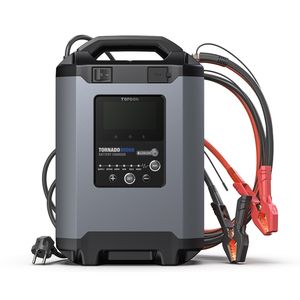
| Commercial Heavy Duty SLI | 12V / 24V Auto Select | Intelligent High-Amperage ECU Power Supply | TOPDON Tornado90000 (90A) | Dealerships, Assembly Inspection, Heavy Trucks |
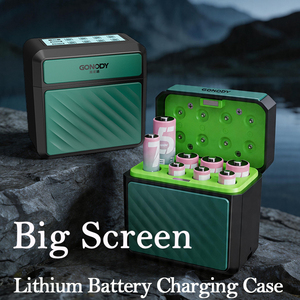
| Small-Cell NiMH / Li-ion | 1.2V – 1.5V (AA / AAA) | Multi-Bay Independent Smart Channels | Flip Top 8-Slot Universal Charger | Commercial Portable Tech, Field Testing Devices |
Operating in southern Morocco or unconditioned industrial plants during summer months involves ambient temperatures reaching over +45°C, pushing internal charger components past +85°C. Elite manufacturing partners implement customized thermal management protocols:
• Conduction-Cooled Aluminum Extrusions: Eliminating failure-prone fans in dusty environment chargers (IP65/IP67 rated).
• Conformal Coating & Potting Compound: Thermal epoxy encapsulation protecting SMPS circuitry against fine dust ingress, humidity, and salt spray in coastal zones like Agadir and Casablanca.
• Dynamic Thermal Derating: Automatic current throttling above +65°C internal temperature to prevent component degradation while maintaining continuous charging operation.
Building on over 60 years of foundational power conversion heritage, our manufacturing facilities integrate precision OEM/ODM customization paths. Importers across Morocco benefit directly from three strategic pillars:
Avoid expensive ground-up engineering costs. Importers can select established catalog platforms and modify target output voltages, DC cable harnesses, EU/Morocco wall plug configurations (Type E/C), and private label branding with low MOQ lead times.
Every exported lot undergoes rigorous burn-in testing, surge testing (IEC 61000-4-5), vibration resistance, and EMC testing to guarantee zero-defect shipments arriving at Port Tangier Med or Casablanca Port.
Direct export handling with complete compliance documentation: CE Certificates of Conformity, RoHS reports, UN38.3 transport safety documentation, and customs authorization dossiers tailored for Moroccan regulatory clearance.
Connect with our technical applications engineering team today. We provide modified-standard recommendations, custom sample evaluations, and direct factory-direct export quotes for Moroccan enterprises.
Inquire Now