 Power Conversion Engineering
Talk to an engineer (888) 597-9255
Products Power Conversion Engineering Precision-engineered, certified power adapters, enclosed switching supplies, and custom DC/DC converters optimized for Malaysian power networks and industrial environments.
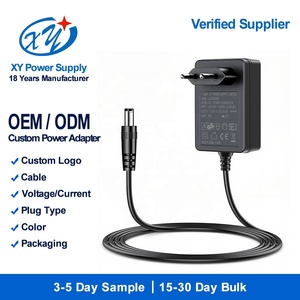
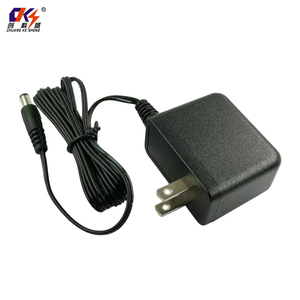
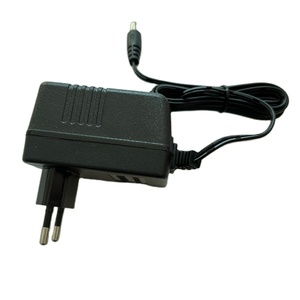
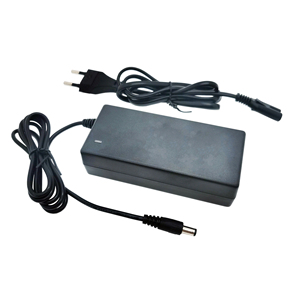
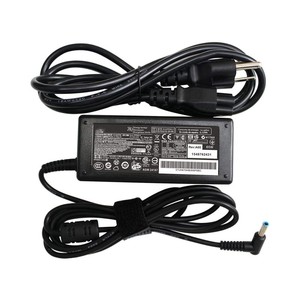
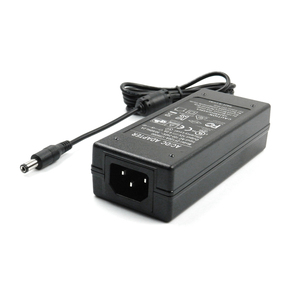
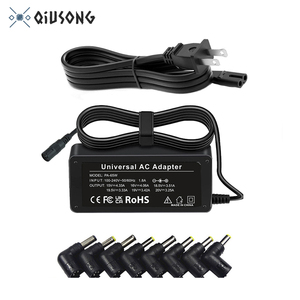
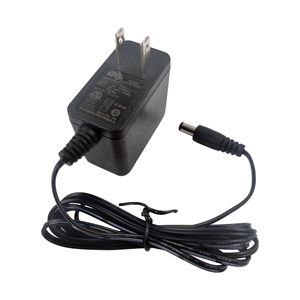
Malaysia has emerged as a powerhouse for global electronics manufacturing, semiconductor assembly, automated test equipment (ATE), and industrial automation across hubs such as Penang ("Silicon Island of the East"), the Klang Valley, Kulim Hi-Tech Park, and Johor. Sourcing electrical power modules for applications deployed in Malaysia requires a deep technical understanding of local grid characteristics, stringent regulatory pathways, and environmental resilience demands.
The Malaysian national grid operated by Tenaga Nasional Berhad (TNB) supplies electricity at a nominal single-phase voltage of 230V AC (historically 240V AC) at 50Hz, utilizing the BS 1363 (UK Type G) 3-pin plug topology. Power modules deployed across local industrial plants, telecommunications towers, and medical facilities must accommodate wide-input AC ranges (typically 85VAC to 264VAC) to buffer against line voltage sags, brownouts, and localized surge transients common in heavy-industrial manufacturing zones.
SEO Information Gain Insight: Unlike standard temperate-climate deployments, power supplies operating in Malaysia must be engineered to withstand constant high ambient humidity (averaging 80%–90% RH) and elevated ambient temperatures. Selecting modules with conformal coating, potted encapsulation, and high thermal derating margins is essential to prevent micro-condensation failures and premature electrolytic capacitor breakdown.
System integrators and original equipment manufacturers (OEMs) importing or specifying power supplies for the Malaysian market must ensure compliance with international and national standard frameworks managed by the Energy Commission of Malaysia (Suruhanjaya Tenaga - ST) and SIRIM QAS International:
Selecting the optimal power supply manufacturer requires evaluating technical engineering depth, customization agility, component traceabilities, and export logistics speed to ports like Port Klang and Penang Port. Below is an evaluation breakdown comparing production paradigms available to Malaysian procurement teams:
| Evaluation Dimension | Standard Catalog Supplier | Modified-Standard Factory (Recommended) | Fully Custom OEM/ODM Manufacturer |
|---|---|---|---|
| NRE / Upfront Tooling Cost | Zero NRE | Low to Nominal NRE | Higher Initial NRE Investment |
| Time-to-Market / Delivery | Immediate (Stock Dependent) | Fast (2–4 Weeks Sample Lead) | 12–24 Weeks Full R&D Qualification |
| Tropicalization (Conformal Coating) | Rarely Included as Standard | Applied per Application Spec | Fully Integrated into Mold / Potting |
| Thermal Operating Range | -10°C to +50°C Typical | -40°C to +70°C Derated Options | -55°C to +125°C Extended Range |
| Compliance Flexibility (SIRIM/CE) | Fixed Standard Approvals | Pre-certified Platform Base | Tailored Certification File Generation |
For most industrial OEMs in Penang and Selangor, buying purely off-the-shelf standard power units leads to design compromises—such as standard cables being too short, lack of internal moisture barrier coatings, or rigid mounting footprints. Conversely, fully custom power supply engineering requires extensive time and capital investment. A Modified-Standard approach leverages a proven, mass-produced core topology (flyback, forward, active PFC, or LLC resonant) while customizing specific parameters—such as output voltage trimming, custom wire harnesses, mechanical potting, thermal baseplate conductive plates, or specific EMI filtering circuits.
Power conversion requirements vary significantly across Malaysia's distinct regional industrial ecosystems. Understanding these localized engineering demands ensures long-term operational reliability:
Automated Test Equipment (ATE) and semiconductor wafer handling robotics demand isolated DC/DC converters with low output noise (< 10mV p-p), high isolation voltage (> 3kVDC), and extremely stable line regulation to ensure precision micro-volt measurement accuracy during chip sorting and packaging.
Outdoor telecom cabinets deployed along Malaysia's 5G national rollout encounter intense solar loading and humidity. Power modules require wide operational temp specs (-40°C to +85°C), active PFC correction, and surge protection compliant with IEEE/ANSI standards to sustain unmonitored remote operation.
Palm oil refineries, bio-chemical processing plants, and port logistics automated guided vehicles (AGVs) require DIN-Rail and enclosed AC/DC power supplies built with heavy-duty aluminum chassis, vibration-resistant terminals, and anti-corrosive circuit treatments.
Design teams producing mobile medical diagnostic machinery demand ultra-compact desktop AC/DC adapters or embedded open-frame supplies meeting 2×MOPP isolation and strict leakage current maximums under IEC 60601-1 certification.
With an engineering legacy dating back to 1961, Wall Industries, Inc. stands out as a global leader in power conversion engineering. Operating from Exeter, New Hampshire, USA, our engineering team brings over six decades of expertise in designing standard, modified-standard, and fully custom AC/DC power supplies (1W to 3,600W) and DC/DC converters (0.5W to 1,500W).
Our commitment to technical excellence and rigorous quality assurance directly addresses the demands of Malaysian systems integrators and international OEMs operating across Southeast Asia:
Connect directly with our experienced power conversion engineers in Exeter, NH, USA. Whether you require standard product validation, modified-standard samples, or a complete custom design spec, our technical team is ready to support your program.
Inquire Now