 Power Conversion Engineering
Talk to an engineer (888) 597-9255
Products Power Conversion Engineering Explore our specialized range of auxiliary power supplies, industrial converters, and solar inverter control hardware optimized for high ambient temperature deployment across Qatar.
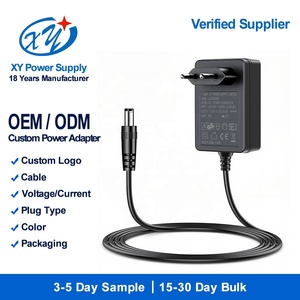
Precision-regulated auxiliary switching supply designed for telemetry sensors, weather stations, and micro-inverter control units operating in desert environments.
Get Catalog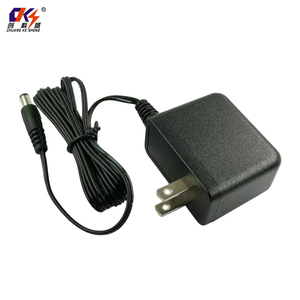
Multi-output DC power module engineered to provide stable logic rail voltage for smart solar inverter gate drivers under extreme ambient temperature shifts.
Get Catalog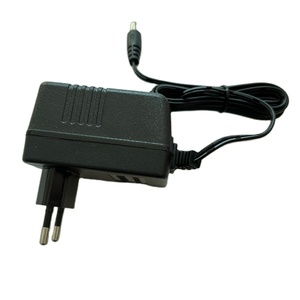
Heavy-duty linear converter offering robust noise immunity and electrical isolation for commercial solar array control cabinets and utility tie-ins.
Get Catalog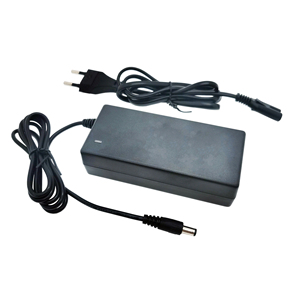
Enclosed, thermal-derated universal AC/DC adapter supporting remote Combiner Box monitoring equipment across utility-scale solar farms in Doha.
Get Catalog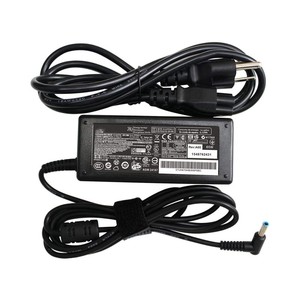
Compact, continuous-duty power conversion module crafted for smart energy meters, data loggers, and SCADA monitoring hardware in harsh Middle East climates.
Get Catalog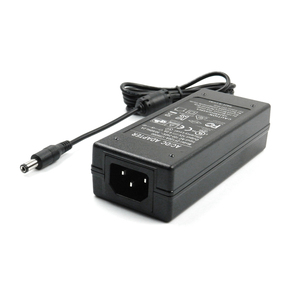
High-power density AC/DC module delivering stable multi-voltage rails for large-capacity central inverter control units, cooling fans, and safety relays.
Get Catalog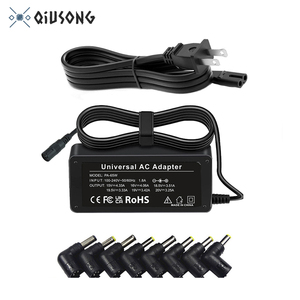
Field-adjustable DC supply optimized for integrating battery storage telemetry with hybrid solar inverters in off-grid and microgrid applications.
Get Catalog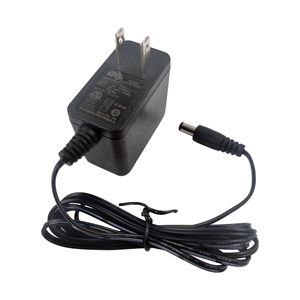
Slim-line wall and DIN-rail mounted power charger built for tight physical envelopes inside commercial string inverter enclosures and distribution boards.
Get CatalogThe State of Qatar—and specifically its rapidly expanding capital, Doha—represents one of the world's most demanding operating environments for solar power conversion equipment. Driven by the ambitious renewable energy targets outlined in Qatar National Vision 2030 (QNV 2030), the region is accelerating its transition toward solar energy through landmark projects such as the 800MW Al Kharsaah Solar PV IPP and localized commercial rooftop developments across West Bay, Lusail Smart City, and the Ras Bufontas Free Zone.
However, achieving high performance and long-term bankability in Doha requires solar inverters engineered far beyond standard tropical or temperate design specifications. Manufacturers supplying the Qatari market must address a compounding set of harsh environmental stressors: extremely high ambient heat exceeding 50°C in peak summer, extreme solar irradiation levels, heavy airborne particulate matter (fine sand and silica dust), high relative humidity along the Arabian Gulf coastline, and stringent grid-compliance criteria mandated by the Qatar General Electricity & Water Corporation (Kahramaa).
Standard commercial solar inverters typically begin derating power output when ambient temperatures reach 45°C. In Doha, internal inverter enclosure temperatures routinely exceed 75°C under direct sunlight. Premium solar inverter manufacturers supplying Qatar utilize advanced Wide Bandgap (WBG) Silicon Carbide (SiC) power electronics, forced liquid or intelligent dual-path air cooling, and IP66 hermetic sealing to ensure zero power derating up to 50°C ambient conditions.
When selecting a solar inverter manufacturer for procurement in Doha, EPC contractors, project developers, and MEP consultants must evaluate four critical environmental degradation mechanisms:
Sustained ambient heat accelerates electrolytic capacitor aging and semiconductor degradation. Desert-grade inverters utilize film capacitors, conduction baseplates, and custom derating curves to guarantee 25-year service lifetimes.
Fine particulate dust in Doha causes mechanical fan failure and heatsink clogging. Advanced manufacturers implement isolated cooling channels, magnetic-levitation brushless fans, and double-lip gasket seals.
Doha’s coastal proximity generates salt-laden marine air. Inverter housings require C5-M anti-corrosion coating, stainless steel hardware, and conformal-coated internal printed circuit boards (PCBs).
As a leading supplier and manufacturing partner for power electronics, our solar inverters and auxiliary power platforms are tailored for diverse deployment profiles across Qatar:
Large-scale solar parks in Qatar’s desert interior demand high-capacity string inverters (250kW to 350kW) or 1500V central inverter stations (up to 4.4MW). Key requirements include multi-MPPT tracking to mitigate soft shading from dust accumulation, anti-PID (Potential Induced Degradation) night recovery modules, and direct integration with 33kV Kahramaa substations via fiber-optic Modbus/IEC 61850 protocol networks.
Warehouse logistics centers in the Industrial Area, Qatar Free Zone facilities, and commercial towers across Doha utilize smart string inverters ranging from 50kW to 125kW. These systems emphasize compact footprints, integrated arc-fault circuit interrupters (AFCI), rapid shutdown compliance for fire safety, and dynamic active power control to prevent reverse power flow into the grid prior to net-metering approval.
Remote oil and gas telemetry sites, desert agricultural projects, and off-grid communications hubs rely on hybrid bi-directional inverters (10kW to 100kW). These units seamlessly combine solar PV input, diesel generator backup, and high-voltage lithium-ion battery storage, ensuring uninterruptible power with fast switching times (<10ms).
With Qatar’s push toward green building certification (GSAS - Global Sustainability Assessment System), urban developments in Lusail and Pearl-Qatar are incorporating rooftop microinverters and single/three-phase hybrid string inverters featuring sleek wall-mount aesthetics, ultra-low acoustic noise emission (<30dB), and integrated EV charger control outputs.
Compare performance specifications across string, central, and hybrid solar inverter architectures designed for deployment in Qatar.
| Inverter Topography | Typical Power Rating | Thermal Derating Threshold | IP / NEMA Enclosure Rating | Max Efficiency | Primary Doha Application |
|---|---|---|---|---|---|
| Commercial String Inverter | 50kW – 125kW | Full output up to 50°C | IP66 / NEMA 4X | 98.7% | C&I Rooftops, Commercial Buildings, Warehouses |
| High-Power Utility String | 250kW – 350kW | Smart active cooling to 53°C | IP66 Hermetic Isolation | 99.0% | Utility-Scale PV Farms (1500V DC Architecture) |
| Central Inverter Station | 1.5MW – 4.4MW | Liquid cooling / Forced air to 50°C | IP55 Enclosure / IP65 Core | 98.8% | Grid-Connected IPP Solar Parks & Mega Projects |
| Hybrid Storage Inverter | 10kW – 100kW | Conduction cooled to 48°C | IP65 Outdoor Rated | 97.6% | BESS Microgrids, Telecom, Oil & Gas Off-Grid |
| Smart Microinverter System | 600W – 2000W | Potted compound to 65°C | IP67 Fully Potted | 96.5% | GSAS Residential & Urban Distributed PV |
Combining over six decades of industrial power conversion heritage with cutting-edge desert solar innovations.
Founded on rigorous power conversion expertise since 1961, our manufacturing facilities produce industrial power components engineered to the absolute highest MTBF standards. We apply proven magnetic and semiconductor topologies rather than unverified experiments.
We recognize that standard off-the-shelf catalog units do not fit every Qatari project envelope. Our engineering team specializes in modified-standard configurations—adjusting pinouts, auxiliary rails, thermal derating curves, conformal coatings, and IP enclosures in short turnaround times.
Every solar inverter and power supply module undergoes rigorous burn-in testing under elevated thermal conditions. Our products comply with IEC 62109-1/-2 safety standards, IEC 61000 EMC limits, IEEE 1547 grid interconnect codes, and Kahramaa T&D connection regulations.
Expert guidance addressing common technical, regulatory, and operational queries from Qatari solar buyers and engineers.
Solar inverters connected to the Qatari power grid must comply with Kahramaa Technical Regulations for Distributed Solar Generation. Key certifications include IEC 62109-1 and IEC 62109-2 (safety), IEC 61727 (utility interface characteristics), IEC 62116 (anti-islanding protection), and EN 50549 / IEEE 1547 for grid stability. Inverters must support low-voltage ride-through (LVRT), reactive power control, and dynamic grid support.
Our desert-spec inverters utilize Wide Bandgap (WBG) Silicon Carbide (SiC) semiconductors that exhibit lower switching losses at high temperatures compared to legacy silicon IGBTs. Combined with heavy-duty heat sinks, heat-pipe thermal dissipation, intelligent variable-speed brushless fans, and high-temperature film capacitors, our systems deliver 100% rated capacity up to 50°C ambient without thermal derating.
While IP65 offers basic dust protection and resistance to low-pressure water jets, IP66 hermetic protection provides complete immunity to ingress from dust and fine silica sand particulates thrown by heavy desert sandstorms (Shamal winds). Furthermore, IP66 enclosures withstand high-pressure water jets used during automated solar panel and inverter cleaning cycles in Qatar.
Yes. Based on our 60+ year manufacturing legacy, we provide both modified-standard adaptations (custom voltage trims, special connectors, specialized conformal coating, custom enclosure mounting) and fully custom power electronics engineered ground-up from your exact electrical, mechanical, and compliance specification.
High humidity combined with high DC system voltages (1000V/1500V) accelerates PID in solar panels across Doha's coastal zones. Our solar inverters feature integrated anti-PID recovery modules that apply a reverse bias voltage during night hours, neutralizing stray ionic currents and restoring PV module power output over the system lifetime.
Contact our power conversion engineering team today for technical datasheets, customized quotation requests, or direct consultation on Kahramaa grid-compliant solar inverter designs.