 Power Conversion Engineering
Talk to an engineer (888) 597-9255
Products Power Conversion Engineering Our OEM/ODM manufacturing capability spans precision wall-mount adapters, high-density switching power supplies, and customized high-isolation subsea control units engineered to meet stringent ISO 13628-6 and API 17F standards for the Baku and Caspian offshore sectors.
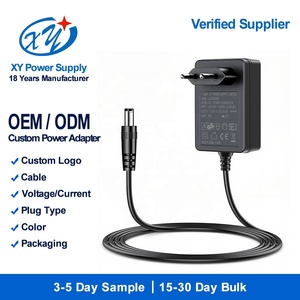
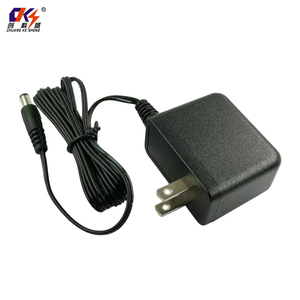
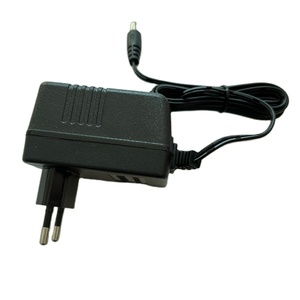
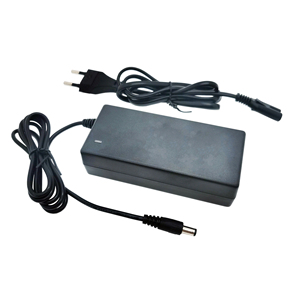
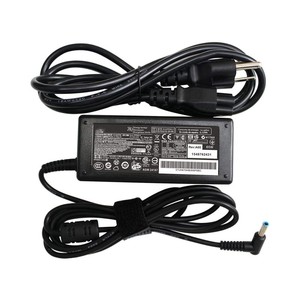
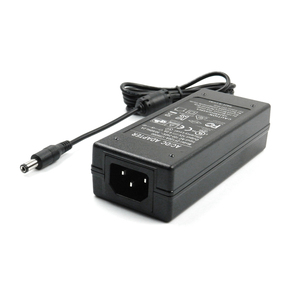
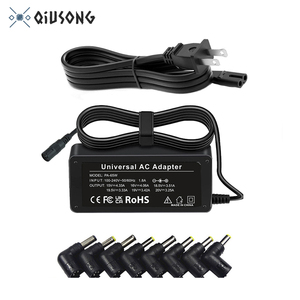
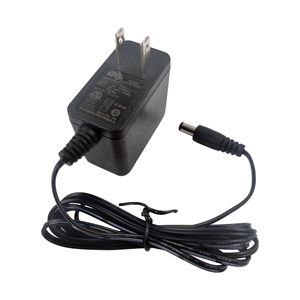
Subsea equipment operating in the Caspian Sea faces unique environmental challenges: shallow-water temperature swings, high brackish salinity, mud volcano activity, and continuous vibration from offshore operations. Our power solutions are engineered from the ground up for extreme survivability.
Subsea umbilicals experience severe ground potential shifts over long distances. Our isolated DC/DC converters provide up to 8000VDC isolation, preventing ground loops and protecting subsea tree control electronics from high-voltage transients.
From frozen winter onshore terminals in Sangachal to subsea pressure housings under intense operational thermal loads, our military-grade component selection ensures flawless power regulation without derating penalties.
Our OEM subsea power modules feature complete polyurethane or epoxy vacuum potting, eliminating internal void spaces to withstand extreme hydrostatic pressures in Caspian deepwater offshore basins up to 1,000 meters depth.
Detailed breakdown of how our custom OEM/ODM power supplies serve critical energy projects across the Caspian Sea, including Shah Deniz Phase 2, Azeri-Chirag-Gunashli (ACG), and Absheron gas fields.
Subsea Christmas Trees installed in deep Caspian fields rely on Umbilical Cables extending tens of kilometers from platform topsides or shore-based control stations. Our custom AC/DC power racks convert mains voltages into clean, low-ripple DC transmission rails (typically 24V, 48V, or 300VDC). At the subsea end, our ultra-compact, high-isolation DC/DC converters step down voltages to drive directional solenoid valves, acoustic telemetry modems, and subsea electronic units (SEUs) with microsecond transient suppression.
Remotely Operated Vehicles (ROVs) performing subsea inspection, maintenance, and repair (IMR) across Baku offshore platforms require maximum power density in small form factors. We engineer high-voltage DC/DC step-down converters (converting 1000V+ tether power to 24V/48V instrument rails) utilizing resonant LLC topologies. These modules feature conduction cooling via baseplate attachment directly to pressure housings, operating smoothly without fan cooling under extreme seabed pressure.
As Azerbaijan expands its green transition initiative with offshore wind farms in the Caspian Sea, subsea substation power systems demand long-life, zero-maintenance power components. Our OEM DIN-rail and chassis-mount AC/DC power supplies incorporate industrial-grade 105°C long-life electrolytic capacitors, conformal coating against marine air salinity, and redundant N+1 configuration options to guarantee 20+ year service life in offshore turbine bases and subsea hub boxes.
An authoritative technical reference for electrical systems designers, subsea engineers, and procurement specialists operating in Azerbaijan's offshore sector.
Power transmission over long subsea umbilical cables (spanning 15 km to over 90 km in Caspian gas fields) presents severe electrical challenges. Umbilical lines possess significant distributed capacitance and resistance. When switching subsea control electronics on or off, high voltage spikes and line drop transients can damage unshielded power supplies.
Our custom subsea power systems incorporate active Power Factor Correction (PFC > 0.99), wide input voltage tolerance ranges (e.g., 85-305VAC or 4:1 DC inputs from 9 to 36VDC / 18 to 75VDC), and dynamic transient surge suppression circuitry complying with IEEE 519 and MIL-STD-1275 specs. This guarantees stable voltage regulation at the Subsea Electronic Unit (SEU) regardless of umbilical load variations.
Unlike open ocean water, the Caspian Sea features a unique brackish water composition with high levels of sulfate and calcium compounds, along with localized seismic seabed vents (mud volcanoes) near the Baku Archipelago. Subsea power housings are susceptible to rapid crevice corrosion and galvanic oxidation if power conversion components generate stray ground currents.
Our OEM/ODM manufacturing facility provides fully potted subsea power blocks using specialized room-temperature vulcanizing (RTV) silicone or dense military-grade polyurethane resins. This potting material features high thermal conductivity (k > 1.2 W/mK) while maintaining a dielectric strength exceeding 20 kV/mm, insulating sensitive power transformers from galvanic cell formation even in the event of micro-seepage in outer housings.
Since our establishment in 1961 in Exeter, New Hampshire, USA, Wall Industries has established a rigorous quality control framework. Every subsea power unit exported to the Azerbaijan market undergoes 100% full-load burn-in testing, high-potential (Hi-Pot) dielectric withstand testing, and environmental stress screening (ESS) including thermal cycling from -55°C to +125°C.
| Power Architecture Series | Input Voltage Window | Isolation Rating | Thermal Operating Range | Caspian Application Profile |
|---|---|---|---|---|
| Subsea Isolated DC/DC (High-V) | 100V - 1000V DC Rail | 5,000V - 8,000V DC | -40°C to +85°C (Baseplate) | ROV Tether Step-down, Seabed Sensor Nodes |
| Umbilical Topside AC/DC Racks | 85V - 264V AC Universal | 3,000V AC (Input to Output) | -20°C to +70°C (Convection) | Sangachal Terminal & Offshore Platform Racks |
| Encapsulated PCB Power Modules | 4:1 Input (9-36V / 18-75V) | 1,500V - 3,000V DC | -55°C to +105°C (Extended) | Subsea Tree Control Modules (SCM), Acoustic Modems |
| Linear Ultra-Low Noise Series | 110V / 230V AC Step-Down | 2,500V AC Isolation | -10°C to +60°C | Hydrophone arrays, Precision Sonar Transducers |
Direct answers regarding custom power design, standards compliance, supply chain logistics, and environmental suitability for Caspian offshore projects.
Our power modules are engineered in strict alignment with international oil & gas standards, including API 17F (Specification for Subsea Production Control Systems) and ISO 13628-6. We provide full material traceability, MTBF calculation reports (per MIL-HDBK-217F), and shock/vibration qualification test reports required for equipment deployed in the Azeri-Chirag-Gunashli and Shah Deniz concession areas.
A modified-standard design takes an established, pre-qualified catalog topology and adjusts key parameters such as output voltage trimming, connector wire harnesses, specialized conformal coatings, or custom mounting plates. This approach minimizes tooling costs and lead times. A fully custom design starts from a blank sheet to match exact mechanical form factors, extreme multi-rail output configurations, or specialized pressure-tolerant encapsulation for deepwater subsea enclosures.
Yes. For solid-state subsea electronic units (SEUs), we utilize specialized vacuum resin potting compounds with zero micro-voids. This allows encapsulated power converters to operate directly in pressurized or dielectric oil-filled subsea canisters at hydrostatic pressures matching Caspian seabed depths down to 1000+ meters, eliminating atmospheric collapse risks.
We support both direct export to engineering contractors in Baku and shipping to international system integrators (in the UK, Europe, or UAE) building subsea skids for Caspian deployment. Standard prototype samples are dispatched rapidly, while modified-standard production runs typically ship within 4 to 8 weeks depending on compliance testing requirements.
We maintain a strict component end-of-life (EOL) monitoring policy and guarantee form-fit-function replacement availability. Because subsea capital equipment in Azerbaijan is designed for decades of service, our engineering team guarantees long-term component availability and drop-in replacement designs so your system never faces forced redesigns.
Consult directly with our power engineering team to define your subsea electrical specifications, request sample units, or schedule a custom OEM feasibility review for your Azerbaijan Caspian offshore project.
Get a Quote