 Power Conversion Engineering
Talk to an engineer (888) 597-9255
Products Power Conversion Engineering High-reliability AC/DC power supplies, linear transformers, and switching adapters engineered for Brazilian grid conditions, BESS microgrids, and industrial automation.
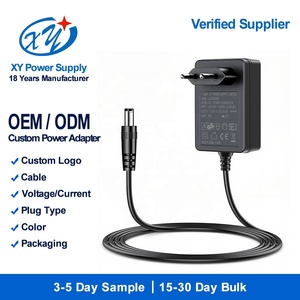
CE GS TUV RoHS certified 12V 3A 36W wall-plug converter. Designed for industrial router units, BESS telemetry controllers, and smart grid IoT gateways in Brazilian installations.
Contact Us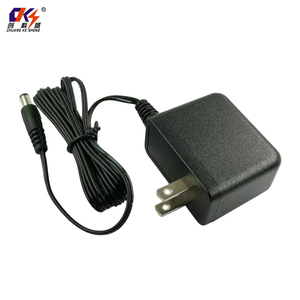
Wide-input 5V/6V/8V/9V/15V/18V/24V regulated power adapter series. Features ultra-low standby power dissipation and over-current protection for lithium battery management systems (BMS).
Contact Us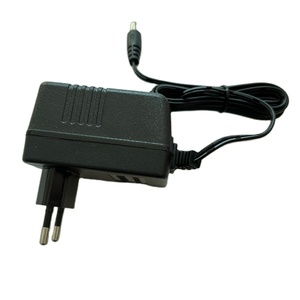
Heavy-duty copper winding linear power supply (110V/230V dual input range). Offers superior galvanic isolation and zero high-frequency EMI noise for sensitive grid monitoring instrumentation.
Contact Us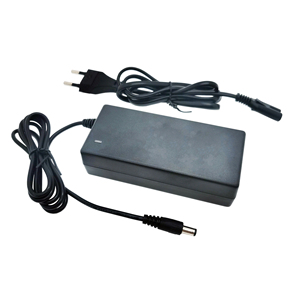
Multi-plug desktop AC/DC power supply providing clean 24VDC rail output. Built with rugged casing for energy storage control cabinets, robotic automation, and industrial communications.
Contact Us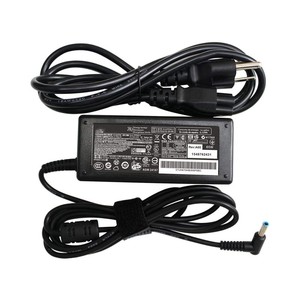
Regulated DC power supply module with 4.5 x 3.0mm industrial connector. Ideal for field service testing devices, site-survey laptops, and mobile diagnostic terminals in solar power plants.
Contact Us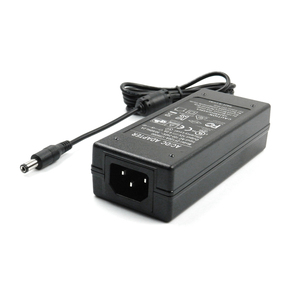
Versatile OEM power converter platform supporting output current up to 10A. Engineered with heavy conformal coating for high resistance against tropical humidity in Brazil.
Contact Us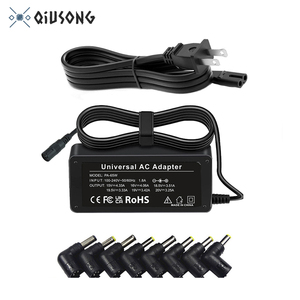
Multi-tapped variable voltage AC/DC supply configured for R&D laboratories, battery cell testing setups, and multi-rail energy storage system prototype development.
Contact Us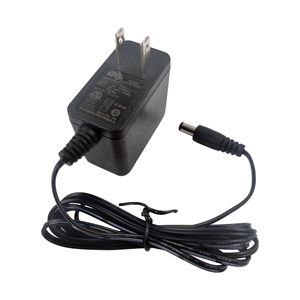
Compact 12W wall adapter featuring high efficiency (DoE Level VI), low ripple noise, and global certification compliance. Engineered for continuous 24/7 duty cycle operation.
Contact UsAn executive whitepaper on how utility-scale BESS, commercial peak shaving, and distributed generation are reshaping Brazil’s power landscape.
Brazil’s electricity landscape is undergoing a radical transition. Historically dependent on hydroelectric power—which accounts for over 60% of national generation—the country faces increasing seasonal droughts and hydrologic volatility. To mitigate system vulnerability, ANEEL (Agência Nacional de Energia Elétrica) and ONS (Operador Nacional do Sistema Elétrico) have accelerated the integration of centralized solar PV and wind assets, primarily concentrated in the Northeast region (Bahia, Ceará, Piauí, and Rio Grande do Norte).
However, grid bottlenecking and transmission curtailment have created an urgent imperative for Battery Energy Storage Systems (BESS). Energy storage factories and exporters supplying the Brazilian market must deliver robust power conversion equipment capable of interfacing with high-voltage utility grids down to localized 127V/220V/380V distributed commercial networks.
Following the enactment of Marco Legal da Microgeração e Minigeração Distribuída (Law 14.300), grid-tie compensation structures have shifted. Commercial & Industrial (C&I) electricity consumers in industrial clusters such as São Paulo, Minas Gerais, and Rio de Janeiro are rapidly adopting energy storage for behind-the-meter (BTM) peak shaving and tariff arbitrage.
Engineering considerations for power converter design, thermal management, isolation parameters, and compliance standards.
Energy storage auxiliary systems require maximum efficiency to lower Total Cost of Ownership (TCO). Our converter engineering incorporates advanced topologies:
Operating electronic hardware in South America demands severe environmental protection due to extreme humidity, ambient thermal stress, and airborne contaminants.
Preventing system cross-talk and equipment reset in high-power BESS installations requires strict electromagnetic compliance and dielectric safety margins.
| Power Conversion Platform | Wattage Output | Input Voltage Spectrum | Dielectric Isolation | Target BESS / Industrial Application |
|---|---|---|---|---|
| Isolated DC/DC Converters | 0.5W – 1,500W | 5V, 12V, 24V, 48V, 110V, 310V DC | 1.5 kVDC – 8 kVDC | BMS Cell Monitoring, Substation Protection Relays, Rail Transit |
| Non-Isolated Buck/Boost Regulators | 0.5W – 50W | 3.3V – 36V Point-of-Load DC | Non-Isolated (Common GND) | Telemetry Logic Boards, FPGA & Microcontroller Power Rails |
| AC/DC Internal Modules (Open Frame / Enclosed) | 1W – 3,600W | 85 VAC – 264 VAC Universal Input | 3.0 kVAC – 4.2 kVAC | BESS Auxiliary Power Cabinets, Inverter Controller Supplies |
| DIN Rail Industrial Supplies | 10W – 480W | 90 VAC – 305 VAC Single/Three-Phase | 3.0 kVAC Input-to-Output | PLC Enclosures, Process Automation, Solar Combiner Boxes |
| External Wall Mount & Desktop Adapters | 2.5W – 250W | 90 VAC – 264 VAC Universal Input | Class I & Class II Reinforced | Field Maintenance Terminals, Diagnostic Meters, Commercial IoT |
Combining over 60 years of US-engineered power conversion expertise with agile global manufacturing for original equipment manufacturers (OEMs).
We maintain an extensive catalog of over 3,000 active AC/DC power supplies and DC/DC converter models. Standard products offer off-the-shelf availability, rapid prototyping cycles, and pre-certified compliance documentation, allowing engineering teams in Brazil to drastically reduce time-to-market for new energy storage product introductions.
When off-the-shelf units do not fully match your mechanical envelope or pinout configuration, our modified-standard engineering track provides the fastest, most cost-effective path forward. We modify voltage trims, cable harnesses, custom connectors, potting compounds, thermal derating curves, and private label branding while preserving existing core safety approvals.
For complex defense, medical, or multi-megawatt energy storage projects requiring ground-up design, our engineering team works from your exact electrical and mechanical specification. We utilize proven topologies—flyback, forward, LLC resonant, buck, and boost—delivering preliminary design reviews, thermal simulations, prototype evaluation units, and full qualification support.
Proven field reliability in diverse geographical environments—from coastal ports to remote industrial plants.
In large-scale battery storage facilities connected to the 500kV National Interconnected System (SIN), auxiliary power units must remain online even during severe phase imbalance or grid voltage sags. Our high-voltage input DC/DC converters (operating up to 310 VDC) and wide-input AC/DC supplies power the primary master controller, HVAC actuators, fire suppression sensors, and gas detection systems inside containerized BESS enclosures.
Irrigation pumps, grain processing facilities, and cold storage units in central-western Brazil rely heavily on hybrid solar/storage microgrids. Power adapters and encapsulated converters installed in outdoor junction boxes endure ambient temperatures topping 40°C. Our industrial-grade power supplies feature thermal derating up to +70°C, ensuring uninterrupted crop preservation and processing operations.
Off-grid telecom base transceiver stations (BTS) throughout Manaus, Belém, and interior Northeast cities utilize 48V battery banks paired with solar array charging. Compact, high-isolation DC/DC converters stabilize power to 5G radio heads, microwave links, and satellite telemetry units, operating flawlessly in high-humidity tropical microclimates.
Factories in the ABC Paulista industrial hub deploy behind-the-meter battery storage to minimize peak-hour demand charges. DIN rail-mounted AC/DC power supplies feed clean 24V DC control lines for programmable logic controllers (PLCs), energy meters, and communication gateways monitoring real-time power consumption.
Addressing regulatory compliance, voltage standards, duty structures, and customized power engineering inquiries.
Brazil has a unique dual-voltage grid infrastructure depending on the state and municipality. Residential and commercial single-phase voltages are typically 127 VAC / 60 Hz in major cities like São Paulo and Rio de Janeiro, while other regions (such as Brasília, Fortaleza, and Recife) utilize 220 VAC / 60 Hz. Industrial three-phase supplies operate at 220V, 380V, or 440V. All our AC/DC power adapters and switching supplies feature universal wide input (85 VAC to 264 VAC, 47-63 Hz), guaranteeing seamless operation across all Brazilian states without requiring manual voltage selector switches.
Power conversion hardware imported into Brazil must comply with applicable safety and electromagnetic standard directives set by INMETRO (Instituto Nacional de Metrologia, Qualidade e Tecnologia) and ANATEL (for wireless/telecom-integrated units). Our factory products hold international IEC/EN/UL certifications (such as IEC 62368-1, IEC 60601-1, and CB Scheme reports), which simplify local INMETRO homologation through established mutual recognition procedures and certified testing documentation.
Yes. For humid, tropical, or saline environments, we provide extended environmental hardening options. These include MIL-STD-810 compliant conformal coating (acrylic or polyurethane resin) to shield PCB traces against humidity oxidation, silicone potting for encapsulated DC/DC modules, and extended operating temperature options engineered to perform from -55°C up to +125°C baseplate temperatures.
A catalog part is an off-the-shelf design ready for immediate deployment. A modified-standard unit starts from a proven, qualified catalog platform and makes precise adjustments required by your specific system—such as customizing output voltage trimming, replacing wiring harnesses/connectors, modifying PCB mounting geometries, or adding conformal coating. Modified-standard designs drastically reduce NRE (Non-Recurring Engineering) costs and shorten qualification timelines while delivering custom-fit performance.
Importing electronic components into Brazil involves Navigating the Common External Tariff (TEC) and import taxes (II, IPI, PIS/COFINS). For specialized power conversion hardware that lacks local Brazilian production equivalents, importers can apply for Ex-Tarifário tax relief status, temporarily reducing import tariffs down to 0% or 2%. We assist procurement teams by providing detailed HS Code classifications (such as NCM 8504.40 for static converters) and comprehensive technical datasheets required for federal tax exemption applications.
Energy storage facilities, substations, and industrial plant assets operate with multi-decade lifespans (15 to 25+ years). We specialize in maintaining active production for long life-cycle programs, offering form-fit-function second-source replacements for end-of-life (EOL) component power supplies from other manufacturers, ensuring your bill of materials (BOM) remains active without expensive system re-engineering.
Whether you are designing a utility-scale battery energy storage facility, an agribusiness microgrid, or an industrial automation controller in Brazil, our applications engineering team is ready to analyze your requirements.