 Power Conversion Engineering
Talk to an engineer (888) 597-9255
Products Power Conversion Engineering Explore our engineering-grade portfolio of boost converters designed for high efficiency, thermal endurance, and zero-dropout voltage stabilization across industrial and commercial systems.
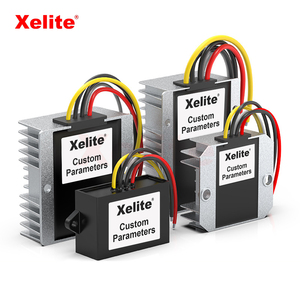
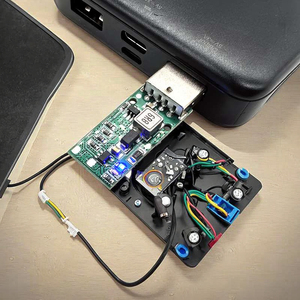
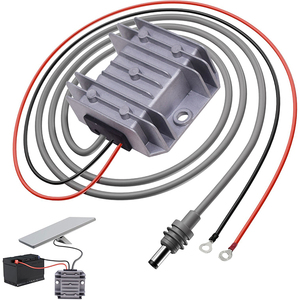
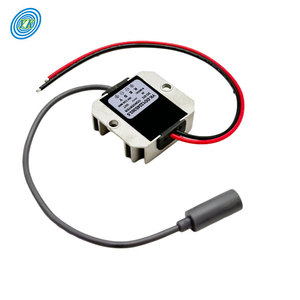
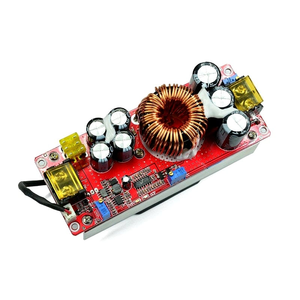
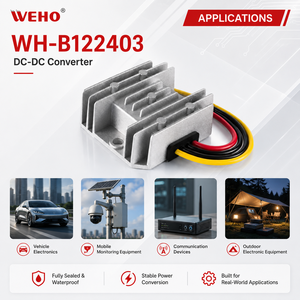
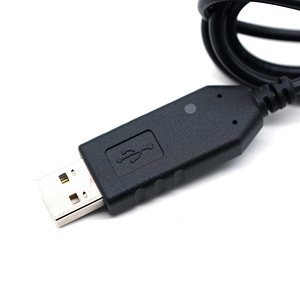
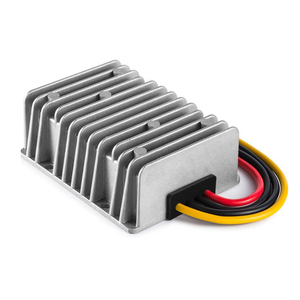
In modern industrial automation, automotive electrification, remote telecommunications, and off-grid renewable energy systems, maintaining stable DC rail voltages is a fundamental prerequisite for operational reliability. A DC-DC boost converter (step-up switching regulator) operates by storing electrical energy in an inductor during the switch ON phase and transferring that energy, combined with the input source voltage, to the output load during the switch OFF phase. Achieving enterprise-grade performance requires precise tuning of Pulse-Width Modulation (PWM) duty cycles, minimized parasitic resistance (RDS(on)), and advanced thermal mitigation schemes.
As a premier manufacturer and exporter of step-up voltage converters, our engineering methodology integrates high-frequency MOSFET switches, planar magnetics, and synchronous rectification topology. Traditional asynchronous boost converters utilize a Schottky diode in the discharge path, resulting in forward conduction losses ($V_f \times I_{out}$) that severely limit energy conversion efficiency when handling high current loads. By replacing the diode with an active, low-impedance synchronous switch controlled by microsecond-precise gate drivers, our modern boost converter modules achieve thermal-effective efficiencies exceeding 96.5%.
When selecting boost converters for enterprise systems, power loss within the secondary conduction loop dictates cooling design and mean time between failures (MTBF). Synchronous boost topology minimizes internal power dissipation ($P_{diss} = I_{rms}^2 \times R_{DS(on)}$), enabling compact aluminum housing encapsulation without requiring loud, failure-prone cooling fans.
The operational dynamics of high-efficiency step-up conversion are governed by the fundamental inductor volt-second balance equation. Under steady-state conditions, the energy stored in the magnetic field during continuous conduction mode (CCM) must satisfy the operational transfer function:
However, real-world industrial environments introduce transient input line voltage sags, sudden step-load current jumps, and electromagnetic interference (EMI). Our step-up modules incorporate inner peak current-mode control loops paired with outer voltage feedback loops. This dual-loop controller structure guarantees zero output overshoot during hot-plugging, ultra-fast transient recovery times (<100 microseconds), and absolute immunity against line voltage fluctuations caused by heavy motor starting or battery discharge curves.
Utilizing high-frequency switching (up to 500 kHz) allows for smaller planar inductors and ceramic MLCC capacitor arrays, shrinking power module footprints by over 40% compared to legacy designs.
Integrated hardware protection matrix including Over-Voltage Protection (OVP), Over-Current Protection (OCP) with auto-recovery hiccup mode, Under-Voltage Lockout (UVLO), and Thermal Shutdown at 115°C.
Engineered to handle severe DC battery voltage collapse. Input ranges spanning from 5V up to 72V DC allow seamless step-up stabilization for 12V, 24V, 36V, and 48V nominal equipment buses.
The global power electronics landscape is undergoing a structural paradigm shift driven by clean energy transition, mobile satellite broadband expansion (e.g., Starlink Gen3 & Mini deployments), commercial electric vehicles (EV), and edge computing infrastructure. Sourcing managers and systems integration engineers must look beyond basic unit pricing to evaluate long-term thermal efficiency, component sourcing security, and compliance with emerging environmental mandates.
Silicon (Si) MOSFETs are rapidly approaching their physical performance limits regarding switching speed and thermal dissipation. Next-generation boost converter designs are integrating Gallium Nitride (GaN) and Silicon Carbide (SiC) power switches. WBG semiconductors exhibit higher breakdown fields and lower gate charge ($Q_g$), enabling switching frequencies in excess of 1 MHz. This results in ultra-compact boost modules operating at higher ambient temperatures without thermal derating.
With the rapid global deployment of satellite terminals such as Starlink Mini and Gen3 in remote, vehicle-mounted, and marine environments, demand for wide-input boost converters has surged. Standard 12V vehicle cigarette lighter sockets or solar battery banks often experience voltage drop below 10.5V under heavy load, causing satellite routers to reset. High-reliability 12V/24V to 30V and 48V boost converters (with female DC 5.5*2.1mm connectors) provide a regulated step-up voltage rail, ensuring continuous internet connectivity for remote field operations.
Industrial IoT and marine power deployments demand complete protection against moisture ingress, salt spray, shock, and extreme vibration. The procurement trend is shifting away from open-frame PCB assemblies toward vacuum-potted epoxy enclosures with extruded aluminum heatsinks. Encapsulated modules provide thermal conductivity while sealing sensitive surface-mount components against harsh operating environments.
| Converter Category | Nominal Input Range | Output Voltage Range | Efficiency (Peak) | Enclosure / Cooling | Primary Industrial Application |
|---|---|---|---|---|---|
| Compact USB Step-Up | 5V DC (USB 2.0/3.0) | 9V / 12V Fixed | 88% - 91% | PCB Plastic Case / Convection | Network Routers, Small Electronics, R&D |
| Starlink Terminal Boost | 10V - 28V DC Wide | 30V / 48V Regulated | 94.5% | Sealed Aluminum Case / Conduction | Satellite Mobile Comms, RV, Marine |
| Heavy Waterproof Module | 10V - 16V DC (12V Rail) | 24V DC (3A to 10A) | 95.5% | IP67 Epoxy Potted / Chassis Mount | Automotive Buses, Trucks, Marine Lighting |
| High-Power Industrial Boost | 12V - 48V DC High-Amp | 24V - 72V Adjustable | 96.5% | Extruded Heatsink + Dual Fan Option | Solar Battery Storage, EV Charging, Motors |
Answers to common engineering, regulatory compliance, and OEM procurement questions regarding DC-DC boost converters and voltage regulators.
System architects and procurement directors should evaluate five core engineering metrics: (1) Input Voltage Window: Ensure the converter accommodates worst-case battery drop or transient voltage spikes; (2) Thermal Derating Curves: Verify continuous power output at max operational ambient temperature (+70°C to +85°C); (3) Efficiency under Partial Load: High peak efficiency at 100% load is meaningless if idle efficiency drops off drastically; (4) EMC/EMI Compliance: Look for internal filtering meeting CISPR 32 / EN 55032 Class B limits; and (5) MTBF & Certificate Traceability: Ensure raw materials comply with RoHS3, REACH, and UL 94V-0 flame retardancy standards.
A pure Boost Converter can only step up an input voltage to a higher output level ($V_{out} > V_{in}$). If the input voltage rises above the target output, the converter cannot step it down. Conversely, a Buck-Boost Converter or continuous Automatic Voltage Regulator can seamlessly step up or step down ($V_{out}$ can be higher, lower, or equal to $V_{in}$), making it ideal for battery systems where input starts at 14.4V when fully charged and drops to 10.5V when depleted.
Yes. Our specialized Starlink Mini DC Step-Up Converters are engineered specifically to step up 12V or 24V vehicle/marine battery power to a ultra-stable 30V (3.5A) or 48V output rail. Equipped with molded DC 5.5*2.1mm connectors and IP67 weather-proofing, they eliminate system reboots during engine cranking or voltage sags.
We provide standard open-frame PCB modules, compact plastic-cased units, extruded aluminum chassis-mount converters, and IP67 fully encapsulated potted modules. Custom modifications include specialized cable lengths, custom connector types (Anderson Powerpole, XT60, Deutsch, M12), specific voltage trim settings, and custom potting compounds for high-vibration aerospace or military applications.
For high-power models (300W to 1500W+), we implement heavy-copper double-sided PCBs, ceramic insulated aluminum substrate baseplates, and high-conductivity thermal pads coupled directly to anodized aluminum heatsink fins. Where required, intelligent temperature-controlled PWM cooling fans kick in only when internal substrate temperatures cross 55°C, extending fan lifespan and reducing ambient noise.
Our manufacturing facility operates under an ISO 9001:2015 Quality Management System. All exported boost converters undergo 100% automated optical inspection (AOI), full-load electrical burn-in testing, high-potential dielectric isolation testing (where applicable), and compliance validation against CE, FCC, RoHS, and WEEE directives.
Over six decades of combined power conversion heritage, offering uncompromised reliability, modified-standard flexibility, and robust global supply chain execution.
Rooted in decades of power electronics innovation, applying field-tested topology designs across critical infrastructure.
Shorten product design cycles by adjusting catalog platforms for custom voltage trims, harness, and enclosure potting.
Strict component sourcing policies utilizing direct semiconductor foundry partners to guarantee long-term supply stability.
Serving OEMs across North America, Europe, Asia-Pacific, and Latin America with rapid sample fulfillment and full documentation support.
Ready to integrate high-efficiency boost converters into your hardware platform?