 Power Conversion Engineering
Talk to an engineer (888) 597-9255
Products Power Conversion Engineering Explore our industrial-grade power adapters and switching modules engineered specifically to power high-frequency wireless charging stations, OEM desktop pads, and multi-device charging hubs.
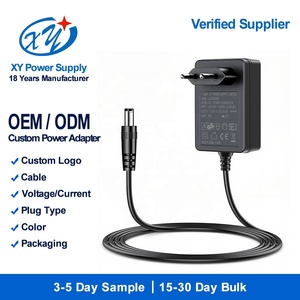
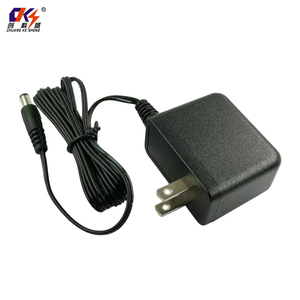
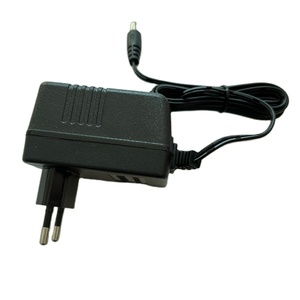
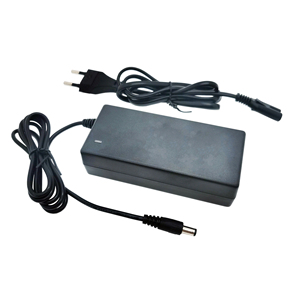
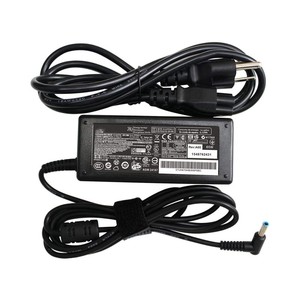
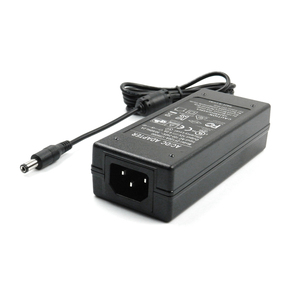
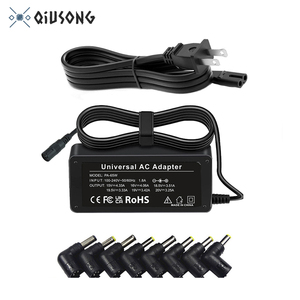
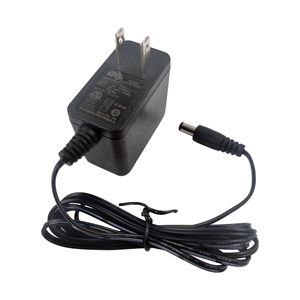
As consumer electronics, automotive interiors, medical devices, and smart workplace infrastructure rapidly migrate toward total cable-free power delivery, searching for top China wireless charger factories and suppliers has become a pivotal strategic imperative for global brands, procurement managers, and OEM/ODM engineering teams. China—specifically the Guangdong supply chain cluster spanning Shenzhen, Dongguan, and Huizhou—accounts for over 80% of global inductive and resonant power conversion hardware production.
However, modern wireless power procurement extends far beyond acquiring basic copper coils and plastic housings. Today’s high-performance wireless charging ecosystems demand extreme power density, flawless thermal dissipation, rigorous Electromagnetic Interference (EMI) containment, and strict compliance with global wireless standards such as the Wireless Power Consortium (WPC) Qi2 protocol. Understanding the technical architecture, supplier qualification benchmarks, and integrated AC/DC power supply foundations is critical to avoiding product recalls, thermal throttling issues, and regulatory non-compliance.
Core Procurement Insight: A high-performance wireless charger is only as stable as its front-end AC/DC power converter. Voltage ripple, transient response latency, and thermal noise in the power brick directly impact magnetic field coupling stability and charging speed.
Wireless charging technology relies primarily on Near-Field Magnetic Induction and Resonant Coupling. To achieve maximum power transfer efficiency (PTE) between the transmitter (Tx) coil inside the charging pad and the receiver (Rx) coil inside the mobile terminal, precise frequency adjustment and duty-cycle control are mandatory.
B2B buyers and sourcing directors must align their product roadmaps with key technological transitions currently reshaping the Chinese electronics manufacturing sector:
Migration from Qi 1.3 to Qi2 MPP standard, incorporating magnetic alignment rings and 15W high-efficiency wireless power transfer identical to Apple MagSafe architecture across both iOS and Android ecosystems.
Adoption of Gallium Nitride (GaN) semiconductor switches in both the AC/DC power adapter brick and the internal H-bridge inverter, enabling ultra-compact form factors and reduced thermal output.
Surging market demand for space-saving, travel-friendly charging hubs capable of concurrently powering phones (15W), smartwatches (5W), and TWS earbuds (3W) with independent power management channels.
When selecting OEM/ODM partners in China, reviewing detailed technical parameter capabilities helps engineering leads select the exact power stage required for their end-user applications.
| Power Platform / Adapter Category | Voltage & Current Range | Efficiency Grade | Isolation & Safety Compliance | Optimal OEM/ODM Application |
|---|---|---|---|---|
| Compact Wall-Mount Switching Supply | 5V/2A, 12V/3A, 24V/0.5A | DoE Level VI / CoC Tier 2 | CE, GS, TUV, FCC, RoHS, Class II | Single-coil desktop wireless pads, smart home sensors |
| High-Power Universal AC/DC Adapter | 12V-24V Adjustable (Up to 10A) | 90%+ Full Load Efficiency | CB, ETL, FCC, Over-Voltage/Current Prot. | Multi-station commercial wireless charging kiosks, furniture hubs |
| GaN Multi-Output Power Brick | USB-PD 3.1 (5V-28V Dynamic) | 94% Peak Efficiency | UL/IEC 62368-1, EN 55032 Class B EMC | High-wattage 3-in-1 Qi2 magnetic desktop charging stands |
| Industrial Linear AC/AC Transformer | 110VAC/230VAC to 9VAC-24VAC | Heavy-duty Iron Core Design | High Dielectric Breakdown Isolation | Low-noise laboratory equipment & sensitive wireless telemetry |
With decades of established heritage in power supply engineering, custom transformer manufacturing, and rigid quality assurance protocols, our production framework provides B2B clients with significant technical and logistical advantages over standard assembly shops.
Our engineering design methodology begins long before mass production starts on the factory floor. By applying established topological architectures—including flyback, forward, LLC resonant, and active clamp flyback (ACF)—we mitigate design risk and accelerate time-to-market for specialized projects.
Expert insights addressing compliance certification, factory auditing, thermal testing, and customization options when importing wireless charging products from China.
Qi-compatible means a manufacturer built a product following general Qi guidelines without formal submission to the Wireless Power Consortium. Official Qi2 certification requires testing in an authorized laboratory (ATL) to verify magnetic alignment, full compliance with the Magnetic Power Profile (MPP), precise FOD protection, and inter-operability across devices.
The wireless charger transmitter bridge converts incoming DC voltage into high-frequency AC magnetic fields. If the AC/DC wall adapter has poor voltage regulation or high ripple noise, it introduces frequency instability, causes thermal spikes in the ferrite coil, and can trigger unwanted safety shut-offs in smartphones.
Tier-1 factories employ multi-layered thermal management strategies: high-thermal-conductivity graphite sheets, aluminum heat sinks, internal NTC thermistors for dynamic thermal throttling, optimized PCB copper weight (2oz+), and encapsulated thermal potting compounds that dissipate heat evenly across the housing.
Yes. By utilizing existing catalog PCB platforms and altering secondary winding ratios, output resistor dividers, or cable harnesses, we deliver fully customized electrical output profiles without triggering costly complete tooling cycles or high minimum order quantities (MOQs).
For North America: FCC Part 15 (EMC), UL/ETL safety compliance (UL 62368-1 standard), and DoE Level VI efficiency. For the European Union: CE mark (encompassing Low Voltage Directive LVD and EMC Directive), TUV/GS safety marks, RoHS environmental restriction compliance, and EU CoC Tier 2 energy efficiency.
Every manufactured unit passes automated end-of-line (EOL) functional testing where standardized metallic discs (copper, aluminum, steel) are placed on the charging surface. Test fixtures verify that power transmission terminates within designated millisecond thresholds before units are packed for shipment.
Consult with our senior power engineering team today. Request product samples, technical datasheets, factory audit reports, or custom power adapter specifications.