 Power Conversion Engineering
Talk to an engineer (888) 597-9255
Products Power Conversion Engineering High-efficiency switching power supplies, custom AC/DC adapters, wide-input DC/DC converters, and linear power units designed for energy storage system (ESS) management units, BMS controllers, and industrial power grids.
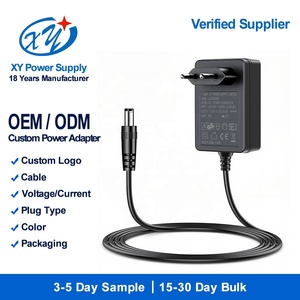
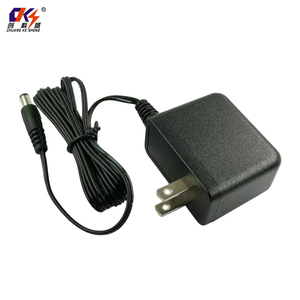
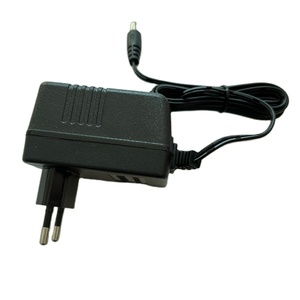

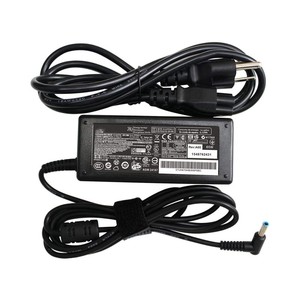
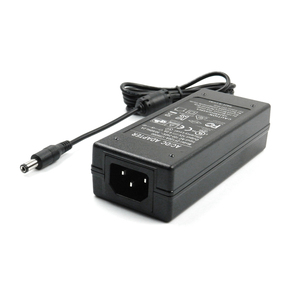
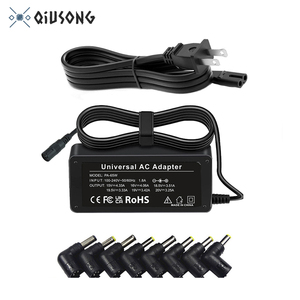
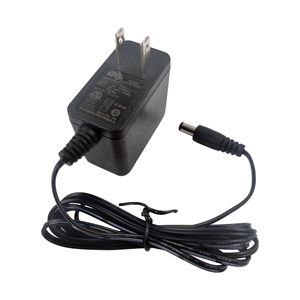
The global transition toward renewable energy generation—specifically utility-scale solar photovoltaic (PV) and wind power integration—has catalyzed an unprecedented surge in demand for commercial, industrial, and grid-scale Battery Energy Storage Systems (BESS). China has established itself as the world’s primary epicenter for energy storage manufacturing, hosting over 70% of the global lithium-ion battery cell manufacturing capacity, advanced Power Conversion System (PCS) assembly lines, and integrated Energy Management System (EMS) software infrastructure.
For international procurement directors, engineering original equipment manufacturers (OEMs), and utility system integrators, selecting the optimal manufacturing partner in China requires a comprehensive multi-layered audit. The manufacturing landscape spans across specialized Tier-1 cell chemistry vendors (such as CATL, BYD, EVE Energy, and REPT Battero), power electronics pioneers specializing in bidirectional inverters and high-voltage DC/DC converters, and turnkey balance-of-plant (BOP) assembly factories.
SEO & Sourcing Insights: Evaluating a Chinese Energy Storage Factory demands looking beyond initial nominal capacity costs ($/kWh). Leading engineering auditors focus heavily on long-term cycle degradation curves, thermal management safety architectures (liquid cooling vs. forced air), auxiliary power supply conversion efficiencies, and international certification compliance (UL 1973, UL 9540A, IEC 62619, and NFPA 855).
Power conversion reliability forms the critical backbone of any energy storage deployment. From high-voltage industrial battery racks operating at 1000VDC–1500VDC down to localized low-voltage auxiliary controllers powered by precision AC/DC wall-mount and switching adapters (such as 12V, 24V, and 48V power supplies), the system's operational continuity depends on high-grade electrical components engineered for zero-downtime environments.
When evaluating Tier-1 vs Tier-2 energy storage suppliers in China, international procurement engineers must audit four fundamental technical pillars: Electrochemical Integrity, Thermal Management Dynamics, Power Conversion Conversion Efficiency, and Environmental Reliability Engineering.
Modern commercial BESS architecture has largely transitioned to prismatic LiFePO4 cells due to their superior chemical safety profile compared to nickel-manganese-cobalt (NMC) formulations. Key metrics include:
• Nominal Capacity & Energy Density: High-density 314Ah and 320Ah cells are replacing legacy 280Ah cells, enabling standard 20-foot shipping containers to house up to 5 MWh+ of usable capacity.
• Cycle Life Expectancy: Premium OEM factories guarantee 6,000 to 10,000 cycles at 80% Depth of Discharge (DoD) under standard 0.5C/0.5C charge/discharge profiles.
• Galvanic Isolation & PCB Construction: Internal switching power supplies and DC/DC converter modules built into the cell monitoring units must offer isolation ratings from 1.5kVDC to 8kVDC to prevent transient voltage spikes from damaging control microcontrollers.
An often overlooked vulnerability in containerized energy storage units is the quality of auxiliary switching power supplies. The auxiliary circuit drives critical system sub-components, including coolant pumps, HVAC blowers, fire suppression solenoids, remote telemetry routers, and BMS master controllers.
Applying industrial-grade power conversion technology—such as modified-standard AC/DC wall-mount and open-frame switching adapters spanning 1W to 3,600W—ensures that control electronics maintain continuous operation across broad input voltage swings (85 VAC to 264 VAC or 10 VDC to 310 VDC). Wide-temperature operation (-40°C to +70°C ambient or custom designs operating up to +125°C) prevents unexpected thermal shutdowns in hostile desert or arctic installations.
| Evaluation Parameter | Standard Commercial Grade | Tier-1 OEM Industrial Grade | Mission-Critical Defense/Utility Grade |
|---|---|---|---|
| Battery Chemistry | Standard LiFePO4 (280Ah) | High-Density LFP (314Ah / 320Ah) | Ultra-Safe LFP or Sodium-Ion |
| Thermal Architecture | Forced Air Cooling | Liquid Cooling (Glycol/Water) | Immersion Liquid Cooling |
| Auxiliary Power Isolation | 1.5 kVDC Isolation | 3.0 kVDC Isolation | Up to 8.0 kVDC High Isolation |
| Operating Temperature | -10°C to +50°C | -30°C to +65°C | -55°C to +125°C (Custom Potted) |
| Compliance Approvals | CE, FCC Class A | UL 1973, UL 9540A, IEC 62619, CE, GS | MIL-STD-810H, MIL-STD-1275, UL 9540A |
Synthesizing over six decades of power conversion design heritage, our manufacturing framework bridges high-precision electronics engineering with robust Chinese manufacturing scale. Whether deploying standard catalog AC/DC power adapters, customized switching units, or purpose-built industrial converters, our engineered solutions emphasize five core principles:
1. Topologies Matched to Purpose: Leveraging proven power converter topologies—including LLC resonant converters, active PFC flybacks, zero-voltage switching (ZVS) buck-boost regulators, and forward conversion stages—eliminates experimental risk and ensures rapid qualification.
2. Modified-Standard Agility: Recognizing that off-the-shelf catalog models rarely meet 100% of complex BESS enclosures, over 65% of our projects are delivered as modified-standard solutions. Engineers adjust output voltage trims (e.g., 5V, 9V, 12V, 15V, 19V, 24V, or dual/triple outputs), custom wire harnesses, specialized IP-rated encapsulation potting, conformal coating, or thermal baseplate heat-sinks while maintaining foundational compliance testing data.
3. Severe Environment Ruggedization: Energy storage sites face extreme ambient stress, from offshore marine humidity to high-altitude solar farms. Our engineered components support conformal coating against corrosive atmospheres, potted mechanical builds resistant to high shock and vibration, and conduction-cooled baseplates removing heat without mechanical fans.
4. Strict E-E-A-T Quality Verification: Grounded in Search Quality Guidelines and technical transparency, every product datasheet is backed by verified laboratory test reports. We enforce strict anti-counterfeit component sourcing protocols, maintain full lot traceability for power semiconductors, and adhere to environmental directives including RoHS and REACH.
Global procurement teams structuring long-term supply chain agreements with Chinese manufacturers must align their procurement strategies with four key technical transformations shaping the energy storage industry over the next decade:
The energy storage industry is rapidly phasing out 50Ah and 100Ah pouch cells, as well as legacy 280Ah prismatic units. The new market standard is dominated by 314Ah, 320Ah, and upcoming 500Ah+ ultra-large prismatic cells. This shift dramatically reduces the total number of internal electrical connections, busbars, and BMS monitoring leads within a 5MWh container, lowering manufacturing labor costs and improving overall system reliability.
Liquid cooling technology has evolved from a premium option into the primary specification for C&I and utility-scale projects above 100kWh. By maintaining cell-to-cell temperature differentials within ≤ 3°C, liquid cooling prevents localized thermal degradation, extends overall battery pack lifespan by up to 20%, and lowers continuous auxiliary HVAC power consumption by nearly 40%.
As traditional fossil-fueled thermal power plants decommission, power grids lose physical mechanical inertia. Next-generation Power Conversion Systems (PCS) produced in China are integrating virtual synchronous generator (VSG) algorithms and grid-forming capabilities. These advanced inverters inject fast frequency response (FFR) and reactive power within milliseconds to stabilize utility grid voltage phase angles.
International regulatory mandates—such as DoE Level VI in the United States and EU CoC Tier 2 in Europe—require auxiliary external power adapters and internal power converters to operate at peak electrical efficiency with ultra-low no-load standby losses (<0.075W). Modern BESS factories are embedding these high-efficiency AC/DC adapters (offering CE, GS, TUV, UL, and FCC safety marks) across all control sub-assemblies to optimize overall system round-trip efficiency (RTE).
Below are critical technical and commercial questions answered by our application engineering and procurement audit teams:
For complete battery systems, mandatory international certifications include UL 1973 (for stationary battery packs), UL 9540A (thermal runaway fire propagation testing), IEC 62619 (industrial lithium safety), UN 38.3 (transportation safety), and CE/FCC compliance. For sub-tier electronic power supplies and adapters powering control circuits, look for UL, ETL, CE, GS, TUV, and FCC safety approvals matching IEC/UL 62368-1 standards.
A modified-standard unit begins with an existing, safety-certified catalog power platform and adjusts specific parameters—such as output DC voltage trim, custom wire harness lengths, specialized connectors, conformal coating, or thermal derating curves. This approach dramatically reduces tooling costs and shortens engineering lead times to just weeks. A fully custom power supply is engineered from the ground up starting from a blank PCB schematic, reserved for complex mechanical envelopes or specialized military/medical compliance requirements.
Utility-scale battery banks operate at high DC voltage potentials (up to 1500VDC). High galvanic isolation (typically 1.5kVDC to 8kVDC) between primary input power, secondary output logic power, and chassis ground prevents dangerous high-voltage transients from penetrating sensitive low-voltage microcontrollers, communication gateways, and operator human-machine interfaces (HMI).
Yes. By utilizing industrial-grade component selection, premium high-temperature electrolytic capacitors, conformal PCB coatings, and potted aluminum enclosures, our power units operate reliably across extended temperature windows ranging from -40°C to +70°C standard, with custom designs capable of surviving extreme ambient environments from -55°C to +125°C.
Tier-1 manufacturers typically provide a 5-year to 10-year standard limited performance warranty on complete battery containers, guaranteeing at least 60% to 70% retained energy capacity at the end of the warranty term. Sub-system power conversion electronics and auxiliary switching adapters should carry an MTBF (Mean Time Between Failures) rating exceeding 100,000 to 250,000 operational hours.
Simply click the "Inquire Now" button on any product listing within this directory or contact our engineering application team directly. Provide your project's target input AC/DC voltage range, required output channels, maximum wattage load, target environmental rating, and applicable safety compliance standard. Our application engineers respond with technical recommendations and preliminary mechanical drawings within 24 to 48 hours.
Connect with our senior engineering team to discuss custom power conversion units, modified-standard AC/DC switching power supplies, or Tier-1 Chinese factory auditing frameworks.