 Power Conversion Engineering
Talk to an engineer (888) 597-9255
Products Power Conversion Engineering Engineered to international IEC/GB standards, offering proven energy efficiency, solid copper/aluminum windings, and advanced dielectric thermal management for utility grids, renewable power plants, and industrial substations.
An authoritative breakdown for Utility Directors, EPC Engineers, and Electrical Procurement Officers seeking long-term operational resilience and optimized Total Cost of Ownership (TCO).
The global energy landscape is undergoing a monumental shift driven by renewable integration, grid modernization, industrial electrification, and aging infrastructure replacement. Central to this transformation is the power transformer—the vital electromagnetic node that bridges power generation, high-voltage transmission, and localized distribution networks. Selecting the right power transformer manufacturer is no longer merely a commercial purchasing decision; it is a strategic risk-mitigation process that governs grid stability, operational efficiency, and safety compliance over a 30-to-50-year lifecycle.
This technical whitepaper evaluates the market leaders in electrical power conversion, detailing engineering standards (such as IEC 60076, IEEE C57, ANSI, and GB/T requirements), core material innovations, and critical procurement criteria. Whether sourcing high-capacity 230kV substation step-down transformers or compact SCB dry-type distribution units, understanding manufacturer capabilities, lead times, and thermal derating performance is paramount for successful project execution.
Evaluating global original equipment manufacturers (OEMs) and high-capacity transformer suppliers by manufacturing scale, technological specialization, and grid reliability records.
| Manufacturer / Supplier | Primary Voltage Range | Key Product Specialization | Core Strengths & Market Position |
|---|---|---|---|
| Hitachi Energy | Up to 1,150 kV HVDC / AC | Ultra-High Voltage (UHV) & Digital Transformers | Global leader in HVDC transformers, Eco-efficient ester-filled units, advanced digital fleet management. |
| Siemens Energy | Up to 800 kV AC / HVDC | Sensformer® & Mobile Substation Units | Integrated IoT connectivity, low-noise designs, high short-circuit strength for critical infrastructure. |
| GE Vernova | Up to 765 kV AC | Grid Solutions & Substation Transformers | Strong North American footprint, massive installed base, specialized offshore wind step-up units. |
| Schneider Electric | Up to 170 kV Medium/High Power | Trihal Dry-Type & Smart Distribution Units | Pioneer in dry-type resin insulation, energy efficiency, connected distribution networks. |
| Hyundai Electric | Up to 765 kV AC | Heavy Power Transformers & Shunt Reactors | High reliability in extreme climate conditions, fast execution for utility-scale substation projects. |
| TBEA Co., Ltd. | Up to 1,100 kV UHV AC / DC | Ultra-High Voltage & Massive Power Transformers | World's largest production capacity, dominant supplier for long-distance renewable transmission. |
| China XD Group | Up to 1,000 kV AC / 800 kV DC | HV & EHV Power Transmission Equipment | Comprehensive R&D in gas-insulated transformers (GIT) and high-voltage grid equipment. |
| Mitsubishi Electric | Up to 500 kV AC | Shell-form Power Transformers & GIS Systems | Renowned for exceptional seismic resistance, shell-form expertise, and long-term operating durability. |
| Toshiba Energy Systems | Up to 765 kV AC | Substation Power & Industrial Systems | Pioneering compact footprint designs, advanced cooling (ODAF/ODWF), and solid safety track records. |
| Custom OEM / Partner Networks | 10kV to 230kV (Up to 100MVA) | Custom Power, S11-S20 Oil & SCB Dry-Type | Agile lead times, bespoke engineering (MIL-spec, high-ambient derating, custom taps), high cost-performance ratio. |
Combining over 60 years of power conversion heritage with modern precision manufacturing to deliver defect-free transformers tailored to exact technical specifications.
We utilize oxygen-free electrolytic copper conductors with high mechanical rigidity and high-purity insulating paper wrapping, guaranteeing superior resistance against electrodynamic short-circuit forces during grid faults.
Constructed from high-permeability, grain-oriented cold-rolled silicon steel sheets (CRGO) with step-lap miter jointing, dramatically reducing no-load losses, excitation current, and acoustic noise emissions.
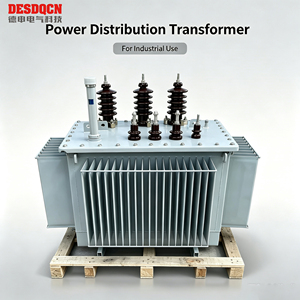
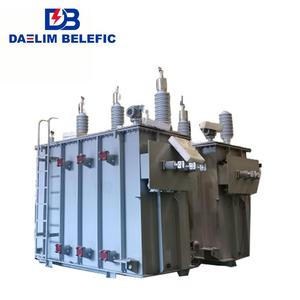
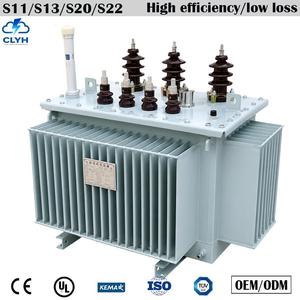
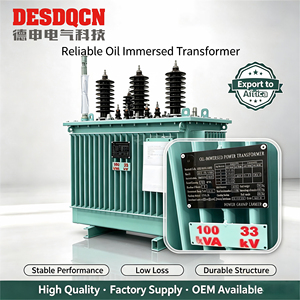
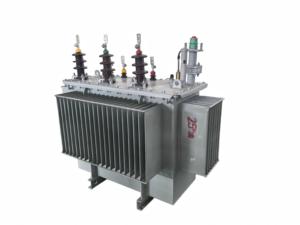
Our S11/S13/S20 oil-immersed tanks are fully sealed with corrugated radiators, isolating the dielectric oil from atmospheric moisture and oxygen to prevent insulation aging and eliminate routine oil maintenance.
Every single power transformer leaving our manufacturing facility undergoes routine testing according to IEC 60076 and IEEE C57 standards. This includes winding resistance measurements, voltage ratio and vector group verification, short-circuit impedance testing, separate-source AC withstand voltage testing, induced overvoltage withstand testing, and precision partial discharge analysis (< 5 pC for dry-type units).
Key market factors redefining how utility operators, EPC contractors, and industrial buyers evaluate, purchase, and deploy electrical transformers globally.
Procurement teams are moving away from selecting transformers based solely on upfront purchase price. Modern purchasing evaluation algorithms heavily weight no-load losses (core losses) and load losses (copper losses) calculated over a 30-year operational window. High-efficiency S20-tier oil-immersed transformers and amorphous alloy core units command higher initial capital expenditure but yield massive net savings through reduced energy dissipation during continuous operation.
Due to surging transformer demand from data center expansion and EV charging networks, tier-1 global OEM lead times have stretched beyond 80 to 120 weeks for high-voltage units. Wise procurement officers are diversifying their vendor bases by partnering with certified medium-voltage/high-voltage regional manufacturers capable of delivering custom-engineered 10kV to 230kV units in 12 to 24 weeks without compromising IEEE/IEC certification integrity.
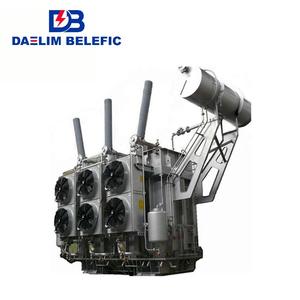
Environmental regulations and fire safety codes are accelerating the replacement of traditional mineral oil with natural and synthetic ester fluids. Ester-filled transformers offer a significantly higher fire flash point (>300°C vs 140°C for mineral oil), classified as K-class less-flammable fluids. Furthermore, ester liquids are readily biodegradable, shielding companies from severe environmental remediation costs in the event of liquid spillage near waterways.
Exploring breakthroughs in material science, digital monitoring, and solid-state power electronics driving the next generation of power conversion systems.
Future transformers are evolving into intelligent edge nodes. Integrated optical fiber temperature sensors, micro-acoustic partial discharge sensors, and automated online Dissolved Gas Analysis (DGA) modules continuously feed real-time operational diagnostics to cloud-based Asset Performance Management (APM) platforms, enabling predictive maintenance long before catastrophic dielectric failure occurs.
With the rapid proliferation of DC microgrids, solar PV arrays, and battery energy storage systems (BESS), Solid-State Transformers incorporating Silicon Carbide (SiC) power semiconductors are gaining momentum. SSTs offer high-frequency isolation, dynamic voltage regulation, continuous AC-DC bidirectional conversion, and a fraction of the physical footprint of traditional 50/60Hz electromagnetic units.
Modern commercial buildings and industrial plants produce heavy non-linear harmonic loads due to variable frequency drives (VFDs) and computer servers. Next-generation distribution transformers are designed with specialized K-factor ratings (K-4 to K-20), electrostatic shielding between primary and secondary windings, and structural damping materials that suppress magnetostrictive core hum in urban indoor environments.
Direct answers from our senior power applications engineers addressing technical selection, installation environments, standards compliance, and custom manufacturing inquiries.
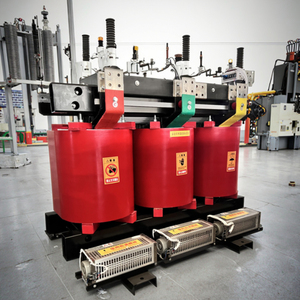
Dry-type transformers (such as the SCB10 series) utilize solid epoxy resin casting to encapsulate the coils, relying on natural air (AN) or forced air (AF) cooling. They are inherently non-flammable, generate zero liquid leaks, and are mandatory for high-density indoor installations, high-rise buildings, underground subways, and hospitals. Oil-immersed transformers (S11-M, S13-M, S20-M) use mineral or ester oil as both the dielectric medium and cooling agent. Oil units offer superior thermal dissipation, higher kVA/MVA capacity limits, self-healing dielectric properties, and lower upfront cost, making them the preferred choice for outdoor substations, overhead pole-mounts, and utility distribution grids.
The "S" designation in national and international transformer standards dictates energy efficiency brackets. S11 represents standard energy-efficient performance. S13 reduces no-load losses (core losses) by approximately 25% to 30% compared to S11 by incorporating refined grain-oriented silicon steel cores. S20 represents ultra-high efficiency standards, reducing no-load losses by over 40% and load losses by over 10% relative to older benchmarks. S20 units comply with ultra-low carbon grid mandates and deliver the lowest long-term operational costs.
Partial discharge refers to localized electrical breakdowns within tiny voids or micro-cracks inside the solid resin insulation system under high voltage stress. Over time, continuous partial discharge erodes the resin cast, eventually leading to catastrophic dielectric breakdown and transformer short-circuit. Premium dry-type power transformers undergo strict factory partial discharge screening; maintaining PD levels below 5 Pico-Coulombs (pC) guarantees a operational lifetime exceeding 30 years without insulation failure.
Yes. Standard transformers are rated for operation up to 1000 meters altitude and ambient temperatures between -25°C and +40°C. For specialized mining, desert solar installations, or high-altitude mountain locations (>2000m), air density decreases and heat dissipation drops. Our engineering team customizes the insulation class (Class H or Class C for dry-type), expands radiator cooling surfaces, adjusts clearance distance (creepage margin) on high-voltage bushings, and applies thermal derating calculations to ensure 100% rated continuous output without overheating.
To receive an exact technical proposal and quotation, engineering buyers should provide: (1) Rated Capacity in kVA or MVA; (2) Primary (Input) and Secondary (Output) Voltages in kV; (3) Number of Phases and Frequency (50Hz or 60Hz); (4) Vector Group / Connection Symbol (e.g., Dyn11, YNd11); (5) Tapping range and tap-changer type (Off-Circuit Tap Changer - OCTC, or On-Load Tap Changer - OLTC); (6) Short-Circuit Impedance percentage (%Uk); (7) Cooling Type (ONAN, ONAF, AN, AF); and (8) Operating Environment constraints (indoor vs outdoor, ambient temp, altitude, seismic zoning).
Connect directly with our senior power conversion engineering team for custom electrical transformer design, high-voltage substation layout reviews, or competitive tender pricing.