 Power Conversion Engineering
Talk to an engineer (888) 597-9255
Products Power Conversion Engineering Qualified Standard & Custom Power Conversion Modules for Global OEM/ODM Integration
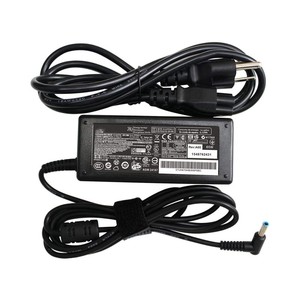
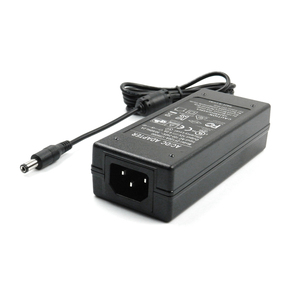
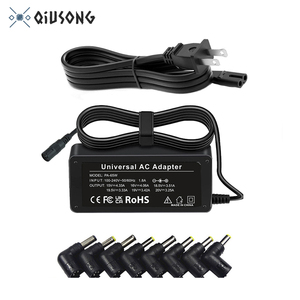
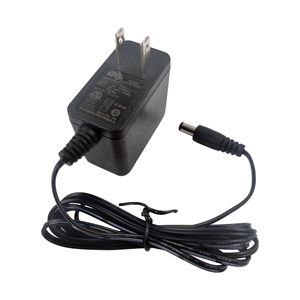
In an era characterized by rapid electrification, industrial automation, medical equipment miniaturization, and stringent energy regulations, selecting the right power supply supplier and exporter is a critical strategic decision. A power conversion unit is no longer merely a commodity component; it is the fundamental heart of system reliability, electromagnetic compatibility (EMC), operational efficiency, and global safety compliance.
According to modern power conversion engineering standards—such as IEC/UL 60601-1 for medical devices, MIL-STD-1275/461 for military ground platforms, and EN 50155 for railway electronics—designing robust AC/DC power supplies and DC/DC converters requires deep technical expertise, rigorous thermal modeling, and precise component selection. Original Equipment Manufacturers (OEMs) and Original Design Manufacturers (ODMs) face mounting pressure to balance high power density with strict regulatory compliance, low standby loss (DoE Level VI / EU CoC Tier 2), and long product life cycles.
Over six decades of domestic and international power engineering heritage (established in 1961), utilizing proven circuit topologies—LLC resonant, active PFC flyback, forward, and synchronous buck/boost architectures.
Comprehensive in-house reliability testing protocols including Highly Accelerated Life Testing (HALT), Burn-in at full load, thermal imaging derating, and radiated/conducted emissions testing to CISPR 32/EN 55032 Class B.
Complete regulatory documentation support for FDA medical device submissions, ISO 9001/13485 quality control systems, conflict-free mineral sourcing, and strict anti-counterfeit component supply chain policies.
When specifying AC/DC or DC/DC power platforms, design teams must evaluate mechanical packaging, isolation ratings, thermal management methods, and conversion efficiency. Below is an engineering comparison of primary power supply platforms manufactured by global top-tier exporters.
| Platform Category | Power Output Range | Typical Input Windows | Isolation & Safety Target | Optimal Industry Application |
|---|---|---|---|---|
| Isolated DC/DC Converters | 0.5W to 1,500W | 5 / 12 / 24 / 48 / 110 VDC (4:1 Wide Input) | 1.5 kVDC to 8 kVDC Reinforced | Medical instrumentation, distributed bus, transit systems |
| Non-Isolated Regulators (POL) | 0.5W to 50W | Point-of-Load (3.3V, 5V, 12V Bus) | Non-Isolated (Common Ground) | Microcontrollers, FPGA rails, IoT sensing nodes |
| High-Voltage DC/DC Modules | 5W to 300W | 110VDC to 310VDC High Bus | 3 kVAC Functional / Reinforced Isolation | Smart grid equipment, EV traction, energy storage |
| AC/DC Open Frame & Enclosed | 3W to 3,600W | Universal 85 – 264 VAC / 90 – 305 VAC | UL/IEC 62368-1, 2xMOPP Medical 60601-1 | Industrial automation cabinets, laser machinery, robotics |
| DIN Rail Industrial Supplies | 10W to 480W | 85 – 264 VAC Universal Input | Class I Double Isolation, Overload Protection | Process automation, PLC control racks, factory robotics |
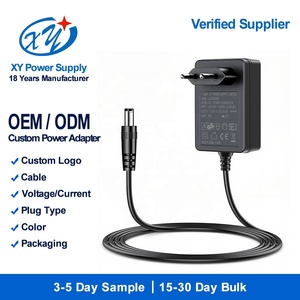
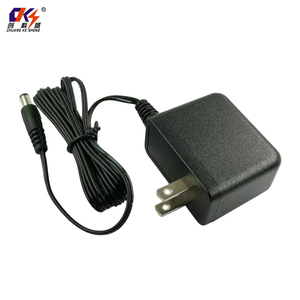
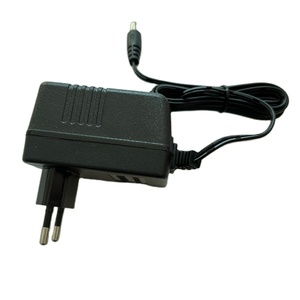
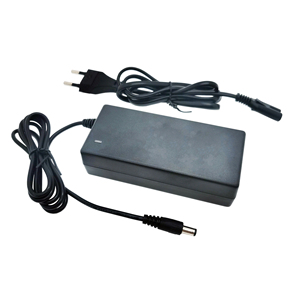
| External Adapters (Level VI) | 2.5W to 250W | 90 – 264 VAC Wall/Desktop | DoE Level VI, EU CoC Tier 2, Class II Isolation | Portable medical diagnostic tools, telecom, commercial gear |
A primary competitive differentiator for premier manufacturers like Wall Industries is the ability to bridge the gap between off-the-shelf catalog models and complex, clean-sheet engineering projects. OEMs frequently find that standard off-the-shelf units satisfy 90% of electrical requirements but fail to meet spatial envelopes, custom connector demands, or extreme thermal derating profiles.
The modified-standard methodology utilizes a pre-qualified, fully certified core platform and modifies specific parameters according to application requirements. This significantly reduces NRE (Non-Recurring Engineering) costs and shortens compliance testing timelines from months to weeks.
Integration of IP67/IP68 waterproof connectors, Molex/Hirose headers, custom cable lengths, and strain reliefs.
Application of silicone potting, polyurethane encapsulation, or conformal coating for extreme humidity, salt spray, and vibration resistance.
Precision output voltage calibration (e.g., non-standard 13.8V, 28V, or dual asymmetric rails) to match proprietary system electronics.
When applications present non-standard physical dimensions, multi-channel power distribution needs, or extreme environmental demands (such as defense ground vehicles operating under MIL-STD-1275 or aerospace platforms subject to high thermal shock), full custom design is necessary. Engineering teams collaborate directly with OEM architects from conceptual topology selection through layout optimization, thermal dissipation modeling (conduction, convection, forced-air), and certified laboratory compliance testing.
The global power supply procurement market is undergoing a structural transition driven by wide-bandgap (WBG) semiconductors, digital control loops, and stringent decarbonization policies. Sourcing managers and system engineers must align procurement strategies with these core industry trajectories:
Gallium Nitride (GaN) and Silicon Carbide (SiC) power switches are replacing traditional Silicon MOSFETs. WBG devices exhibit significantly lower switching losses, enabling power supplies to operate at higher frequencies (hundreds of kilohertz to megahertz). This dramatically reduces magnetic component sizes (transformers and inductors), yielding power densities exceeding 30 Watts per cubic inch while raising efficiency beyond 96%.
Industrial 4.0 and smart factory setups demand intelligent power supplies equipped with digital microcontrollers and telemetry interfaces (I2C, PMBus, CANopen). Systems can monitor real-time output current, internal hot-spot temperatures, input voltage transients, and remaining component life (predictive maintenance), eliminating unscheduled operational downtime.
With the expansion of Electric Vehicles (EV), AGVs, solar microgrids, and high-voltage DC distribution, power supplies are required to handle exceptionally wide input ranges (e.g., 4:1 and 12:1 input ratios for DC/DC converters; up to 305VAC for AC/DC drivers). This enables a single power supply SKU to operate globally across varied grid quality and battery voltage conditions.
Regulatory bodies globally are tightening idle efficiency limits. European Union CoC Tier 2 and US DoE Level VI standards demand no-load power consumption below 0.075W for low-power external adapters. Suppliers are adopting advanced burst-mode switching controllers to meet zero-watt standby expectations.
Detailed engineering and commercial guidance compiled by senior applications engineers to assist procurement teams during component qualification.
Our DC/DC converter portfolio spans from 0.5 Watts up to 1,500 Watts, whereas our AC/DC power supplies range from 1 Watt up to 3,600 Watts. Form factors include board-mount encapsulated modules, PCB through-hole pin formats, open-frame chassis designs, U-channel builds, enclosed units with active fan cooling, DIN rail mounts, and external wall/desktop power adapters.
Medical power supplies complying with IEC/EN 60601-1 require Means of Patient Protection (MOPP). A 2xMOPP qualification demands 4,000 VAC galvanic isolation, 8mm creepage and clearance distances, and extremely low earth leakage current (typically < 300 µA, or < 10 µA for cardiac BF/CF patient-applied parts). Standard industrial power supplies certified to IEC 62368-1 typically feature only 1.5 kVAC to 3 kVAC isolation and higher allowable leakage currents.
In fanless or sealed IP67 enclosures, heat removal relies entirely on conduction cooling through an integrated metal baseplate attached to the customer system chassis. Engineering derating curves dictate full power operation up to specified ambient temperatures (e.g., 50°C or 70°C), above which output power is linearly derated (typically 2.5% per °C) to prevent component over-temperature shut down.
Ruggedized defense power supplies are designed to withstand MIL-STD-1275 (28V DC input voltage spikes and transients in military ground vehicles), MIL-STD-704 (aircraft electrical characteristics), and MIL-STD-461 (conducted and radiated electromagnetic interference limits). Mechanical designs often require full potting to meet MIL-STD-810 shock and vibration requirements.
To begin a custom or modified power evaluation, procurement or engineering leads should provide: input voltage spectrum, nominal and peak output current requirements, target efficiency, envelope dimensions, cooling method (conduction/convection/forced-air), thermal ambient limits, required safety agency marks, and projected annual production volumes. Clicking the inquiry button on any product card connects directly to application engineering support.
Whether you require immediate delivery of certified standard switching adapters, rapid turn-around on modified-standard prototypes, or full custom design engineering for high-reliability applications, our application engineers are ready to assist.