 Power Conversion Engineering
Talk to an engineer (888) 597-9255
Products Power Conversion Engineering Explore our core catalog of standard, modified-standard, and custom AC/DC switching power supplies and transformers. Built for high energy efficiency, rugged thermal dissipation, and international regulatory compliance.
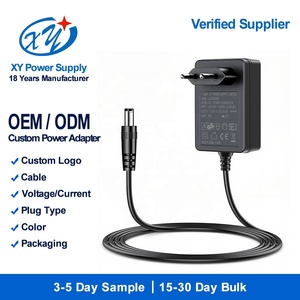
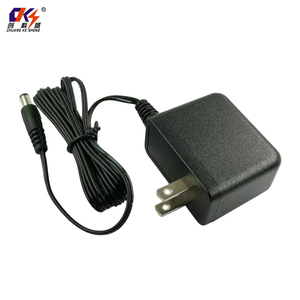
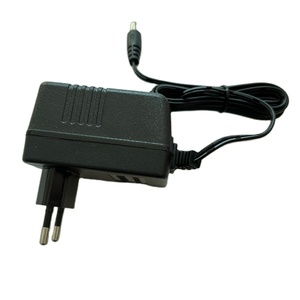
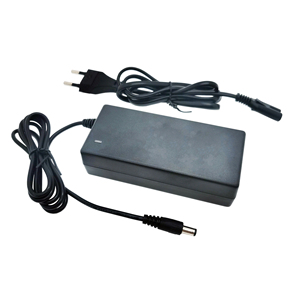
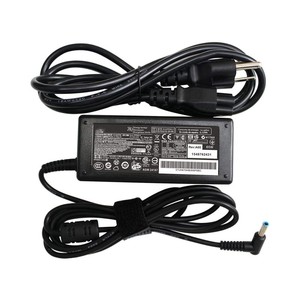
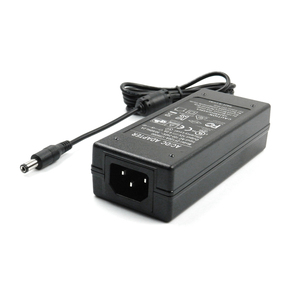
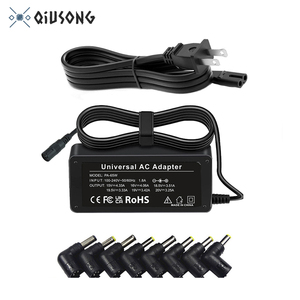
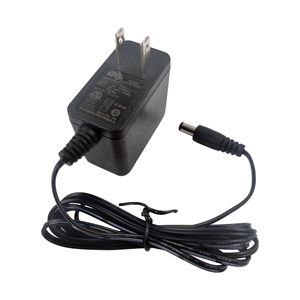
In modern industrial automation, medical electronics, defense platforms, and telecommunications infrastructure, the power conversion stage is far more than a simple transformer or utility brick. It represents the vital link defining system uptime, electromagnetic compatibility (EMC), thermal longevity, and overall energy efficiency. As a leading high-reliability power supply manufacturer with an engineering legacy spanning over six decades (since 1961), our mission is providing full-spectrum Original Equipment Manufacturer (OEM) and Original Design Manufacturer (ODM) capabilities across standard catalog platforms, modified-standard designs, and ground-up bespoke topology engineering.
Navigating global regulatory landscapes demands meticulous attention to safety insulation, harmonic emissions, and operating temperature envelope management. Whether integrating zero-voltage switching (ZVS) flyback topologies for compact wall-mount adapters or high-density LLC resonant topologies for enclosed chassis-mount supplies, our power engineering team applies decades of domain experience to optimize every milliwatt of output.
Implementation of Active Power Factor Correction (PFC), LLC Resonant converters, and synchronous rectification achieving energy conversion efficiencies exceeding 94%.
Bespoke EMI filter design ensuring full compliance with CISPR 32 / EN 55032 Class B radiated emissions and UL 60601-1 2×MOPP medical insulation barriers.
Conduction baseplate cooling, IP67 conformal potting, and extreme temperature derating engineered for reliable operation from -55°C up to +125°C environments.
Sourcing power electronics involves evaluating critical design trade-offs between initial non-recurring engineering (NRE) costs, time-to-market speed, and exact mechanical form-factor integration. Our engineering pipeline is structured around three primary manufacturing engagement paths:
Ideal for rapid prototyping and standardized industrial equipment. Over 3,000 baseline catalog models including AC wall adapters, desktop bricks, DIN-rail modules, open-frame PCBs, and encapsulated DC/DC converters are pre-certified with global safety marks (UL, CE, GS, TUV, FCC, CB, ETL) for zero design-in delay.
When an existing catalog unit meets 90% of your electrical requirements, our engineering team can rapidly implement modified-standard revisions. This includes trimming output voltages (e.g., custom 13.8V, 28V, or 48V outputs), adjusting internal wire harnesses, integrating specific industrial connectors (M12, Molex, Barrel, Terminal Block), modifying potted enclosures for IP-rated waterproofing, or tweaking EMI filter stages. Modified-standard projects dramatically reduce qualification budgets while retaining base safety certifications.
For high-density airborne, rail transit, patient-connected medical carts, or rugged defense systems where space, weight, and extreme thermal conditions dictate custom mechanical envelopes. Ground-up custom programs cover full circuit design, magnetic component winding, thermal modeling, PCB layout optimization, prototype fabrication, and turnkey safety submission assistance.
To assist system architects and procurement teams in evaluating power supply platforms, the following matrix outlines core operational characteristics across major product categories:
| Platform Category | Power Output Range | Input Voltage Window | Efficiency Grade | Isolation Rating | Primary Industrial Sector |
|---|---|---|---|---|---|
| Wall Mount AC Adapters | 2.5W - 45W | 90 - 264 VAC Universal | DoE Level VI / CoC Tier 2 | 3.0 kVAC to 4.0 kVAC | IoT Devices, Routers, Medical Handhelds |
| Desktop AC/DC Adapters | 12W - 250W | 85 - 264 VAC with Active PFC | > 90% High Efficiency | 4.0 kVAC Isolation | Industrial PCs, Laboratory Instrumentation |
| Encapsulated DC/DC Modules | 0.5W - 1,500W | 4:1 / 8:1 Ultra-Wide Input | Up to 92% Peak | 1.5 kVDC to 8.0 kVDC | Railway Rolling Stock, Telecommunications |
| Open Frame & U-Frame Units | 15W - 600W | 85 - 264 VAC / High DC Bus | 88% - 94% ZVS Topology | 4.0 kVAC (2×MOPP) | Medical Devices, Embedded Automation |
| Industrial DIN Rail Supplies | 10W - 960W | Single & 3-Phase Wide AC | Up to 95% Active PFC | 3.0 kVAC Reinforced | PLC Cabinets, Factory Automation Systems |
| Custom Ruggedized Power | Up to 3,600W | Custom DC/AC Input Ranges | Custom Optimized | Up to 10.0 kVDC Custom | Defense (MIL-STD-1275), Aerospace, EVSE |
As industrial automation shifts toward smart factories, Industry 4.0 digitization, and green energy infrastructure, power supply architectures are undergoing radical technological shifts. B2B buyers and OEM engineers must account for the following emerging procurement trends to ensure long-term bill-of-materials (BOM) viability and competitive edge:
Gallium Nitride (GaN) and Silicon Carbide (SiC) power transistors are replacing traditional Silicon MOSFETs in high-density switching power supplies. GaN enables switching frequencies well over 500 kHz with minimal switching losses, allowing transformer magnetic volumes to shrink by 40% to 60%. This results in ultra-compact AC adapters and open-frame power supplies offering power densities exceeding 30W/in³, reducing cabinet dimensions and transport shipping weight.
Modern mission-critical equipment requires real-time insight into power system health. Smart industrial power supplies are increasingly integrated with digital microcontrollers offering PMBus, I2C, or CAN-bus telemetry. System operators can remotely monitor output voltage, load current, internal heatsink temperature, and operating hours, enabling predictive maintenance algorithms to flag aging power components before field failures occur.
With the rapid growth of distributed renewable microgrids, battery energy storage systems (BESS), and electric vehicle charging infrastructure (EVSE), power supplies must tolerate severe input voltage fluctuations. Future-ready DC/DC converters feature ultra-wide 4:1, 8:1, or even 12:1 input voltage windows (e.g., 9V to 75V DC or 14V to 160V DC), allowing a single standardized power converter module to operate across diverse battery bus voltages in rail, marine, and solar applications.
Global regulatory bodies continue pushing the boundary for no-load standby consumption and active mode efficiency. Directives such as DoE Level VI in the United States and EU CoC Tier 2 / ErP Lot 7 in Europe require external power supplies to consume less than 0.075W during no-load condition while maintaining high efficiency across light-load (10%) and full-load profiles. Modern OEM/ODM designs incorporate green-mode burst operation to minimize carbon footprints and lower thermal dissipation in enclosed cabinets.
Selecting an industrial power supplier requires trusting their engineering rigor, testing infrastructure, and quality control management. Here is how our manufacturing framework delivers measurable competitive advantage to global buyers:
Every single power unit undergoes automated Chroma test sequencing for voltage accuracy, ripple noise, efficiency, load transient response, and hi-pot dielectric withstand safety testing.
We maintain comprehensive compliance archives including CB Scheme test reports, UL file numbers, CE declarations of conformity, RoHS/REACH compliance files, and ISO 9001 quality audit trails.
We support multi-decade equipment lifecycles. Our long-term BOM protection policy provides form-fit-function direct drop-in replacements for legacy or end-of-life catalog power supplies.
Below are detailed answers to the most common engineering and procurement questions encountered by OEM buyers when specifying industrial power supplies:
Our power conversion solutions span from 0.5 Watt micro-converters up to 3,600 Watt high-power industrial racks. Mechanical form factors include wall-mount plug adapters, desktop power bricks, encapsulated PCB-through-hole modules, open-frame boards, U-channel chassis, IP67 waterproof potted modules, and standard 35mm DIN-rail panel supplies.
A modified-standard design starts from an existing, safety-certified catalog circuit board platform and alters minor elements such as DC output voltage tuning, output cable length, custom connectors (e.g., DIN, Molex, waterproof aviation plugs), or conformal coating. This minimizes tooling costs and cuts qualification time to 2-4 weeks. A fully custom ODM design starts from zero on a blank PCB layout to fit exact mechanical geometries, unique electrical multi-output rails, or specific defense/medical standards (MIL-STD-461, IEC 60601-1 4th Ed.).
For harsh industrial or outdoor environments where cooling fans are prohibited due to dust, moisture, or reliability concerns, we design conduction-cooled baseplate power supplies. We utilize high thermal conductivity aluminum chassis plates, thermally conductive silicone potting resins (up to 2.0 W/m·K), high-temperature 105°C/125°C rated Japanese electrolytic capacitors, and conservative component derating curves to allow continuous full-load operation in ambient temperatures from -40°C to +85°C.
Depending on the product series and target application, our designs comply with UL/EN/IEC 62368-1 for IT and industrial equipment, UL/IEC 60601-1 3rd/4th Edition (2×MOPP) for patient-proximity medical devices, EN 50155 / EN 45545-2 for railway electronics, MIL-STD-1275E / MIL-STD-704F for defense vehicles, and DoE Level VI / EU CoC Tier 2 for external adapters. All units carry CE marking and comply with EU RoHS and REACH environmental regulations.
We calculate MTBF using standardized Telcordia SR-332 (Bellcore) or MIL-HDBK-217F Reliability Prediction models. Standard industrial models achieve MTBF figures exceeding 300,000 to 1,000,000 hours at 25°C ambient operating temperature. Detailed reliability predictions and stress analysis reports are available upon request during custom OEM engineering evaluation.
For standard catalog power supplies, MOQ starts as low as 100 units. For modified-standard designs, sample turnaround is typically 10-15 business days with an MOQ of 500 units. Fully custom ODM power design projects typically require 4-6 weeks for prototype delivery, with production MOQs ranging between 1,000 to 3,000 units depending on mechanical tooling complexity.