Power Conversion Engineering
Talk to an engineer (888) 597-9255
Products Power Conversion Engineering Explore our engineering catalog featuring customized grid-tied inverters, hybrid energy storage systems (ESS), split-phase power converters, and high-voltage industrial modules manufactured for global OEM/ODM deployment.
Building on decades of industrial, defense, and medical-grade power conversion design, our OEM grid-tie inverter platform combines military-grade ruggedization with high-efficiency energy storage integration.
Rather than experimenting with unproven schematics, our power engineering team utilizes field-hardened circuit topologies—including LLC resonant, interleaved boost, and bidirectional active-clamp topologies—proven across decades of mission-critical installations. We ensure high mean time between failures (MTBF) under continuous high-power stress.
Accelerate your time-to-market without compromising exact specifications. OEMs can elect a modified-standard model—adjusting output voltage trims, communication buses (Modbus, CAN, SunSpec), mounting profiles, potting, and conformal coatings—or engage our engineering team for a ground-up custom OEM build.
Our OEM manufacturing frameworks align with strict global compliance paths, including UL 1741 SB, IEEE 1547-2018, IEC 62109-1/-2, EN 50549, and CISPR/EN 55032 EMC limits. All designs undergo multi-stage thermal derating, environmental chamber testing, and grid disruption simulation prior to mass delivery.
As a specialized custom OEM grid inverter manufacturer, we provide end-to-end white-label and co-developed manufacturing services for renewable energy brands, EPC contractors, and industrial equipment integrators. Our modular architecture allows precise configuration of the following technical domains:
Electrical & Power Architecture: Custom MPPT voltage windows, single-phase 120V/240V split-phase, 3-phase 380V/480V grid synchronization, high-frequency transformerless topologies, and scalable 0.5kW to 3600W+ module pairing.
Communication & Firmware: Custom firmware stacks supporting SunSpec Modbus RTU/TCP, CAN 2.0B, Wi-Fi 6, 4G LTE IoT telemetry, dynamic anti-backflow algorithms, and rapid shutdown control protocols.
Mechanical & Thermal Enclosures: NEMA 4X / IP65 and IP66 outdoor die-cast aluminium enclosures, fanless conduction-cooled designs, custom brand silkscreening, customized wiring harnesses, and quick-connect terminal blocks.
Insights into wide-bandgap semiconductors, bidirectional V2G capabilities, smart microgrid management, and next-generation power electronics design.
The global grid inverter sector is undergoing a fundamental structural transition from silicon-based IGBTs to Wide Bandgap (WBG) semiconductors—specifically Silicon Carbide (SiC) MOSFETs and Gallium Nitride (GaN) HEMTs. SiC power stages operate at significantly higher switching frequencies (above 100 kHz) while maintaining ultra-low switching losses. This allows OEM manufacturers to shrink passives—reducing inductor and capacitor volume by up to 45%—and achieve peak conversion efficiencies exceeding 98.8%.
For B2B procurement teams, sourcing SiC-based grid inverters translates directly to lower heat dissipation, reduced thermal management hardware costs, smaller physical footprints, and lower freight expenditures per kilowatt installed.
Modern power grids require two-way energy orchestration. Future-proof grid inverters no longer function merely as unidirectional solar power harvesters; they operate as bi-directional power hubs capable of Vehicle-to-Grid (V2G) and Vehicle-to-Home (V2H) energy transfer. Integrating high-voltage DC-DC converters with active grid-forming control algorithms enables inverters to instantly transition between grid-tied operation and islanded microgrid generation within less than 10 milliseconds.
With the commercialization of high-density 314Ah, 400Ah, and 628Ah LiFePO4 cells—as well as emerging Sodium-Ion chemistry—OEM grid-tied hybrid inverters must incorporate adaptable Battery Management System (BMS) communications. Modern hybrid architecture requires multi-bus CAN interface capability to automatically adjust charge/discharge voltage curves, prevent thermal runaway, and maximize cycle life up to 8,000+ deep cycles.
| Inverter Platform Class | Nominal AC Output | Max Efficiency | Grid Synchronization | Target Application |
|---|---|---|---|---|
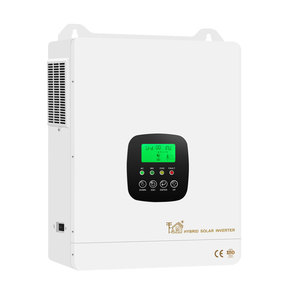
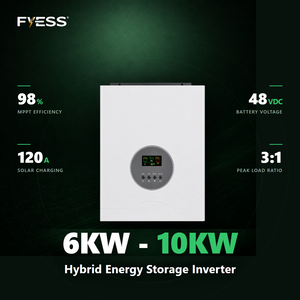
| LV Single-Phase Hybrid | 3.6 kW – 8.0 kW | 97.6% | 120V/240V Split Phase | Residential Storage, Remote Telecom ESS |
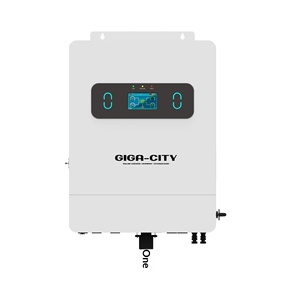
| HV Three-Phase Commercial | 10.0 kW – 12.0 kW | 98.4% | 380V/480V 3P4W Grid | Commercial PV Systems, Light Industrial |
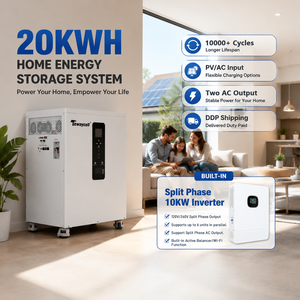
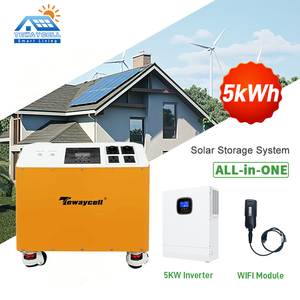
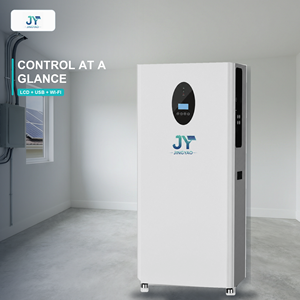
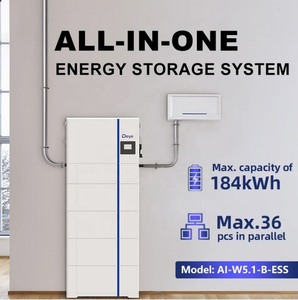
| All-In-One Integrated ESS | 5.0 kW (5kWh–30kWh) | 97.8% | Off-Grid / Grid-Tie Auto Switch | Emergency Backup, Mobile Solar Stations |
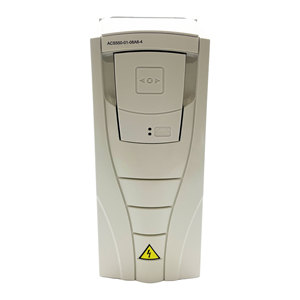
| Low-Voltage AC Drives | 4.0 kW (ACS Series) | 98.1% | 3-Phase Variable Frequency | Industrial Motor Drives, Solar Pumping |
Strategic analysis for EPC contractors, distributor brand owners, and OEM buyers navigating grid modernization, tariff structures, and supply chain resilience.
Procurement preference is rapidly shifting from standalone inverter units toward modular All-In-One Energy Storage Systems. Integrating the inverter power conversion module, MPPT controllers, LiFePO4 battery rack, and intelligent AC distribution panel into a single factory-prewired enclosure slashes field installation labour costs by over 60% and eliminates field wiring error rates.
Utilities worldwide are mandating grid-supportive inverter behavior, including voltage ride-through (VRT), frequency regulation, dynamic VAR compensation, and anti-islanding protection (IEEE 1547.1). OEM buyers now prioritize inverter hardware equipped with edge-computing microcontrollers capable of real-time machine learning algorithm execution for Time-of-Use (TOU) energy arbitrage.
To hedge against trade volatility and supply chain bottlenecks, global distributors are demanding modular inverter platforms with standardized component bills of materials (BOM). Utilizing qualified modified-standard platforms allows brand owners to adjust enclosure aesthetics, localization certifications, and user interfaces while maintaining a reliable, high-volume manufacturing origin.
Technical guidance and answers to common engineering questions asked by sourcing managers and systems integrators.
A modified-standard inverter utilizes an existing, fully certified power hardware platform and modifies localized elements—such as input/output voltage trims, wiring harness length, custom connector types, branded enclosure colors, or specific communication firmware (e.g., custom Modbus registers). This significantly shortens qualification time and reduces tooling costs. A fully custom design starts from a blank sheet to fulfill non-standard form factors, extreme thermal derating envelopes (e.g., -55°C to +125°C), or specialized military/industrial grid standards, requiring complete electrical design, layout, prototyping, and certification.
Our OEM grid inverter engineering platforms are designed to fulfill major global safety and interconnect standards. Depending on the target regional export market, units are built to address UL 1741 SA/SB, IEEE 1547, IEC/EN 62109-1, IEC/EN 62109-2, EN 50549-1/-2, and CE EMC directives (CISPR 32 / EN 55032 Class A & B). Detailed compliance documentation and test reports are made available during the OEM engineering phase.
Thermal management is built directly into our inverter PCB layouts using heavy copper layers, heat-pipe thermal bridges, and heavy-duty aluminum heat sinks. For outdoor NEMA 4X / IP65 enclosures, we employ fanless natural convection or smart temperature-controlled forced-air cooling. Our high-reliability models maintain 100% full-load output rating up to +50°C ambient without thermal derating, with optional high-temperature configurations operating reliably up to +65°C or down to extreme -55°C conditions through internal heater integration.
Yes. Our hybrid inverter control board features programmable battery management profiles accessible via software firmware or RS485/CAN communication interfaces. We provide pre-programmed communication protocols for top battery brand BMS systems, and can code custom CAN/RS485 protocol stacks to match your proprietary battery pack hardware upon request.
For modified-standard OEM inverters, sample prototype evaluation units are typically delivered within 3 to 5 weeks, with mass production scaling in 6 to 8 weeks. Fully custom power conversion programs involve engineering specification freeze, PCB layout, thermal modeling, preliminary prototyping, safety agency testing, and pilot production runs, which generally span 12 to 20 weeks depending on custom mechanical tooling requirements.
Connect directly with our senior application engineers to request detailed datasheets, evaluate modified-standard platforms, or receive a technical quote tailored to your regional market requirements.