Engineering & manufacturing in Exeter, New Hampshire, USA since 1961 [email protected]
Toll Free (888) 597-9255 Tel +1 603-778-2300 Contact

Custom OEM Battery Charger Manufacturers & Suppliers

Engineering High-Efficiency Industrial Battery Chargers, OEM/ODM Power Modules, and Custom Smart Charging Systems for Global OEMs, Automotive, Medical, and Energy Storage Applications.

Featured OEM/ODM Solutions

Industrial-Grade Battery Chargers & Charging Power Modules

Explore our flagship OEM customizable battery chargers engineered with multi-stage algorithms, active PFC, rugged enclosures, and multi-chemistry lithium/lead-acid compatibility.
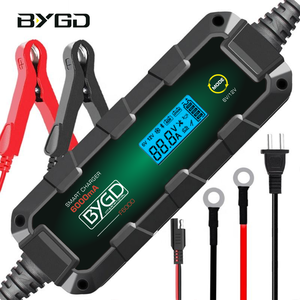
Customizable 6A Smart Battery Charger
Factory Wholesale Customizable 6A Smart Battery Charger, 12V 8-Stage Charging for Lithium-Ion/Lead-Acid, Vehicle Maintenance
Key Spec: 12V 6A | 8-Stage Microprocessor Control | MCU Auto-Repair Mode
Inquire Now
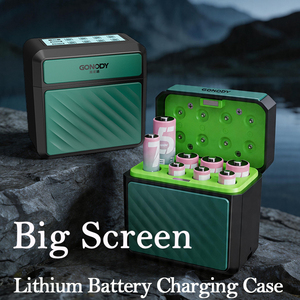
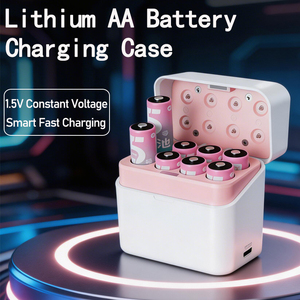
Flip Top Battery Charger for AA AAA
OEM/ODM Factory High Capacity Flip Top Battery Charger For 1.2V 1.5V AA & AAA Rechargeable Lithium Li-ion Batteries NiMH Battery
Key Spec: Dual Chemistry (Li-ion/NiMH) | Flip-Top Design | USB-C Fast Input
Inquire Now
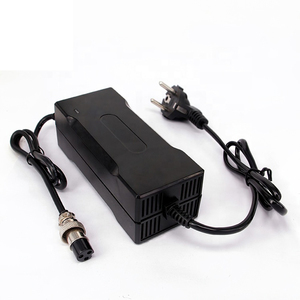
63V 2A 15S Scooter Charger
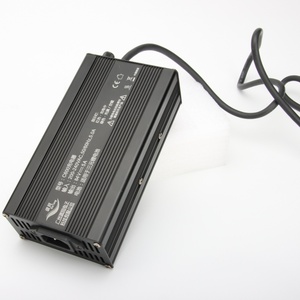
Hot Sale 63V 2A 15S Charger for Moped 18650 Scooters 55.5V Lithium Li-ion Battery Charger
Key Spec: 63V 2A (15S Pack) | CC/CV Precision Control | Aluminum Casing
Inquire Now
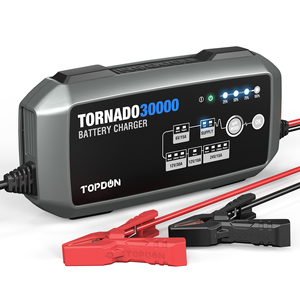
Industrial Car Battery Charger T30A
TOPDON T30A Industrial Car Battery Charger 6V 12V 12V/24V Automatic Gel 30 Am Car Battery Repair and Charger
Key Spec: 30A High Output | 6V/12V/24V Auto-Sense | Pulse Repair Technology
Inquire Now
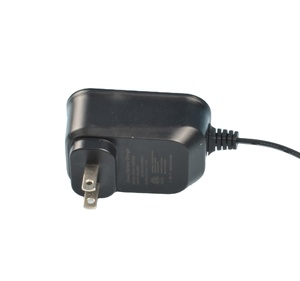
12.6V 16.8V Lithium Power Adapter
12.6v 16.8v 1a 1.5a 2a 3a 4a Lithium Li-ion Battery Charger 12.6v Power Supply Adapter 3s Battery Charger
Key Spec: 3S/4S Pack Compatible | Low Ripple & Noise | Global Safety Approvals
Inquire Now
8-slot AA AAA Smart Charger
Batteries Charger For 1.2V 1.5V AA & AAA Rechargeable Lithium Li-ion Batteries Ni-MH Battery 8-slots Charger Nimh Battery
Key Spec: Independent Channel Control | LCD Diagnostic Display | Overcharge Cutoff
Inquire Now
600W C600 67.2V 6A Charger
600W C600 CE 67.2V6A Lithium Battery Charger E-Bike Club Car Dirt Bike Lawnmower Special Charger
Key Spec: 600W High Power | 67.2V 6A Output | IP65 Conduction Cooled
Inquire Now
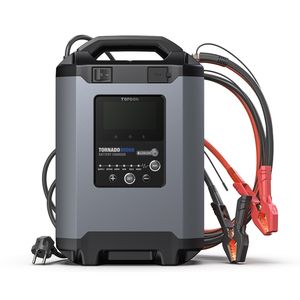
Tornado90000 T90A Intelligent Charger
TOPDON Tornado90000 T90A Intelligent Portable Lead Acid Automatic Smart 12v 24v Volt 12 v Auto Battery Charger for Car
Key Spec: 90A Commercial Grade | ECU Programming Power Supply | Smart Voltage Trim
Inquire Now

60+ Years

Power Conversion Heritage

0.5W - 3.6kW

Custom Power Range

96.5%

Peak Conversion Efficiency

-55°C to +125°C

Extended Operating Capability

Technical Whitepaper

State of the Art in OEM Custom Battery Charger Engineering

Architectural principles, thermal management strategies, and firmware intelligence driving next-generation custom battery charging solutions for original equipment manufacturers.

Modern industrial and commercial electrified systems require significantly more than off-the-shelf power adapters. As battery chemistry formulations evolve from conventional flooded Lead-Acid to advanced Lithium Nickel Manganese Cobalt (NMC), Lithium Iron Phosphate (LiFePO4), and emerging Solid-State architectures, the demand for high-reliability Custom OEM Battery Charger Manufacturers has reached a critical inflection point. Power design engineers must address stringent safety certifications, complex thermal derating envelopes, transient noise immunity, and dynamic telemetry integration.

1. Advanced Topology Engineering: Flyback, Forward, and LLC Resonant Converters

At the core of high-efficiency custom charging systems lies the selection of optimal switching topologies. Our engineering framework employs a tailored approach depending on power density, thermal constraints, and form factor requirements:

  • Low-to-Medium Power (1W to 150W): Optimized Flyback and Quasi-Resonant (QR) topologies providing economical, compact form factors ideal for portable medical instruments, consumer lithium packs, and power tools. Utilizing active clamp circuits to capture leakage inductance energy minimizes switching stress and reduces EMI emissions.
  • Medium-to-High Power (150W to 1,500W): Interleaved Two-Switch Forward and LLC Resonant zero-voltage switching (ZVS) topologies. LLC resonant converters operate at zero voltage switching across wide load spectrums, pushing efficiency beyond 95% while drastically reducing magnetic component volumes and radiator footprints.
  • High-Power Mega-Watt & Modular Systems (1.5kW to 3.6kW+): Three-phase active Power Factor Correction (PFC) front-ends paired with full-bridge ZVS DC/DC stages. These units deliver power factor ratings exceeding 0.99 with Total Harmonic Distortion (THD) under 5%, fully compliant with EN/IEC 61000-3-2 standards.

Multi-Stage Charging Algorithms

Firmware-driven CC/CV/Float curves tailored per chemistry. Features pre-charge qualification, pulse desulfation for AGM/Gel, temperature-compensated voltage trimming, and automatic termination logic (dV/dt, dt/dt, safety timer limits).

Wide Input & Voltage Flexibility

Universal AC input ranges (85-264 VAC) or ultra-wide DC input buses (18-75 VDC, 110 VDC, 310 VDC) designed for global grid compatibility, traction equipment, and high-voltage energy storage systems.

Ruggedization & Extreme Thermal Ranges

Potting compounds, conformal coatings, and fanless conduction-cooled chassis designs enabling continuous full-load operation in ambient environments ranging from -55°C up to +125°C with high shock/vibration tolerance.

Market Telemetry

Future Technology & Global Procurement Trends

Strategic analysis of industry shifts, semiconductor advances, and sourcing best-practices for hardware engineering leadership.

GaN & SiC Wide-Bandgap Adoption

Gallium Nitride (GaN) and Silicon Carbide (SiC) power devices are replacing traditional Si MOSFETs. This allows switching frequencies to exceed 500 kHz, yielding up to 40% reduction in magnetic volume and power densities above 30 W/in³.

Smart Cloud & CAN/Modbus Telemetry

B2B buyers increasingly require chargers with integrated IoT controllers. Communication over CAN bus 2.0B, J1939, or Modbus RTU delivers real-time Battery Management System (BMS) handshake, state-of-charge (SOC), and health diagnostics (SOH).

Modified-Standard Procurement Strategy

To mitigate compliance delays and tooling costs, top-tier OEMs are moving away from full custom ground-up builds. Choosing modified-standard catalog architectures preserves existing UL/CE test data while customizing harnesses, firmwares, and enclosures.

Specification Matrix

OEM Charger Platform Technical Comparison

Compare baseline capabilities across key industrial battery charging platforms to streamline initial component qualification.

Charger Platform Category Power & Voltage Range Battery Chemistry Cooling & IP Rating Primary OEM Application
Portable Smart Maintenance Chargers 15W - 360W (6V / 12V / 24V) Lead-Acid, GEL, AGM, LiFePO4 Convection Cooled / IP65 Waterproof Automotive maintenance, powersports, marine, emergency vehicles
High-Power Industrial On-Board Chargers 600W - 3,600W (36V to 96V) Lithium-Ion, LiFePO4, NiMH Fanless Baseplate / IP67 Sealed AGVs, Golf Carts, Electric Lawnmowers, Floor Scrubbers, Cobots
Multi-Slot Desktop & Rack Chargers 10W - 200W (1.2V - 16.8V) NiMH, NiCd, 18650/21700 Li-ion Internal Silent Fan / ABS Flame-Retardant Medical handheld devices, two-way radios, power tools, logistics scanners
Regulated Commercial Bench Chargers 500W - 3,000W (Auto-select 6V-24V) Universal Multi-Chemistry Forced Air Intelligent Control Dealership ECU flash power supply, fleet maintenance, battery repair shops

Why Partner With Our OEM Battery Charging Engineering Team?

Building on over six decades of power conversion experience (tracing back to our founding roots in 1961), our engineering team bridges the gap between theoretical circuit synthesis and mass production. Whether your project demands compliance with UL/IEC 60601-1 for patient-connected medical equipment, MIL-STD-1275 / MIL-STD-461 for defense applications, or EN 50155 for railway transit buses, our custom design pipeline ensures zero compromise on long-term field reliability.

End-to-End Quality Engineering & Verification Protocols

Every custom battery charger undergoes rigorous testing before shipment, including:

  • Automated 100% Full-Load Burn-In: Thermal stress testing under high temperature conditions for up to 48 hours to eliminate premature infant mortality failures.
  • In-House Pre-Compliance EMC Testing: Conducted and radiated emissions testing to guarantee compliance with CISPR 32 / EN 55032 Class B limits prior to third-party agency submission.
  • Dielectric Withstand & Leakage Current Verification: High-potential (Hi-Pot) testing up to 4,000 VAC with patient leakage current controlled down to microampere thresholds for medical-grade power supplies.
  • Component Derating & Lifecycle Management: Electrolytic capacitors rated exclusively for 105°C operation with conservative voltage and ripple current derating to ensure MTBF figures exceeding 200,000 hours per Telcordia SR-332 standards.
Procurement FAQ

Frequently Asked Questions by OEM Procurement & Engineering Teams

Direct technical answers addressing customization limits, certifications, MOQ, and engineering workflow.

What is the typical development timeline for a custom OEM battery charger?
For modified-standard solutions (adjusting output voltage trims, firmware charge profiles, connectors, or cable harnesses), samples are typically delivered in 2 to 4 weeks. For fully custom ground-up designs involving specialized PCB layouts and custom enclosures, prototype samples are completed within 6 to 10 weeks, followed by compliance testing and tooling activation.
How do you manage battery charging safety for Lithium-Ion vs. Lead-Acid chemistries?
Our chargers utilize dedicated microcontroller (MCU) firmware algorithms tailored to the chemistry. Lithium-Ion designs emphasize precise Constant Current / Constant Voltage (CC/CV) transitions, individual cell-balancing handshakes via CAN/SMBus, and low-temperature charge lockout to prevent lithium plating. Lead-Acid designs incorporate temperature-compensated Float/Absorption stages and controlled pulse desulfation routines.
Can your chargers be integrated directly into weather-exposed or high-vibration equipment?
Yes. We engineer sealed IP67 and IP68 enclosures utilizing thermally conductive polyurethane potting compounds, aluminum die-cast housings, and vibration-proof silicone-anchored heavy components. These chargers meet demanding automotive shock and vibration profiles (ISO 16750) and marine salt-fog exposure standards.
What safety and EMC standards do your power supplies and chargers comply with?
Depending on target markets, our products are engineered and certified to UL 62368-1 (Audio/VIdeo & ICT Equipment), IEC/EN 60335-2-29 (Household & Industrial Battery Chargers), UL 60601-1 3rd/4th Edition (Medical Electrical Equipment), EN 50155 (Railway), and MIL-STD-1275/461 (Military Vehicle Power).
What is your Minimum Order Quantity (MOQ) for custom OEM/ODM production runs?
We accommodate flexible engineering requirements. Modified-standard requests often feature low initial MOQs starting at 100 to 500 units, while fully custom designs generally start at 1,000 units depending on plastic tooling or aluminum extrusion requirements. Prototype volumes for qualification testing are supported without strict MOQs.

Ready to Consult With Our Power Design Engineers?

Submit your electrical parameters, target battery chemistry, mechanical limits, and compliance goals. Receive a expert engineering recommendation and modified-standard sample quote within 24 business hours.

Inquire Now