Engineering Whitepaper & OEM/ODM Direct Sourcing Guide: Advanced AC/DC Open Frame Power Conversion Systems, High-Density Switching Topology, and Regulatory Compliance Matrix for Global Enterprise Applications.
Featured Open Frame & Switching Power Supply Solutions
Direct Factory Wholesale Catalog — High-Efficiency, Certified AC/DC Power Adapters and Embedded PCB Modules
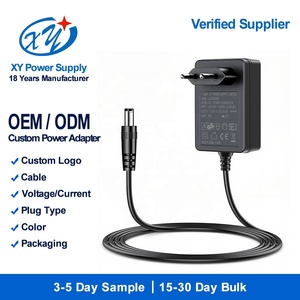
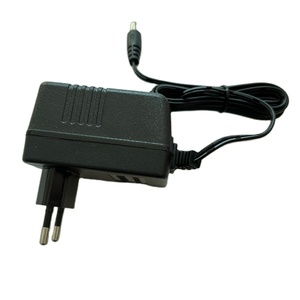
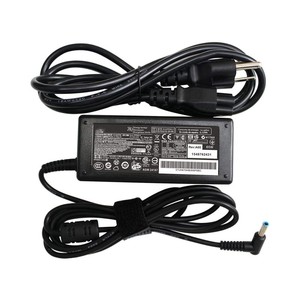
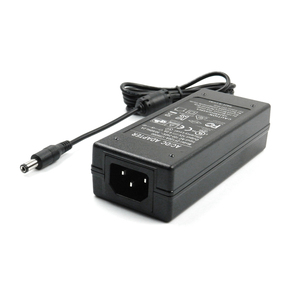
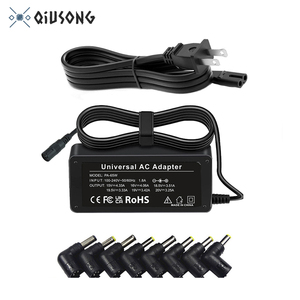
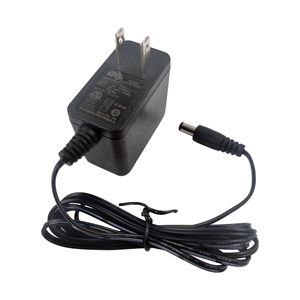
EU Wall Mount AC Adapter Switching Power Supply 12V 3A 36W (5V 9V 24V Compatible)
Architectural Deep-Dive: Open Frame Power Supply Topologies & Engineering Excellence
In modern electronic system design, open frame power supplies represent the foundational core for embedded systems, medical diagnostic platforms, industrial automation cabinets, and telecommunications infrastructure. Unlike external wall-mount adapters or fully enclosed metal-cased units, an open frame power supply is engineered without an integrated outer enclosure, mounting directly onto internal equipment chassis or printed circuit board (PCB) assemblies via standoff pins. This unhoused mechanical footprint offers unmatched advantages in space optimization, thermal management, weight reduction, and custom electrical integration.
From a power conversion engineering perspective, high-efficiency open frame power architectures designed in top-tier China wholesale manufacturing facilities utilize sophisticated switching topologies optimized for specific power density and thermal dissipation profiles:
Active Power Factor Correction (PFC) Front-End: Modern global standards (such as EN 61000-3-2 Class D) dictate strict harmonic current limits. Advanced open frame designs incorporate boost PFC circuits operating in Continuous Conduction Mode (CCM) or Transition Mode (TM), raising the system power factor up to 0.99 while stabilizing the internal high-voltage DC bus (typically 380V–400V DC) across wide-range AC inputs (85VAC to 264VAC).
LLC Resonant Half-Bridge Converters: For power outputs ranging from 100W to 600W+, LLC resonant converters utilize Zero Voltage Switching (ZVS) on primary switches and Zero Current Switching (ZCS) on secondary synchronous rectifiers. This dramatically minimizes switching losses, yielding conversion efficiencies exceeding 94% and suppressing Electromagnetic Interference (EMI) at the source.
Planar Transformers & Matrix Magnetics: Replacing traditional wire-wound transformers with multi-layer PCB planar magnetics reduces component profile heights down to 1U (1.75 inches / 44.45 mm), improves thermal conductivity to the aluminum baseplate, and ensures tight leakage inductance control.
Wide Bandgap (WBG) Semiconductor Integration: The adoption of Gallium Nitride (GaN) high-electron-mobility transistors (HEMTs) and Silicon Carbide (SiC) Schottky diodes enables switching frequencies up to 500kHz–1MHz. This frequency scaling dramatically contracts the physical size of inductors and bulk capacitors, yielding ultra-high power densities surpassing 30W/in³.
Technical Insight for Systems Engineers: Open frame power supplies rely on conduction and natural convection cooling. When integrating into sealed IP67 enclosures, heat must be transferred from switching MOSFETs and rectifiers through conduction-cooled baseplates directly to the equipment outer chassis. Proper component derating curves must be evaluated above +50°C ambient temperatures.
Global Regulatory Matrix & Safety Standards Compliance
Deploying open frame power supplies into international markets requires strict adherence to international safety certifications, electromagnetic compatibility (EMC) standards, and environmental directives. Qualified Chinese exporting factories must maintain verifiable laboratory compliance protocols.
In addition to electrical safety, modern export mandates enforce efficiency compliance under DoE Level VI (USA) and EU CoC Tier 2 (Europe) for external adapters, along with zero-load standby power consumption below 0.075W. Environmental compliance requires full documentation for RoHS 3 (EU 2015/863), REACH SVHC, and Conflict Minerals (CMRT) reporting.
Strategic Future Procurement Trends for OEM Sourcing Directors (2025–2030)
The global power supply procurement landscape is undergoing a structural paradigm shift. As corporate supply chains navigate geopolitical dynamics, carbon neutral initiatives, and rapidly evolving electronic bill-of-materials (BOM) costs, procurement leaders must look beyond basic unit price and evaluate Total Cost of Ownership (TCO). Key trends shaping China wholesale open frame supply chains include:
1. Digital Power Management & PMBus
Shift from analog feedback control to digital microcontrollers (DSP) enabling real-time telemetry over I²C / PMBus / CAN bus. Engineers can remotely monitor thermal status, output current, voltage rail trimming, and predictive failure alerts.
2. Modular Customization Platforms
To shorten NPI (New Product Introduction) cycles, factories utilize "modified-standard" building blocks. Pre-certified primary PCB modules are rapidly combined with custom secondary pinouts, wire harnesses, or specific voltage trims without triggering full safety re-certification.
3. Automated Optical & Robotic Testing
Tier-1 Chinese exporters are heavily integrating Automated Optical Inspection (AOI), 3D X-Ray Inspection (AXI) for SMT solder joints, and 100% automated ATE burn-in testing with dynamic thermal cycling to achieve zero-defect quality levels (<10 PPM).
Building upon over six decades of power conversion engineering legacy (dating back to 1961 roots), our manufacturing operations combine US-standard power design principles with high-capacity, cost-effective wholesale production in China. We bridge the gap between complex engineering customization and reliable, scalable supply chain execution.
End-to-End OEM / ODM Engineering Execution
From concept topology selection, magnetic design, and PCB thermal modeling to rapid prototype turnaround (samples available in 10–14 business days). We assist clients who lack complete specifications by defining operating envelopes, worst-case transient profiles, and safety compliance pathways prior to tooling.
Rigorous Component Derating & MTBF Guarantee
We enforce conservative component stress derating (derating electrolytic capacitor temperature/ripple current by at least 20°C, MOSFET Vds breakdown voltage by 20%+). All power units undergo MIL-HDBK-217F standard calculations, achieving proven Mean Time Between Failures (MTBF) exceeding 500,000 hours.
In-House EMC Chambers & Environmental Labs
Equipped with 3-meter Anechoic Conducted/Radiated EMI testing chambers, lightning surge generators, electrostatic discharge (ESD) simulators, and thermal shock chambers. Every product design is pre-validated in-house to guarantee 100% first-pass rate at third-party safety agencies (UL, TUV, Intertek).
Strict authorized franchise distribution sourcing for active semiconductors (TI, STMicroelectronics, Infineon, Onsemi) and Japanese long-life capacitors (Nichicon, Nippon Chemi-Con, Rubycon). Full lot traceability ensures zero counterfeit components enter your supply chain.
Technical & Procurement Insights for Global Sourcing Managers and Engineering Teams
What electrical parameters must be defined when requesting a custom open frame power supply quote?
To provide an accurate engineering assessment and factory direct quote, please specify: (1) Input Voltage Range (e.g., 85-264VAC universal or DC input bus), (2) Output Rails (nominal voltage, continuous current, peak surge current rating), (3) Mechanical envelope dimensions & height restrictions (e.g., 2" x 4" footprint, 1U profile), (4) Cooling method (natural convection, forced air CFM, or baseplate conduction), (5) Required isolation rating (e.g., 3kVAC vs 4kVAC / 2xMOPP), and (6) Target safety & EMC standards (IEC 62368-1, IEC 60601-1, Class B radiated noise).
What is the typical lead time for prototype samples versus mass production wholesale orders?
For standard catalog open frame power supplies and AC adapters, evaluation samples are dispatched within 3 to 5 business days. For modified-standard designs (custom cable harnesses, specific output voltage trims, custom PCB pinouts), sample lead times are typically 10 to 14 business days. Fully custom ground-up designs requiring new magnetic tooling take 4 to 6 weeks for working prototypes. Mass production lead times range between 4 to 6 weeks following sample sign-off and approval.
How do open frame power supplies handle system-level Electromagnetic Interference (EMI) issues?
Because open frame power supplies lack a metallic outer shield, electromagnetic radiation can couple onto adjacent target electronics or enclosure wiring. Our engineering designs incorporate two-stage or three-stage internal Pi-filter networks on the AC input, common-mode chokes, differential mode inductors, X/Y safety capacitors, and copper shielding around the main switching transformer. We also provide system-level integration guidance regarding grounding standoffs and wiring routing to ensure your end-equipment effortlessly passes CISPR 32 / EN 55032 Class B limits.
What minimum order quantities (MOQ) apply for wholesale export orders from China?
Standard production catalog models feature flexible MOQs starting at 100 to 500 units to support client NPI pilot runs. Modified-standard and custom OEM/ODM production batches typically maintain a minimum order quantity of 1,000 units, depending on specialized raw material components or custom tooling requirements. Blanket purchase orders (POs) with scheduled scheduled releases over a 12-month period are fully supported.
Can your open frame power supplies operate reliably under extreme ambient temperatures?
Yes. Standard industrial-grade open frame models operate from -20°C to +70°C (with linear power derating above +50°C). For extreme military, aerospace, or outdoor industrial deployments, custom conduction-cooled models feature extended temperature range capability operating from -55°C up to +125°C baseplate temperatures. High-grade industrial components, silicone potting compounds, and conformal coatings (acrylic or polyurethane) are applied to resist moisture, salt spray, and vibration.
What quality assurance and burn-in testing processes are performed prior to export shipment?
Every single power supply unit manufactured in our facilities undergoes 100% automated testing at multiple production stages: (1) In-Circuit Testing (ICT) of raw SMT assemblies, (2) High-Voltage Dielectric Isolation Testing (HIPOT 3,000V-4,000VAC primary-to-secondary), (3) Full-load dynamic Burn-In testing for 2 to 4 hours in elevated temperature chambers (40°C ± 5°C) with active power cycling, and (4) Final Automated Test Equipment (ATE) verification of voltage tolerance, ripple & noise, current limit protection, and short-circuit recovery.
Ready to Optimize Your Power Supply Supply Chain?
Connect directly with our senior applications engineering team. Request engineering drawings, detailed datasheets, custom modification quotes, or factory evaluation samples today.
 Power Conversion Engineering