 Power Conversion Engineering
Talk to an engineer (888) 597-9255
Products Power Conversion Engineering Explore our certified export series of switching power supplies, wall-mount adapters, and constant current modules engineered for global compliance (UL, CE, GS, TUV, FCC, RoHS).
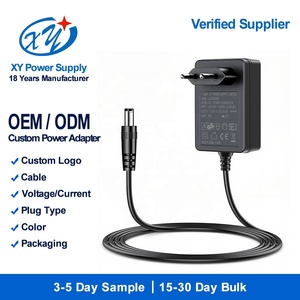
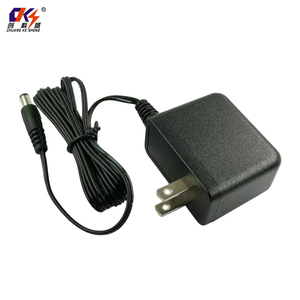
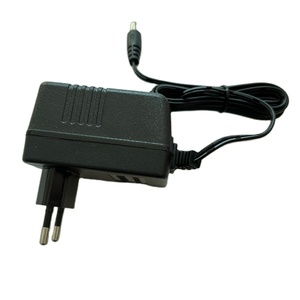
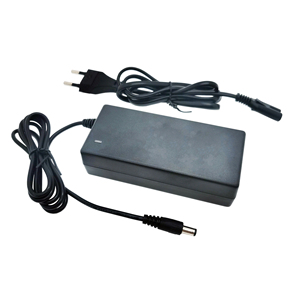
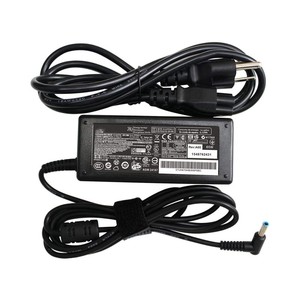
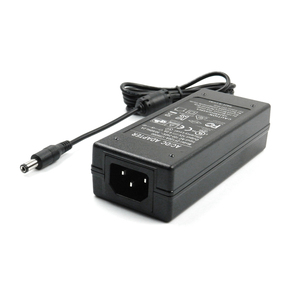
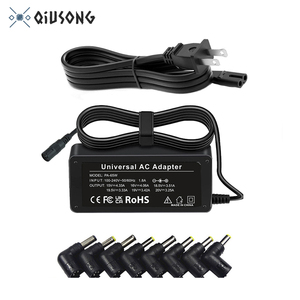
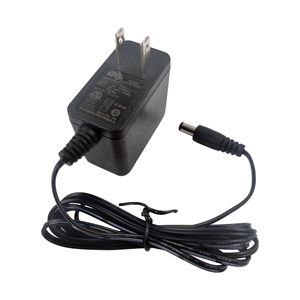
Selecting a premier supply partner among China Wholesale Current Driver Factories & Exporters requires looking beyond simple unit cost. In mission-critical LED installations, medical equipment, industrial control systems, and consumer electronics, the power conversion stage acts as the foundational heart of the entire product hardware architecture.
Tracing our engineering heritage back to US-based power conversion engineering standards established since 1961 (inherited through legacy technical alignment with companies like Wall Industries, Inc.), our integrated China manufacturing facilities bridge the gap between rigorous western compliance protocols and Asian production scale. We deliver both standard catalog products and fully custom modified-standard power topologies tailored for global original equipment manufacturers (OEMs).
Every single power unit undergoes 100% full-load thermal burn-in under elevated ambient conditions, Automated Optical Inspection (AOI), and multi-stage Hi-Pot electrical safety testing to eliminate early life cycle failure rates.
Rather than incurring high NRE expenses and long qualification cycles for ground-up designs, our engineers rapidly modify catalog topologies (trimming output voltages, custom wiring harnesses, potting, and extended thermal derating).
Our power solutions comply with international electromagnetic compatibility (EMC) standards including EN 55032 Class B, MIL-STD-461, UL/IEC 60601-1 for medical devices, and DoE Level VI / EU CoC Tier 2 eco-efficiency mandates.
When specifying drivers from Chinese manufacturing exporters, distinguishing between CC and CV architectures is critical for LED system longevity. Constant Current (CC) drivers dynamically adjust output voltage to maintain a fixed electrical current (e.g., 350mA, 700mA, 1050mA), effectively preventing thermal runaway caused by the negative temperature coefficient of LED dies. Conversely, Constant Voltage (CV) drivers supply a fixed potential (12VDC, 24VDC, 48VDC) for parallel arrays containing integrated current-limiting resistors. Choosing a hybrid CC/CV driver provides dual-mode operation, enabling CV output at maximum current load and switching to CC mode when over-current conditions occur.
The power supply landscape is undergoing a massive transformation driven by energy efficiency directives, miniaturization requirements, and smart IoT control systems. Leading Chinese OEM current driver factories are investing heavily in specific architectural developments:
Traditional silicon (Si) MOSFETs are rapidly being replaced by Gallium Nitride (GaN) power switches. GaN enables significantly higher switching frequencies (up to several MHz), allowing reduction of passive magnetic component sizes (flyback transformers and inductors) by up to 50%. This yields power densities exceeding 20W per cubic inch, reduced thermal dissipation, and overall system efficiency exceeding 94%.
Modern constant current drivers have evolved from simple analog (0-10V / 1-10V) dimming units into intelligent control hubs. The standard for commercial export drivers now demands DALI-2 (Digital Addressable Lighting Interface) and D4i compliance, enabling bidirectional communications for energy reporting and predictive maintenance. Wireless protocols such as Matter, Zigbee 3.0, and Bluetooth Mesh are directly integrated onto driver control boards.
Low-quality current drivers exhibit high-frequency output ripple (100Hz/120Hz double-mains frequency modulation), causing sub-perceptual visual flicker linked to eye strain and photographic artifacts. Advanced multi-stage power topologies utilize active power factor correction (PFC > 0.98) coupled with secondary ripple-rejection circuits to achieve total current ripple under 1%, adhering to strict IEEE 1789 flicker-safety recommendations.
Industrial installations, severe-weather outdoor fixtures, and sealed enclosure applications cannot tolerate forced-air fan cooling due to mechanical failure risks. Thermally conductive silicone potting materials combined with heavy aluminum extrusion chassis allow fan-less conduction cooling, expanding operating temperature ranges from -55°C to +125°C while providing IP67/IP68 ingress protection.
Global B2B buyers, distributor networks, and lighting OEMs face complex procurement challenges: managing lead times, verifying component authenticity, navigating tariff changes, and ensuring compliance with evolving eco-design regulations (such as EU ErP / CoC Tier 2 and US DoE Level VI).
A low initial FOB unit cost is rapidly offset if drivers exhibit a high field failure rate. Factoring warranty claim costs, brand reputation risk, and shipping replacements shows that paying a modest premium for Tier-1 electrolytic capacitors (e.g., Rubycon, Nippon Chemi-Con) vastly reduces TCO over a 5-year operational lifecycle.
Established export factories enforce strict supply-chain anti-counterfeit policies. Direct factory auditing ensures that IC controller chips, power switch MOSFETs, and safety-critical isolation optocouplers are sourced directly from authorized semiconductor vendors with full traceability certificates (CoC).
Modern Chinese exporters offer tiered MOQ models: high-volume automated lines for standard wall-mount and desktop adapters, complemented by flexible pilot-run batch production lines for customized industrial DIN-rail or embedded constant current drivers.
Compare structural attributes across primary power supply platform types to inform your OEM engineering specification.
| Driver / Power Platform | Typical Topology | Efficiency Range | PFC & THD Performance | Isolation Level | Ideal Application Sector |
|---|---|---|---|---|---|
| Constant Current (CC) LED Driver | Single-Stage PFC Flyback / LLC | 88% – 94% | PFC > 0.95, THD < 12% | 3.75 kVAC (Galvanic) | Commercial Architectural Lighting, Streetlights, High-Bays |
| Constant Voltage (CV) Switching Adapter | Flyback with Secondary Synchronous Rectification | 85% – 92% | PFC > 0.90 (Optional) | 3.0 kVAC Primary to Secondary | LED Strip Lighting, Routers, Consumer Electronics, IT Devices |
| Linear AC/AC Transformer | Laminated Steel Core / Toroidal | 65% – 78% | N/A (Pure Sinusoidal) | 2.5 kVAC Isolation | Ultra-Low Noise Audio Instrumentation, HVAC Valves, Security |
| High-Power Industrial Enclosed Unit | Half-Bridge / Full-Bridge LLC Resonant | 92% – 96% | PFC > 0.98, THD < 8% | 4.0 kVAC Reinforced | Industrial Automation, Robotics, Heavy Machinery, Battery Charging |
| Isolated DC/DC Power Converter Module | Push-Pull / Forward Converter | 82% – 90% | DC Input Bus | 1.5 kVDC up to 8 kVDC | Medical Electronics (2xMOPP), Railway Rolling Stock, Telecom |
Expert answers to the most critical technical and logistical queries when importing current drivers and power supplies from China.
A modified-standard power supply starts with an established, field-proven catalog design platform. Our engineers alter targeted parameters such as adjusting output voltage trims, fitting custom output wiring harnesses, adding conformal coating for humid environments, or re-configuring mechanical mounting brackets. This approach drastically reduces engineering tooling costs (NRE) and shortens compliance re-certification cycles. A fully custom design builds a unique circuit topology and PCB layout from scratch based on a client's proprietary electrical, spatial, and multi-rail specification.
MTBF is typically calculated using recognized international reliability standards, primarily MIL-HDBK-217F (Notice 2) or Telcordia SR-332. The calculation evaluates individual component failure rates based on thermal stress, operating voltage stress, and ambient environment (e.g., Ground Benign vs. Ground Mobile). Standard commercial-grade export supplies achieve MTBF figures exceeding 100,000 to 300,000 hours at 25°C ambient, whereas industrial and military-grade potted designs can exceed 500,000 hours.
Power supplies generate internal heat through switching losses in MOSFETs, core losses in transformers, and conduction losses in rectifiers. Most power supplies deliver 100% rated load up to an ambient temperature of +40°C or +50°C. Above this threshold, a linear thermal derating curve (typically 2.5% load reduction per °C up to +70°C) must be applied to keep junction temperatures of critical semiconductors within safe limits. For sealed metal enclosures without forced air ventilation, choosing a driver with conduction baseplate cooling is essential.
For North America, lighting drivers must certify under UL 8750 (Standard for Light Emitting Diode Equipment in Lighting Products) along with FCC Part 15 Class A or B for electromagnetic interference. For Europe, compliance with EN 61347-1 / EN 61347-2-13 (Safety of LED Controlgear), EN 55015 (EMC Emissions), and EN 61000-3-2 (Harmonic Current Emissions Limits) is mandatory for CE marking.
Power Factor represents the ratio of real power (Watts) consumed to apparent power (VA) drawn from the electrical grid. Uncorrected power supplies present non-linear capacitive loads, causing phase displacement and high peak current pulses that create grid harmonic distortion. Active PFC circuits use a boost pre-regulator to shape input current to track AC mains voltage in phase, raising Power Factor to >0.95 and reducing Total Harmonic Distortion (THD) below 10%. This prevents utility surcharge penalties for commercial installations.
When AC power is applied to a switching supply, bulk input electrolytic capacitors cause a transient current surge (inrush current) lasting several milliseconds, which can trigger circuit breakers. Factory engineering solutions include integrating internal Negative Temperature Coefficient (NTC) thermistors, active thermistor bypass relays for continuous high-efficiency operation, or designing soft-start control circuits that stagger transformer charging.
Standard engineering evaluation samples are typically dispatched within 3 to 7 business days. Modified-standard sample prototype runs take approximately 2 to 3 weeks. For bulk wholesale production runs, standard lead times range from 4 to 6 weeks following sample approval. Minimal or zero NRE (Non-Recurring Engineering) tooling charges are assessed on modified catalog products, whereas fully custom plastic enclosure molds or specialized transformer bobbins require dedicated tooling timelines.
Connect directly with our senior application engineering and international trade department. Whether you require a standard 12V/24V switching adapter, a custom DALI-2 constant current driver, or an industrial power module, we provide technical recommendations within 24 hours.