 Power Conversion Engineering
Talk to an engineer (888) 597-9255
Products Power Conversion Engineering Engineered to rigorous international standards (CE, GS, TUV, RoHS, CB, FCC, ETL). Designed for high reliability across industrial automation, medical devices, telecommunications, and consumer electronics.
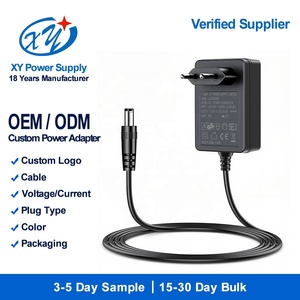
High-efficiency EU plug adapter designed for low standby energy consumption. Ideal for LED lighting arrays, telecom routers, and IoT smart devices.
Inquire Now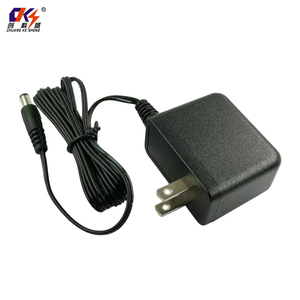
Ultra-compact external power supply offering tight voltage regulation, low ripple noise, and over-current protection for commercial electronics.
Inquire Now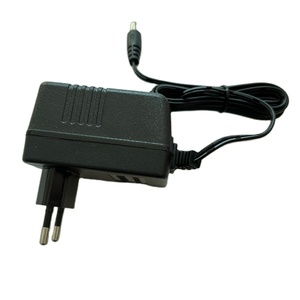
Robust electromagnetic copper-core transformer engineered for sensitive audio equipment, AC motors, and specialized control circuits demanding zero switching noise.
Inquire Now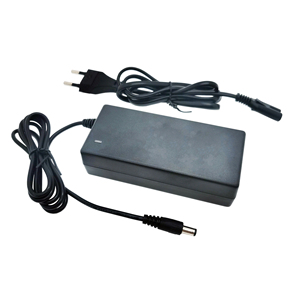
High-power density desktop configuration featuring modular DC tips, short-circuit recovery, and active thermal throttling for high-draw peripherals.
Inquire Now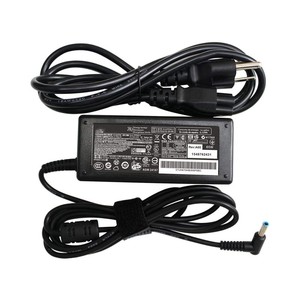
Commercial grade power supply tailored for enterprise computing, POS terminals, and field diagnostics with integrated smart-charging IC protocols.
Inquire Now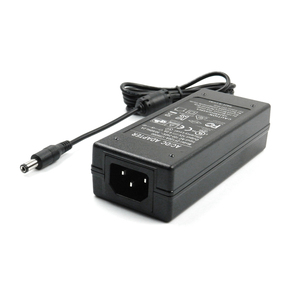
Flexible platform topology customizable for OEM system builders requiring non-standard voltages, customized cable harnesses, and potted enclosures.
Inquire Now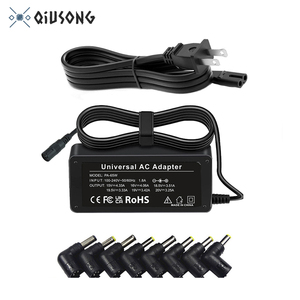
Versatile diagnostic and universal replacement power module equipped with rotary voltage selection, short-circuit latching, and active indicator LEDs.
Inquire Now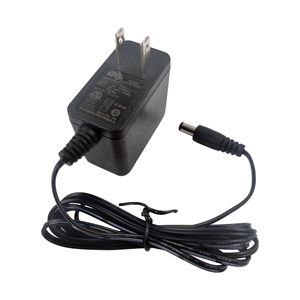
Compact energy-star rated wall charger providing stable isolated DC power for environmental sensors, security controllers, and home automation hubs.
Inquire NowIn the modern industrial ecosystem, power conversion units have evolved from passive electrical components into critical, smart infrastructure nodes. As global original equipment manufacturers (OEMs) accelerate their deployment of Industry 4.0 automation, medical electronics, electric vehicle (EV) charging networks, and high-density computing platforms, the demand for high-efficiency, certified AC/DC power supplies and DC/DC converters has scaled exponentially.
This technical whitepaper examines the paradigm shift taking place across smart power factories and export ecosystems. Drawing on over six decades of power engineering expertise originating from our headquarters in Exeter, New Hampshire, USA, and supported by state-of-the-art smart manufacturing centers globally, this document establishes a rigorous evaluation framework for technical buyers, procurement directors, and systems engineers seeking reliable power conversion solutions.
Core Information Gain Benchmark: Unlike standard off-the-shelf power adapters, modern CE-certified smart power systems incorporate active power factor correction (PFC), GaN/SiC wide-bandgap semiconductors, and digital telemetry protocols (PMBus/I2C) to achieve efficiency ratings upwards of 94% while maintaining electromagnetic compatibility (EMC) under harsh operating conditions.
The global power conversion industry is undergoing a profound technological transformation driven by strict efficiency legislation, miniaturization requirements, and severe operating environments. Design engineers must navigate several key technological vectors:
Traditional silicon-based MOSFETs are approaching their physical efficiency limits. Next-generation switching power supplies increasingly leverage Gallium Nitride (GaN) and Silicon Carbide (SiC) switches. These wide-bandgap devices enable switching frequencies exceeding 500 kHz to several megahertz, dramatically reducing the volumetric footprint of passive magnetic components (transformers and inductors) while driving conversion thermal losses down by up to 40%.
Analog feedback loops are rapidly being supplemented or replaced by digital signal processors (DSPs) and microcontroller units (MCUs). Digital power management allows dynamic voltage scaling, remote power monitoring, predictive thermal throttling, and configurable fault latching via PMBus, CANbus, or MODBUS protocols. This intelligence allows smart power supplies to communicate directly with host PLCs or cloud-based industrial monitoring platforms.
As patient-connected medical electronics and high-voltage energy storage systems (ESS) proliferate, isolation requirements have expanded dramatically. Modern power conversion designs must provide up to 8,000 VDC or 4,000 VAC isolation barriers. In medical applications, strict adherence to IEC/EN 60601-1 3rd/4th Edition standardizing 2xMOPP (Means of Patient Protection) and ultra-low leakage currents (<10 µA) is non-negotiable for global compliance.
Mechanical fans represent the single point of failure in sealed industrial enclosures, outdoor telecommunications units, and rugged defense platforms. The industry is rapidly pivoting toward conduction-cooled baseplate topologies and fully encapsulated potting techniques capable of operating reliably across extended thermal spans from -55°C to +125°C without forced-air derating.
| Performance Vector | Legacy Switching Supplies | Modern CE Smart Power Supplies | Strategic Advantage for OEMs |
|---|---|---|---|
| Semiconductor Topology | Standard Silicon MOSFETs | GaN / SiC Wide-Bandgap Switches | 30%-50% size reduction, lower heat generation |
| Peak Efficiency | 78% – 85% Efficiency | 92% – 96% (DoE Level VI / CoC Tier 2) | Reduced operational energy cost & thermal stress |
| Control Mechanism | Analog PWM Control Loops | DSP Digital Loop + PMBus Telemetry | Predictive maintenance & dynamic power tuning |
| Thermal Envelope | -10°C to +50°C (Fan Dependent) | -55°C to +125°C (Baseplate/Potting) | Fanless operation in severe outdoor environments |
| EMC Immunity | Basic CISPR 22 Class A | CISPR 32 / EN 55032 Class B + MIL-STD-461 | Zero interference with sensitive sensor lines |
Sourcing power conversion hardware in today's macroeconomic landscape requires procurement leadership to balance unit cost against long-term operational risk, regulatory compliance, and total cost of ownership (TCO). Procurement strategies are shifting toward three core trends:
While fully custom power supply engineering provides exact spatial and electrical fits, it imposes significant NRE (Non-Recurring Engineering) costs and extended qualification timelines (12–18 months). Leading OEM buyers are increasingly opting for Modified-Standard solutions. By selecting a proven, pre-certified catalog platform (e.g., standard 12V, 24V, or 48V topologies) and adjusting specific output trims, cable harnesses, enclosure coatings, or connector types, OEMs shorten time-to-market down to 4–8 weeks while preserving foundational compliance testing.
Regulatory scrutiny around electrical safety and electromagnetic interference is intensifying globally. Sourcing directors must verify that factory CE certifications are backed by accredited third-party test reports (e.g., TUV, GS, UL, CB Scheme) rather than unverified self-declarations. Key standards to mandate in factory procurement specifications include:
Substandard power supplies utilize recycled or counterfeit capacitors and switching silicon, leading to premature field failures, dielectric breakdown, or thermal runaways. Smart power export factories mitigate this through strict AS9100/ISO 9001 quality management systems, direct franchised distributor sourcing, and full lot-traceability from raw wafer to final potted power module.
Founded on a heritage of power conversion engineering established in Exeter, New Hampshire, USA in 1961, our organization combines decades of North American engineering rigor with scalable, CE-certified smart manufacturing infrastructure.
In-house R&D teams specializing in flyback, forward, LLC resonant, push-pull, and buck/boost topologies across AC/DC (1W–3600W) and DC/DC (0.5W–1500W) platforms.
100% automated optical inspection (AOI), high-potential (Hi-Pot) dielectric testing, full load thermal burn-in, and full EMI pre-compliance scanning on every production batch.
Rapid turnaround for modified-standard units, custom PCB layout geometry, specific connector pinning, custom branding/labeling, and specialized encapsulation potting.
Clear technical guidance compiled by our senior applications engineering team to streamline component qualification and procurement.
Our smart manufacturing facility produces DC/DC converters ranging from 0.5 watts up to 1,500 watts, and AC/DC power supplies spanning 1 watt up to 3,600 watts. Mechanical form factors include encapsulated PCB through-hole modules, open-frame chassis units, U-frame designs, enclosed fan-cooled power supplies, DIN-rail automation blocks, as well as external desktop and wall plug-in adapters (5V, 9V, 12V, 15V, 19V, 24V, 36V, 48V, and multi-output configurations).
A modified-standard unit starts from an established, pre-tested catalog platform and adjusts specific mechanical or electrical parameters—such as output voltage trimming, custom cable harnesses, specific plug geometries, conformal coating, thermal potting, or extended temperature derating. This approach minimizes qualification time and NRE expenses. A fully custom design starts from a blank sheet to fulfill unique electrical, mechanical dimensions, multi-channel power sequencing, and ultra-specific compliance standards (such as defense or aerospace specs) engineered from the ground up.
Our products are engineered and tested against worldwide safety frameworks including CE (Low Voltage Directive & EMC Directive), GS, TUV, UL/cUL, CB Scheme, FCC Part 15 Class B, ETL, and RoHS/REACH environmental mandates. Depending on the targeted application sector, our designs satisfy IEC/EN 60601-1 (Medical 2xMOPP), MIL-STD-1275 / MIL-STD-461 (Military/Defense), EN 50155 (Railway rolling stock), and DoE Level VI / EU CoC Tier 2 efficiency guidelines for external wall and desktop adapters.
Yes. Upon client specification, our applications engineering team designs and builds ruggedized power supplies and DC/DC converters operating across extreme ambient thermal windows from -55°C to +125°C. This is accomplished using high-reliability component derating, specialized polyurethane or silicone encapsulants, heavy copper PCBs, and conduction-cooled baseplate chassis designs that remove thermal energy without requiring mechanical cooling fans.
Isolated converters utilize internal transformers to completely separate the primary input circuit ground from the secondary output ground. This isolation (ranging from 1,500 VDC to 8,000 VDC) is essential for breaking ground loops, protecting sensitive microcontrollers from high-voltage input surges, and meeting patient safety regulations in medical electronics. Non-isolated switching regulators are selected when input and output share a common ground reference, and the design priority is maximum power efficiency, tiny PCB footprint, and lower unit cost at the point of load (POL).
Industrial, medical, and defense OEMs typically design capital equipment with 10-to-20-year operational lifespans. We support these long lifecycles by maintaining strict engineering change notification (ECN) procedures, offering form-fit-function replacement drop-in modules for obsolete competitor parts, and locking bill-of-materials (BOM) components to prevent unannounced hardware revisions during production runs.
Simply define your input AC/DC voltage range, required output voltages, nominal and peak load currents, isolation expectations, enclosure envelope, and compliance targets. Click our live inquiry portal below to submit your specification directly to our technical sales and engineering group in Exeter, NH, or our global customer support teams. We typically evaluate technical requirements and provide a preliminary engineering assessment within 24 to 48 hours.
Partner with an established, CE-certified smart power manufacturer. Request engineering datasheets, modified-standard samples, or a custom OEM production quote today.
Inquire Now