Industry & Technological Development Trends in PCB Power Conversion
The global power electronics landscape is undergoing a systemic transition driven by demand for higher power density, stringent thermal envelope limitations, dynamic load optimization, and international eco-design directives. As original equipment manufacturers (OEMs) attempt to shrink physical system footprints while integrating high-frequency microprocessors, field-programmable gate arrays (FPGAs), and Internet of Things (IoT) connectivity modules, the internal printed circuit board (PCB) power converter has evolved from a passive component into a mission-critical subsystem.
Key technological shifts redefine modern PCB power topologies, setting new performance baselines for certified manufacturing and global exportation:
Gallium Nitride (GaN) Integration
Wide Bandgap (WBG) semiconductors like GaN replace traditional Silicon MOSFETs, reducing switching losses by up to 50% and allowing switching frequencies to exceed 500 kHz. This enables smaller magnetic transformers and filters, drastically shrinking PCB module footprints.
Planar Magnetics Architecture
Replacing traditional wire-wound transformers with multi-layer printed circuit board planar transformers improves thermal dissipation, guarantees repeatable parasitic capacitance, and lowers profile heights down to under 10mm for space-constrained enclosures.
Enhanced Galvanic Isolation
Demands in medical (IEC 60601-1 2xMOPP) and industrial high-voltage DC bus applications require isolation ratings up to 8kVDC. Advanced potting compounds and planar clearance designs prevent dielectric breakdown under harsh atmospheric stress.
Furthermore, digital control loops via PMBus and I2C interfaces are increasingly replacing analog feedback networks. This shift empowers systems to dynamically adjust output voltages based on instantaneous processor load, optimizing light-load efficiency and providing predictive diagnostic telemetry for industrial automation systems.
Future Sourcing & Procurement Trends for OEM Buyers
Procurement strategies for electronic power supplies are moving away from simple component unit-cost metrics toward evaluating total cost of ownership (TCO), multi-regional compliance longevity, and supply chain transparency. Procurement teams within industrial, medical, and aerospace sectors prioritize suppliers capable of delivering certified, platform-agnostic architectures that reduce re-qualification cycles.
Procurement Vector
Traditional Sourcing Model
Next-Generation OEM Sourcing Model
Strategic Impact on Buyers
Regulatory Compliance
Base CE Mark / Basic EMC
CE + DoE Level VI + EU CoC Tier 2 + Medical 2xMOPP
Eliminates regional redesigns; ensures global market entry.
Design Customization
Off-the-shelf catalog parts only
Modified-Standard Platform Approach
Reduces NRE costs while providing exact mechanical/voltage fit.
Component Traceability
Broker sourcing for short lead-time
Direct Fab Allocation & Anti-Counterfeit Protocols
Mitigates batch failures, field recalls, and supply chain disruptions.
Thermal Reliability
Derating based on fan cooling
Conduction-Cooled Baseplate / Zero Airflow Derating
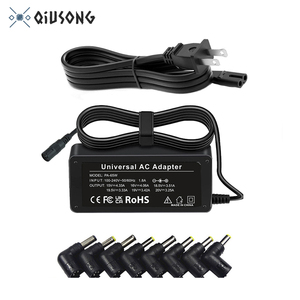
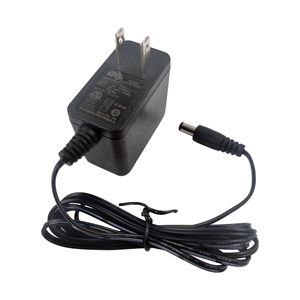
The shift toward Modified-Standard Engineering represents one of the most critical trends in industrial power procurement. Rather than investing significant financial capital and 12–18 months in ground-up custom developments, procurement directors specify core qualified topologies (such as 36W wall-mounts, 60W universal adapters, or PCB-mount encapsulated modules) and customize output trims, cable harnesses, potting density, and mounting hardware. This strategy guarantees short development lead times while retaining full CE, GS, TUV, and FCC safety certifications.
Technical Sourcing & Purchasing FAQ
Answers to critical engineering and compliance questions encountered during power module evaluation and factory selection.
What specific safety directives must a PCB Power Supply fulfill to carry a valid CE Mark for export to the EU?
To carry a valid CE mark for European Union export, a PCB power supply or AC/DC adapter must demonstrate compliance with the Low Voltage Directive (LVD 2014/35/EU), Electromagnetic Compatibility Directive (EMC 2014/30/EU), and the RoHS Directive (2011/65/EU including amendment 2015/863). Safety testing generally aligns with EN IEC 62368-1 for audio/video and ICT equipment, or EN 60601-1 for medical electrical equipment. Electromagnetic compliance requires passing CISPR 32 / EN 55032 Class B for conducted and radiated emissions.
How does a "Modified-Standard" power supply differ from a "Fully Custom" design in terms of cost and timeline?
A modified-standard power supply starts from an existing, safety-certified catalog platform (e.g., a standard 12V 3A PCB module or external adapter) and adjusts specific variables such as output voltage trimming (e.g., modifying to 13.8V), adding conformal coating, altering pin lengths, or applying custom wire harnesses. This path shortens safety re-certification timelines down to 2–4 weeks and minimizes non-recurring engineering (NRE) fees. A fully custom design engineers the topology, transformer, and layout from scratch, requiring 16–26 weeks for full prototype validation, EMI testing, and safety agency sign-offs.
Why is thermal derating critical when selecting encapsulated PCB-mount power modules?
Encapsulated PCB power modules operate within sealed environments where heat dissipation relies primarily on conduction through PCB copper traces or natural air convection. Most modules deliver 100% rated power up to an ambient temperature of +50°C or +60°C. Beyond this threshold, thermal derating curves require reducing output power load by 2.5% to 3.3% per degree Celsius up to the maximum operating limit (+70°C to +85°C). Ignoring thermal derating leads to internal electrolytic capacitor degradation, transformer insulation breakdown, and premature Mean Time Between Failures (MTBF) failure.
What is the distinction between Isolation Voltage (Hi-Pot) and Creepage/Clearance distance?
Isolation Voltage (dielectric withstand) measures the power supply's short-term ability to withstand high voltage (e.g., 3,000VAC to 4,000VAC for 1 minute) between primary input and secondary output without insulation breakdown. Clearance is the shortest distance through air between two conductive parts, protecting against arc-over caused by atmospheric transients. Creepage is the shortest distance along the surface of a solid insulating material, preventing tracking failure caused by ambient humidity and surface contamination. Both must strictly meet safety standards such as UL/IEC 60601-1 or IEC 62368-1.
How do Energy Efficiency regulations like DoE Level VI and EU CoC Tier 2 impact adapter procurement?
Department of Energy (DoE) Level VI in the United States and European Code of Conduct (CoC) Tier 2 in Europe mandate strict minimum active-mode average efficiency thresholds and maximum no-load standby power consumption limits (often < 0.075W to 0.15W depending on output rating). Non-compliant external adapters cannot legally clear customs or be sold within these regions. Modern switching power supply designs implement quasi-resonant switching or burst-mode operation at light loads to guarantee compliance with these mandatory environmental directives.
What measures are taken to mitigate Conducted and Radiated EMI in high-frequency switching converters?
High switching frequencies create electromagnetic interference (EMI) through fast voltage (dv/dt) and current (di/dt) transitions. Suppression techniques involve multi-stage pi-filters (common-mode chokes and differential X/Y capacitors) integrated on the primary input, Faraday shielding within the transformer assembly to reduce primary-to-secondary interwinding capacitance, optimized PCB loop layout geometries, and spread-spectrum frequency jittering in the PWM controller.
Building upon decades of power conversion engineering expertise since 1961, our manufacturing infrastructure combines high-volume automated production with rigorous American engineering standards based in Exeter, New Hampshire. We deliver fully certified, long-life cycle AC/DC power supplies and DC/DC converters designed for mission-critical industrial, medical, defense, and transit equipment.
60+ Years Engineering Legacy
Established power design authority with proven field reliability spanning industrial automation, medical defibrillators, military vehicle power, and transit signals worldwide.
Full Regulatory Portfolio
Complete product validation adhering to CE, GS, TUV, CB, FCC, ETL, UL/IEC 60601-1 (Medical 2xMOPP), MIL-STD-1275/461 (Military), and EN 50155 (Railway) benchmarks.
Extreme Thermal Resilience
Custom potting and conduction baseplate engineering supporting extreme ambient operating ranges from -55°C to +125°C without compromising efficiency or output stability.
Every power unit undergoes automated surface-mount technology (SMT) assembly, 100% full-load thermal burn-in, high-potential isolation testing, and automated optical inspection (AOI) prior to dispatch. We maintain continuous material traceability, strict anti-counterfeit component supply chain protocols, and comprehensive environmental compliance under RoHS and REACH guidelines.
Need Custom Power Supplies or Verified CE Samples?
Work directly with our applications engineering team to review specs, request modified-standard samples, or discuss full custom OEM/ODM production requirements.
 Power Conversion Engineering