 Power Conversion Engineering
Talk to an engineer (888) 597-9255
Products Power Conversion Engineering Direct factory recommendations engineered for extreme electrical environments, maritime automation, LED lighting networks, and industrial control systems. All units comply with European Union CE, TUV, GS, FCC, and RoHS standards.
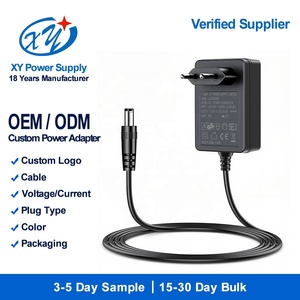
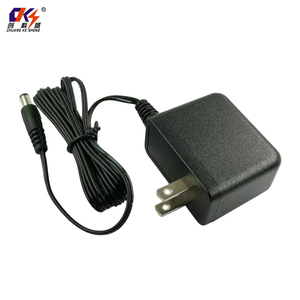
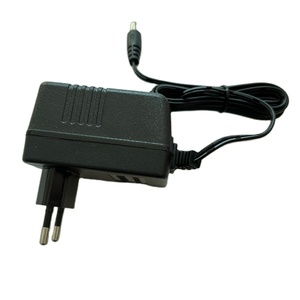
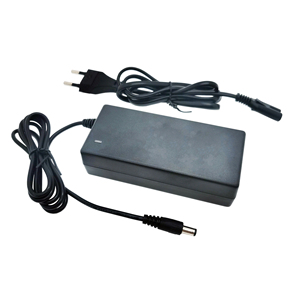
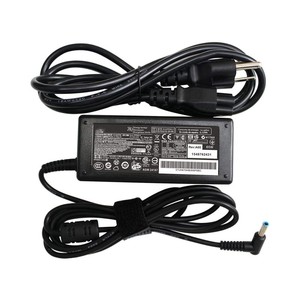
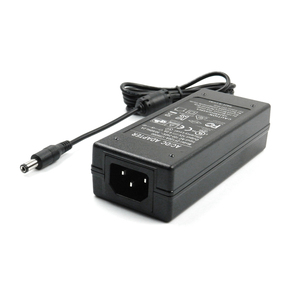
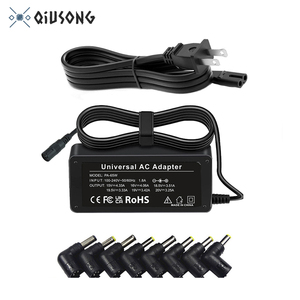
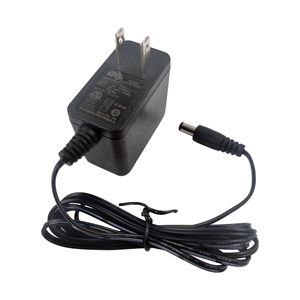
Operating at the intersection of maritime environmental stress and ultra-precise power regulation, our specialized exporting manufacturing hub delivers mission-critical AC/DC switching power supplies and DC/DC converters built for global OEMs.
We bridge the gap between standard off-the-shelf power adapters and fully custom designs. Our engineering teams utilize proven flyback, LLC resonant, forward, and buck/boost topologies. Modification services include output voltage trim, custom cable harnesses, potting, conformal coating, and specialized mounting footprints, eliminating complete system redesigns while accelerating time-to-market.
Marine vessel power grids endure extreme electrical noise, humidity, salt spray oxidation, and severe thermal cycles. Our power supplies feature optional operating thermal envelopes from -55°C to +125°C, conduction-cooled baseplates (eliminating failure-prone fans), IP67 waterproof encapsulation, and robust component derating according to stringent NAVSEA and MIL-STD guidelines.
Every exported unit undergoes 100% full-load burn-in testing and automated electrical validation. We strictly align with European Union Low Voltage Directive (LVD 2014/35/EU), Electromagnetic Compatibility (EMC 2014/30/EU), RoHS 3, DoE Level VI, EU CoC Tier 2, as well as UL/IEC 60601-1 for medical isolation and EN 50155 for transit applications.
Designing power electronics for maritime navigation, offshore telemetry, commercial shipping, and industrial control requires precise electrical parameters. The table below outlines our core engineering export capabilities against standard industry benchmarks.
| Electrical Parameter | Commercial Grade SMPS | Industrial Heavy-Duty | CE Certified Marine Grade |
|---|---|---|---|
| Input Voltage Range | 100–240 VAC (±10%) | 85–264 VAC / 90–305 VAC | Universal AC (85–264V) & Wide DC Bus (18–36V / 90–350V DC) |
| Galvanic Isolation Rating | 1.5 kVAC Input-to-Output | 3.0 kVAC Input-to-Output | 3.0 kVAC – 8.0 kVDC High Isolation Protection |
| Operating Thermal Window | 0°C to +40°C | -20°C to +60°C | -45°C to +85°C (Extended -55°C to +125°C Baseplate Available) |
| EMC & EMI Compliance | CISPR 22 Class A | EN 55032 Class B / FCC Part 15 | IEC 60945 Marine Bridge Standard & MIL-STD-461 Limits |
| Moisture & Salt Protection | None / Basic Housing | Standard PCB Coating | MIL-I-46058C Conformal Coating / Full Vacuum Resin Encapsulation |
| Efficiency & Eco-Rules | DoE Level V | DoE Level VI | DoE Level VI & EU CoC Tier 2 Energy Efficiency Compliant |
| Certification Status | CE, CCC | CE, GS, TUV, UL, FCC | CE Certified TUV / GS / RoHS |
As global maritime logistics transition toward decarbonization, electrification, and intelligent telemetry, power conversion requirements are undergoing a fundamental architectural evolution. Global procurement teams must align with several macro trends over the coming decade.
Silicon Carbide (SiC) and Gallium Nitride (GaN) switching components are rapidly replacing legacy silicon MOSFETs in high-density marine converters. WBG power electronics operate at dramatically higher switching frequencies with significantly reduced switching losses. For marine exporters, this enables up to 40% reduction in power module volume and weight, higher operational efficiency (surpassing 96%), and lower heat dissipation—allowing sealed, fanless chassis designs ideal for moist, salty sea air.
Modern commercial vessels and tugboats are increasingly adopting hybrid electric propulsion systems powered by large lithium-ion battery banks, hydrogen fuel cells, and auxiliary diesel generators. This shift creates complex onboard DC microgrids with varying bus voltages (from 24VDC up to 750VDC). Power supply exporters must provide wide 4:1 and 8:1 input range DC/DC converters capable of stabilizing volatile bus voltages while isolating sensitive communication, sonar, and radar systems.
Procurement specifications are shifting from passive power supplies to intelligent, digitally managed power nodes. Modern marine power converters are now equipped with PMBus (Power Management Bus) or CAN bus interfaces, transmitting real-time operational data including temperature telemetry, output current loads, voltage ripple spikes, and expected MTBF degradation. This data allows shipboard systems to perform predictive maintenance before a power supply failure jeopardizes critical navigation gear.
Geopolitical challenges and regional trade compliance shifts have made dual-sourcing and modular certification paramount for global OEMs. B2B buyers now prioritize power exporters that maintain comprehensive baseline compliance (CE, TUV, GS, UL, FCC) across modular platform designs. This enables fast regional adaptation without repeating expensive end-system compliance testing for every market entry point.
CE certification for marine power supplies involves more than simple safety testing. To guarantee reliable operation on commercial vessels and offshore platforms, power supplies must satisfy both the Low Voltage Directive (2014/35/EU) and the EMC Directive (2014/30/EU) under severe electromagnetic conditions. Marine bridge installations demand strict compliance with IEC 60945, which imposes low radiated emission limits to prevent interference with sensitive GPS, AIS, and VHF radio frequencies, combined with high transient surge immunity against heavy inductive motor switching on shipboard power buses.
Understanding the internal topology of AC/DC adapters and DC/DC converters is vital for system engineers tasked with selecting power architectures for long-life industrial and marine deployments.
Traditional hard-switching flyback converters experience high switching stress and electromagnetic interference (EMI). Modern high-power AC/DC industrial converters employ LLC resonant topologies operating with Zero-Voltage Switching (ZVS). This drastically attenuates high-frequency noise spikes, reduces thermal stress on primary switches, and yields ultra-clean DC outputs required by precision marine sonar and medical diagnostics.
Maritime electrical codes strictly limit total harmonic distortion (THD) on generator buses. Our exported power supplies (>75W) incorporate active boost PFC circuits, achieving a power factor of 0.98 or higher. This maximizes real power delivery, minimizes line currents, prevents phase imbalances, and avoids overheating vessel alternator windings.
Moving parts like cooling fans represent the single point of failure in harsh marine environments due to bearing wear and salt-air ingress. Advanced power designs utilize thermal potting resins, heavy copper PCBs, and direct conduction aluminum baseplates. Heat is drawn directly into the outer chassis, allowing fanless operation in ambient environments reaching up to +85°C.
Answers to common technical, compliance, and export questions encountered by procurement managers, systems integrators, and design engineers sourcing power supplies internationally.
With decades of dedicated power engineering experience, robust supply chain integration, and rigorous compliance protocols, we serve as a trusted power conversion manufacturing partner for international buyers.
Rooted in decades of power design excellence, our engineering teams bring verified expertise in magnetics design, high-density layout, thermal modeling, and safety compliance certification.
From low-power PCB-mount DC/DC converters to multi-kilowatt industrial power supplies, our standard and custom platforms span the entire spectrum of modern industrial requirements.
Our manufacturing centers feature automated ATE testing, environmental thermal shock chambers, vibration test benches, and internal EMC pre-compliance labs to ensure zero-defect delivery.
We support global OEM contracts, flexible MOQs, customized branding, specialized packaging, long-term inventory buffer programs, and rapid engineering sample turnarounds.
Whether you require standard CE-certified switching power adapters, modified catalog units, or fully custom marine-grade power conversion designs, our application engineers are ready to assist with specs, samples, and pricing.
Contact Us