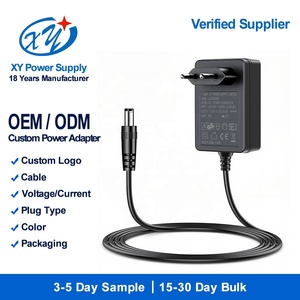
EU Wall Mount AC Adapter Switching Power Supply 12V 3A 36W (5V/9V/24V)
- CE, GS, TUV, RoHS Certified
- Wide Universal Input: 90–264 VAC
- Application: EV Sub-systems & Routers
 Power Conversion Engineering
Explore our core portfolio of CE, TUV, GS, and RoHS certified AC/DC power adapters, wall-mount chargers, switching power supplies, and high-voltage DC/DC conversion modules.
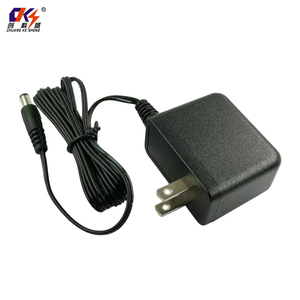
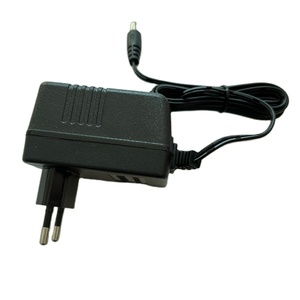
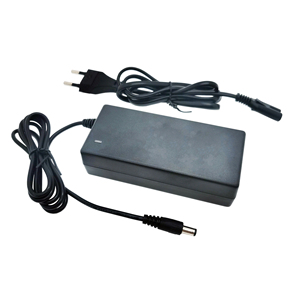
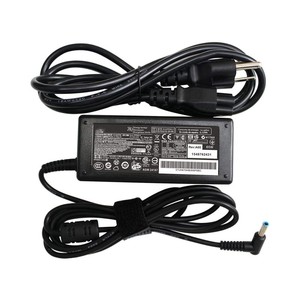
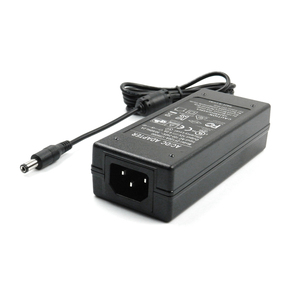
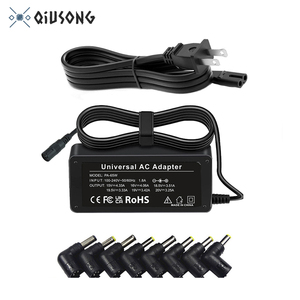
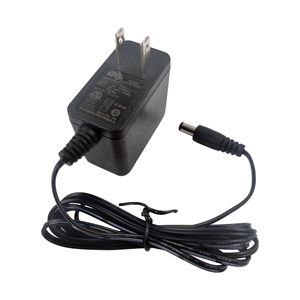
An authoritative technical brief for global procurement directors, hardware engineers, and infrastructure developers seeking verified OEM/ODM power solutions.
The global transition toward electrified transport has shifted Electric Vehicle Supply Equipment (EVSE) from niche infrastructure to a mission-critical utility sector. For B2B importers, infrastructure contractors, and original equipment manufacturers (OEMs), procuring CE Certified EV Chargers is no longer merely a legal formality—it is a comprehensive benchmark of safety, electromagnetic compatibility (EMC), thermal efficiency, and long-term grid integration reliability.
CE marking in the European Economic Area (EEA) demands compliance with stringent directives: the Low Voltage Directive (LVD 2014/35/EU), Electromagnetic Compatibility Directive (EMC 2014/30/EU), and Radio Equipment Directive (RED 2014/53/EU) for smart connected wallboxes. Furthermore, specific standards like IEC/EN 61851-1 govern conductive charging systems, mandating precise signal pilot communication, residual direct current detection (RDC-DD), and robust insulation barriers.
As power topologies evolve, top-tier EV charger manufacturers are replacing traditional silicon switches with high-frequency Silicon Carbide (SiC) and Gallium Nitride (GaN) MOSFETs. This transition unlocks power conversion efficiencies exceeding 98%, dramatically reduces physical footprints, and allows conduction-cooled operation across extreme ambient temperatures ranging from -55°C to +125°C.
Leveraging over six decades of power conversion experience since 1961, we bridge standard catalog convenience with full custom OEM/ODM manufacturing capability.
Every EV charger unit and auxiliary power module undergoes rigorous testing for EN 61851, UL/IEC 60601-1 (medical-grade isolation), and CISPR/EN 55032 emissions. We maintain full traceability and compliance documentation for seamless regulatory submission.
Avoid expensive ground-up redesigns. Our engineering team modifies existing catalog platforms—adjusting output voltages, cable harnesses, conformal coatings, and thermal derating—to fit your exact enclosure envelope and load profiles.
Engineered for outdoor public EVSE infrastructure, industrial automation, defense, and transit systems. Utilizing potted assemblies and conduction-cooled baseplates to eliminate mechanical fans and prevent moisture/dust ingress (up to IP67).
We support 10 to 20-year production lifecycles for infrastructure and industrial capital equipment. Our anti-counterfeit policies and second-source design guarantees ensure component end-of-life never halts your assembly lines.
Understanding the internal power conversion stages that separate basic consumer adapters from commercial-grade EVSE infrastructure.
To comply with EN 61000-3-2 harmonic emission limits, modern EV chargers utilize continuous conduction mode (CCM) boost PFC or interleaved boost PFC stages. This elevates the power factor to PF > 0.99 while maintaining Total Harmonic Distortion (THD) below 5%. This stage stabilizes fluctuating grid AC voltages (85V–264V universal range) into a high-voltage DC bus (typically 400V to 800V DC).
Isolation between the grid mains and the vehicle traction battery is mandatory for user safety. Utilizing zero-voltage switching (ZVS) LLC resonant topologies or bidirectional Dual Active Bridge (DAB) circuits allows high-frequency switching (100kHz–500kHz), yielding galvanic isolation ratings up to 3 kVDC to 8 kVDC. This configuration maximizes thermal dissipation and minimizes electromagnetic interference (EMI).
Auxiliary power modules (like our 12V and 24V switching adapters) power the underlying EVSE microcontroller, RFID reader, LCD screen, and cellular telemetry modules. Supporting ISO 15118 (Plug & Charge) and OCPP 2.0.1 requires uninterruptible 24/7 auxiliary power with ultra-low standby power draw (< 0.1W) to satisfy European ErP Lot 6 efficiency targets.
Benchmark system architectures to select the optimal power topology for your application requirements.
| Hardware Category | Power Output Range | Input Voltage Specification | Isolation & EMC Standard | Primary Target Application |
|---|---|---|---|---|
| AC Level 2 Wallbox Charger | 3.7 kW – 22 kW | 230V Single-Phase / 400V 3-Phase | IEC 61851-1, CE LVD, EN 55032 | Residential & Commercial Fleet Parking |
| DC Fast Charging Modules (DCFC) | 30 kW – 360 kW (Modular) | 400VAC 3-Phase Grid Connection | ISO 15118, DIN 70121, 4kVDC Isolation | Highway Service Hubs & Public Fast Charge |
| Auxiliary EVSE Power Supplies | 5W – 60W (DC Output) | 85V – 264V AC Universal Input | UL 60601-1, DoE Level VI, CE, RoHS | EVSE Control Boards, Relays & Display Logic |
| Bidirectional V2G Converters | 7 kW – 11 kW (Dual Direct) | 300V – 800V DC Battery Bus | EN 50155 Intent, High-PFC Grid Tie | Vehicle-to-Grid Energy Storage Systems |
| Industrial High-Voltage DC/DC | 0.5W – 1,500W | 110VDC / 310VDC Bus Options | Up to 8 kVDC Reinforced Isolation | Robotics, AGVs, Heavy Duty Railway & Transit |
Key economic, technological, and regulatory vectors shaping global sourcing decisions over the next decade.
Infrastructure operators are shifting away from monolithic charger assemblies toward standardized, hot-swappable 20 kW or 30 kW power modules. This architecture minimizes Mean Time to Repair (MTTR) and enables scalable field upgrades from 120 kW to 360 kW without infrastructure overhaul.
European and North American buyers are increasingly enforcing supply chain sustainability metrics under mandates such as the EU Corporate Sustainability Due Diligence Directive (CSDDD). Working with certified exporters who use recycled materials and low-carbon manufacturing is becoming mandatory.
Future-proof EV chargers must incorporate smart power management algorithms to mitigate local grid overloading. Auxiliary supplies must maintain stable power feed during brownouts or grid voltage sags down to 85 VAC.
Direct technical answers to standard qualification questions asked by engineering procurement teams.
To legally enter the European market, EV Chargers and power adapters must comply with the Low Voltage Directive (LVD 2014/35/EU) for electrical safety, the Electromagnetic Compatibility Directive (EMC 2014/30/EU) to limit radio interference, and the Radio Equipment Directive (RED 2014/53/EU) if Wi-Fi, Bluetooth, or 4G telemetry is integrated. Component adapters also satisfy RoHS (2011/65/EU) and REACH environmental restrictions.
A modified-standard unit starts from a proven, pre-certified catalog platform and alters specific elements—such as output voltage trimming, cable harness lengths, connector styles, or potting compounds. A fully custom power supply is engineered from the ground up based on your proprietary mechanical schematic and electrical specification. Modified standards dramatically lower NRE costs and accelerate time-to-market while retaining core safety certifications.
Our extreme-temperature designs utilize conduction baseplate cooling, thermally conductive silicone encapsulation (potting), and premium ceramic capacitors rated for 105°C+. This prevents thermal thermal shutdown and allows stable continuous full-load operation up to 70°C ambient, with specialized customized models operating from -55°C up to +125°C.
Because DC Fast Chargers operate from high 400V to 800V DC buses, auxiliary controllers require reinforced insulation. Standard isolated converters offer 1.5 kVDC isolation, while high-risk or patient-proximity/industrial measurement buses require 3 kVDC to 8 kVDC galvanic isolation barriers to protect sensitive microcontrollers and diagnostic ports.
Standard catalog items and evaluation samples ship within 24–48 hours from stock. Modified-standard prototypes generally require 2 to 4 weeks depending on component lead times, while full production runs feature flexible MOQ options tailored to support startup qualification phases through high-volume commercial deployments.
Consult with our senior applications engineers in Exeter, New Hampshire. Receive immediate design guidance, modified-standard recommendations, or a formal customized production proposal within 24 hours.