China has become a major production base for Non-Isolated DC DC Converters. Its manufacturers serve automation, telecommunications, vehicles, renewable energy, and industrial control markets. This article introduces leading Chinese suppliers and examines their practical strengths.
The comparison looks beyond catalog claims. It considers topology, input range, output accuracy, efficiency, thermal design, protection, testing, and customization. Buck, boost, and buck-boost products may appear similar. Their real performance can differ sharply inside a crowded control cabinet.
Small details matter. A converter mounted near a hot motor needs stable thermal behavior. A telecom module may require dependable operation during input fluctuations. Engineers should inspect datasheets, test reports, certifications, production capacity, and after-sales support before selecting a supplier. Professor Robert W. Erickson has described the switching converter as “a power-processing circuit.” That simple phrase keeps the focus on energy movement, not marketing language.
The manufacturers discussed here are not ranked only by low price. Experience with prototypes, batch consistency, component sourcing, and field feedback also deserves attention. Some suppliers publish impressive efficiency figures, yet provide limited information about test conditions. That is worth questioning. Others may offer strong engineering support but lack broad international documentation. Buyers should verify these gaps directly.
This guide is intended for engineers, procurement teams, and system integrators comparing China’s top Non-Isolated DC DC Converters manufacturers. It highlights measurable capabilities, common application scenarios, and selection risks. The market changes quickly. No single supplier fits every design.
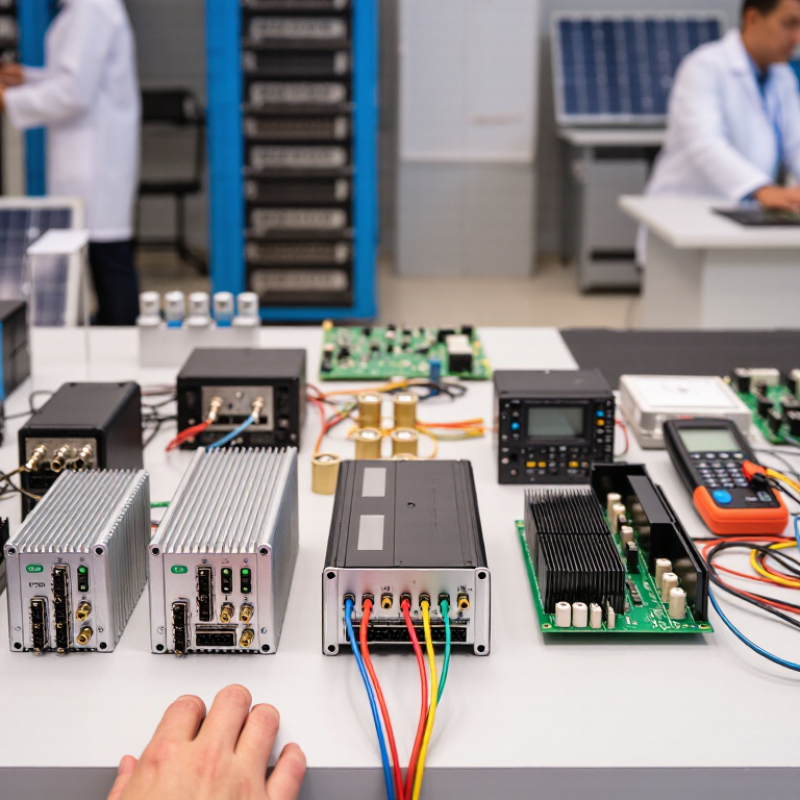
A non-isolated DC-DC converter changes one DC voltage level into another without electrical isolation between input and output. It uses magnetic-free switching elements, inductors, capacitors, and control circuits. Common topologies include buck, boost, and buck-boost designs. Their main role is voltage regulation inside electronic equipment.
These converters help supply processors, sensors, motors, and communication circuits from a shared battery or power rail. They are usually compact, efficient, and less costly than isolated solutions. However, their input and output share a common electrical reference. That detail matters when grounding, noise, and safety requirements become demanding. Experienced engineers check switching frequency, thermal rise, ripple voltage, and load response during real operating conditions. A laboratory result may not match a dusty factory floor.
China’s leading non-isolated DC-DC converter manufacturers often support customization for voltage range, package size, protection features, and production volume. Reliable suppliers should provide clear efficiency curves, tested protection limits, and traceable quality procedures. Claims need evidence. Datasheets alone are not enough.
Tips: Match the topology to the voltage direction and load behavior. Leave thermal margin around the converter. Inspect layout carefully, especially the switching loop. Measure ripple with proper probing. Recheck assumptions under cold start, sudden load changes, and long operating periods. Even a small design shortcut can create unexpected noise.
Non-isolated DC-DC converters are widely used when the input and output share a common ground. Their compact layout and high efficiency suit control boards, battery systems, instruments, and industrial sensors. Product selection depends on voltage direction, current demand, heat, and transient behavior.
Buck converters reduce voltage, such as converting a 24 V rail to 5 V for a controller.
Boost converters raise voltage from a 3.7 V battery to 12 V for a small actuator.
Buck-boost converters handle input ranges above or below the output target. This matters when battery voltage changes during discharge.
Inverting converters generate negative voltage for analog circuits and signal-conditioning stages.
Charge-pump converters use capacitors instead of magnetic components, making them useful at low current and tight board dimensions.
Load-switch and integrated power-module products add enable control, current limiting, or thermal protection. They can simplify production, but their fixed features may restrict later revisions.
In practical testing, engineers should measure efficiency at light and full load, not only at the rated point. A converter may run cool on the bench yet overheat inside a sealed enclosure.
Layout also matters: short switching loops, suitable capacitors, and careful grounding reduce ripple and electromagnetic noise. Datasheet values help, but real results depend on copper thickness, airflow, component tolerance, and the final load profile. Even a well-designed circuit can need adjustment after prototype testing.
China’s non-isolated DC-DC converter manufacturers are moving beyond basic step-down modules. Leading producers now combine magnetics design, synchronous rectification, digital control, and automated testing. MarketsandMarkets valued the global DC-DC converter market at about USD 20.4 billion in 2024. It forecasts USD 34.3 billion by 2029, representing a 10.9% compound annual growth rate. That growth raises expectations for Chinese suppliers serving telecom, industrial, automotive, and renewable-energy equipment. Core capability matters more than a low quotation.
Experienced factories typically offer wide-input designs, tight ripple control, thermal simulation, and customized protection functions. For 48-volt industrial buses, engineers may specify 12-volt outputs, current sharing, soft start, and short-circuit recovery. Production strength appears in automated optical inspection, batch traceability, load testing, and documented failure analysis. The IEA reported that global electric car sales exceeded 17 million in 2024, supporting demand for compact auxiliary converters. However, brochure efficiency can hide performance at light load or elevated temperature. That gap deserves independent validation.
Tips: Request efficiency curves, not one headline percentage. Ask for tests at minimum input, rated load, 85°C case temperature, and repeated start-stop cycles. Verify grounding requirements carefully; non-isolated designs suit shared-ground systems, but not every platform. Review safety approvals, EMC records, component derating, and field-return data before sampling. Small omissions become expensive.
Reliable non-isolated DC-DC converter manufacturers build quality into each production stage. Their work begins with controlled component sourcing and documented supplier audits. Incoming inspections check inductors, MOSFETs, capacitors, and controller markings. Moisture-sensitive parts require sealed storage and monitored humidity. Traceability matters when a converter fails after installation.
During assembly, automated optical inspection examines solder joints and component placement. Operators then verify polarity, spacing, and thermal interface materials. Electrical testing measures output voltage, load regulation, ripple, efficiency, and standby current. Production samples also face overload, short-circuit, thermal cycling, and burn-in tests. These checks should use calibrated instruments, not assumptions. A loose test fixture can create misleading results.
Certification claims require careful reading. ISO 9001 supports a controlled quality management system, but it does not certify every converter design. RoHS and REACH documentation helps verify material compliance. Depending on the application, safety and EMC evaluation may reference IEC standards or regional requirements. CE marking generally reflects the manufacturer’s declaration of conformity. It is not always an independent product certificate. Experienced manufacturers provide test reports, revision records, and corrective-action evidence. Still, no factory is flawless. A missed label, unstable feedback loop, or poorly documented change can weaken confidence. Buyers should request recent reports, batch traceability, rated-temperature data, and clear derating curves before approving a supplier.
Selecting a Chinese non-isolated DC-DC converter manufacturer requires more than comparing quotations. The IEA Global EV Outlook 2024 reports that global electric-vehicle battery demand exceeded 750 GWh in 2023. China supplied more than half of that demand. This growth increases manufacturing capacity, but it does not guarantee consistent converter quality.
Check the converter’s topology, input range, output ripple, efficiency curve, and thermal derating. Ask for test data at 25°C and elevated temperatures. A useful sample should survive startup, short-circuit, load-dump, and 500-hour burn-in testing. Review oscilloscope records, not only a polished specification sheet. Request factory certificates, calibration records, traceable component lists, and production-change procedures. ISO 9001 certification helps, but it is not proof of engineering depth. IEC 62368-1 alignment may also matter for end equipment.
Audit communication as carefully as hardware. Can the engineering team explain magnetic selection, switching losses, and protection thresholds clearly? Can it provide repeatable samples from different production batches? A low price can hide weaker capacitors, limited thermal margins, or manual inspection. That mistake is expensive. I would also compare three samples under identical loads, measuring efficiency, ripple, temperature rise, and electromagnetic noise. The result may challenge the original shortlist. Supplier evaluation should include warranty terms, failure-analysis response time, spare-unit policy, and export documentation. Some buyers focus too heavily on certificates. Real reliability appears during abnormal conditions.
This illustrative procurement model assigns a 100-point weighting to the main factors used when selecting a suitable manufacturer: electrical performance, quality and reliability, compliance and traceability, engineering support, and supply capability. The percentages are evaluation weights rather than company rankings or brand-specific results.
It changes one DC voltage level into another without separating input and output electrically. Both sides share a reference.
A buck converter lowers voltage. It can supply a controller from a 24 V power rail.
A boost converter raises voltage, such as converting a 3.7 V battery into 12 V.
It handles input voltage above or below the required output. This suits batteries during discharge.
It generates negative voltage for analog circuits and signal-conditioning stages. Check polarity carefully.
They use capacitors instead of magnetic components. They fit low-current circuits with limited board space.
Measure efficiency, ripple voltage, thermal rise, and load response at light and full load.Bench results can mislead.A sealed enclosure may trap heat, even when the converter feels cool in open air.
Short switching loops, suitable capacitors, and careful grounding can reduce ripple and electromagnetic noise.Small details matter.
Request efficiency curves, tested protection limits, and traceable quality procedures. Datasheet claims still need practical evidence.
Engineers may overlook cold starts, sudden load changes, component tolerance, or long operating periods.A first design can fail.
Non-Isolated DC DC Converters are essential power conversion devices that regulate, step up, or step down DC voltage without electrical isolation between input and output. Their compact design, high efficiency, fast response, and cost advantages make them suitable for industrial equipment, communication systems, automotive electronics, energy storage, consumer products, and embedded applications. Common product types include buck, boost, buck-boost, and multi-phase converters, each serving different voltage regulation and power management requirements.
China has a broad manufacturing base capable of producing these converters with varied power ratings, control methods, package designs, and customization options. When evaluating a Chinese manufacturer, buyers should examine engineering capabilities, component sourcing, production consistency, thermal design, testing procedures, and after-sales support. Reliable suppliers typically follow recognized manufacturing and safety standards, implement strict quality control from incoming materials to final inspection, and provide relevant certifications and test documentation. A suitable manufacturer should be selected according to electrical specifications, operating environment, volume requirements, delivery capability, compliance needs, and long-term cooperation potential.