Railway DC DC Converters sit quietly inside traction controls, signaling cabinets, passenger information systems, and onboard communication equipment. Their work is less visible than locomotives, yet a voltage fault can stop a subsystem within seconds. The International Energy Agency identifies rail as one of the most energy-efficient transport modes, while UIC railway statistics show continued investment in electrification, digital signaling, and fleet modernization. These trends increase demand for compact, resilient power conversion.
Buying decisions should not begin with price alone. A converter mounted beneath a carriage may face vibration, dust, humidity, thermal cycling, and unstable input voltage. EN 50155 defines demanding railway electronic requirements, while IEC 61373 addresses shock and vibration testing. Compliance claims still need verification. A logo on a datasheet is not enough.
This guide presents seven practical tips for selecting Railway DC DC Converters. It considers input range, output stability, efficiency, isolation, thermal performance, mechanical strength, certification, and supplier support. Small details matter, such as a 24 V control cabinet exposed to a 110 V battery system, or a converter operating beside a hot braking resistor. The wrong assumption can become an expensive lesson. That is worth admitting.
Industry reports provide useful direction, but application conditions decide the final choice. Buyers should compare test reports, derating curves, failure data, and service experience. A converter may look excellent in a laboratory and perform poorly inside a crowded cabinet. Reliability is not a slogan. It is measurable behavior under real railway conditions.
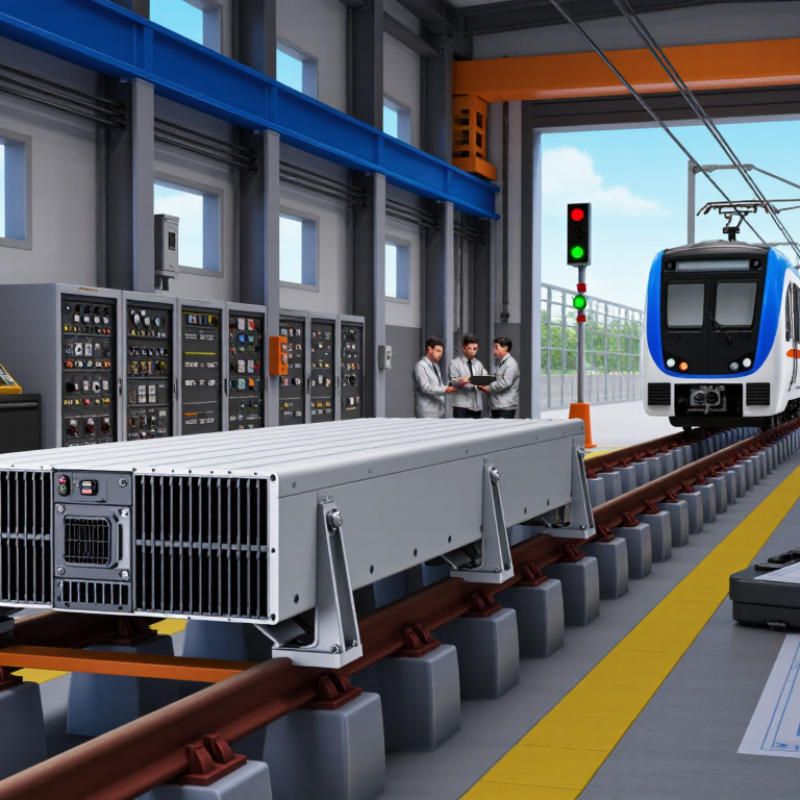
A railway DC-DC converter does more than change voltage. It creates a stable electrical bridge between vehicle batteries, control circuits, communication equipment, and safety systems. When input voltage rises or falls during acceleration, braking, or battery discharge, the converter should maintain a controlled output. This stability protects sensitive loads.
Buying decisions should begin with seven practical checks: input voltage range, output voltage accuracy, power rating, efficiency, isolation, cooling method, and certification. A converter rated for nominal voltage alone may fail during real track operation. Check surge limits, ripple, short-circuit protection, and startup behavior. Small details matter.
Railway applications often demand reinforced isolation between high-voltage traction circuits and low-voltage electronics. Galvanic separation can reduce fault risks and unwanted ground currents. Forced-air cooling may suit equipment cabinets, while sealed natural cooling can reduce maintenance in dusty areas. Installation space also affects heat dissipation. Do not trust impressive efficiency figures without reviewing test conditions. A unit may perform differently at low load, high temperature, or heavy vibration. I have seen specifications that looked complete but omitted derating data. That omission deserves questions. Select equipment tested against relevant railway environmental and electromagnetic standards, with traceable test records and clear service documentation.
Buying a railway DC-DC converter starts with the electrical specification, not the catalogue photo.
The IEA’s The Future of Rail reports that rail carries about 8% of global passenger travel and 7% of freight movement, while using roughly 2% of transport energy. That efficiency raises expectations for reliable onboard power conversion. Match the converter input range with the actual traction supply. EN 50163 identifies common DC systems at 600, 750, 1,500, and 3,000 volts. Do not select by nominal voltage alone. Check continuous, transient, and regenerative conditions.
Verify output voltage, current, ripple, efficiency, and overload duration. Small errors matter. A 24-volt control circuit can reset when ripple exceeds its tolerance. Check isolation voltage and insulation resistance against the vehicle’s safety design. Confirm creepage and clearance for the installation altitude and pollution level. Review inrush current, short-circuit behavior, and recovery after a line interruption. These details often separate a stable system from repeated maintenance calls.
Thermal data needs equal attention. EN 50155 evaluates railway electronic equipment across temperature, humidity, vibration, shock, and supply interruptions. Ask for derating curves, not only a headline efficiency figure. A converter rated at 95% efficiency may still require forced cooling inside a sealed cabinet. Confirm EMC test evidence, especially for conducted emissions near signaling equipment. Field reviews often reveal one uncomfortable truth: engineers check voltage carefully but underestimate connector heating. Leave margin. Then test the complete power chain under the vehicle’s worst realistic conditions, because laboratory perfection can hide installation weaknesses.
A railway DC-DC converter must survive vibration, voltage variation, and electrical noise. Safety starts with reinforced isolation between input and output circuits. Check the working voltage, insulation system, clearance, and creepage distance. IEC 62477-1 provides a useful safety framework for power electronic converters. EN 50155 also addresses railway equipment under temperature, humidity, shock, and supply disturbances. Do not trust a single laboratory certificate. Installation details can change the result.
Tip 1: Verify isolation under real fault conditions. Review dielectric-test voltage, insulation resistance, and leakage current. A converter may pass a brief test yet fail after repeated thermal cycles. Tip 2: Examine the isolation barrier physically. Look for slot spacing, protective coating, and connector separation. Small layout decisions matter.
Electromagnetic compatibility deserves equal attention. EN 50121-3-2 covers emissions and immunity for railway apparatus, while IEC 61000-4-2 includes severe electrostatic-discharge testing, reaching 8 kV contact and 15 kV air at Level 4. Ask for conducted and radiated test plots, not only “passed” statements. The UIC Railway Handbook 2023 reports that rail carries about 8% of global passenger transport and 7% of freight, while using roughly 2% of transport energy. Reliability pressure is therefore substantial. Tip 3: Test the converter beside switching loads, long cable harnesses, and traction equipment. A clean bench result can mislead. Sometimes, the specification is the weak point.
7 Tips for Buying Railway DC DC Converters?
Efficiency is more than a headline figure. Check performance across the full input range, load profile, and operating temperature. A converter rated at 95% efficiency may perform differently at light loads. Request measured curves, not only typical values. Review standby consumption too. Every wasted watt becomes heat inside the cabinet. Confirm input surge handling and output regulation for traction-related voltage changes.
Thermal performance deserves a physical review. Examine derating data, cooling paths, and allowable ambient temperatures. A sealed enclosure may protect electronics, but it can trap heat. Check whether natural convection is realistic after installation. Measure the expected temperature rise near wiring and neighboring equipment. Do not rely only on laboratory figures. Railway vibration and dust can change real conditions. This is where specifications sometimes feel incomplete.
Mechanical design can determine service life. Compare mounting options, connector retention, cable access, and enclosure strength. Check compliance evidence for relevant railway environmental and vibration requirements, such as EN 50155 and IEC 61373, where applicable. Keep clearance for inspection and replacement. A compact converter is not automatically better. It may complicate airflow or maintenance. Ask for lifecycle data, protection behavior, and test reports. Also inspect tolerances carefully; installation teams often face less space than drawings suggest. My own review habit is imperfect: I once focused too heavily on efficiency and overlooked connector access. That mistake changed the purchase checklist.
Representative engineering benchmarks for railway auxiliary DC-DC converter selection. Actual performance depends on input range, output power, cooling method, installation, and load profile.
| Converter Class | Typical Enclosure | Cooling Approach | Typical Volume | Mechanical Selection Point |
|---|---|---|---|---|
| 24 V auxiliary | Sealed aluminum | Natural convection | 0.8–1.5 L | Compact mounting and vibration resistance |
| 72 V auxiliary | Sealed aluminum | Natural or forced convection | 1.2–2.5 L | Check airflow clearance and connector access |
| 110 V auxiliary | Sealed aluminum | Forced convection | 1.5–3.5 L | Verify thermal derating at high ambient temperature |
| 750 V traction auxiliary | Rugged sealed chassis | Forced-air or liquid-assisted | 4–12 L | Prioritize insulation coordination, service access, and cooling path |
Buying guidance: compare efficiency at the expected load point, confirm temperature rise and derating curves, and verify enclosure protection, vibration tolerance, insulation coordination, mounting dimensions, and connector layout against the installation environment.
7 Tips for Buying Railway DC DC Converters
A reliable supplier should understand railway power conditions, not only sell electrical specifications. Ask for documented experience with vibration, temperature cycling, humidity, and electrical transients. Request test reports with serial numbers, test dates, and clear acceptance limits. Independent laboratory verification is valuable, especially when documents look incomplete. It does not replace your own application testing.
Check the converter’s input range, isolation rating, efficiency, thermal derating, and protection functions. Ask whether the supplier can provide samples for cabinet-level testing. Review failure data, not only marketing claims. A useful supplier explains likely faults and shares corrective actions. Confirm warranty terms, repair procedures, and expected response times in writing. Small details matter here.
Long-term support needs more than spare units. Ask for a product lifecycle statement, controlled design changes, firmware records, and advance notification of obsolescence. Confirm replacement compatibility before approving the design. Evaluate component availability and planned spare stock for at least several service years. Speak with the actual engineering contact, not only a sales representative. A factory audit can reveal weak traceability or poor environmental controls. I have seen attractive samples fail when support ownership was unclear. That mistake is easy to repeat. Leave room for uncertainty, and verify every promise against practical tests.
It provides stable power for batteries, control circuits, communication equipment, and safety systems. Voltage changes constantly. The converter limits these changes and protects sensitive electronics.
Check the complete traction supply range, not only the nominal voltage. Review continuous, transient, and regenerative conditions. Common DC systems include 600, 750, 1,500, and 3,000 volts. A nominal match can still fail during braking.
Confirm output voltage, current, ripple, efficiency, and overload duration. Excessive ripple can reset a 24-volt control circuit. Check startup behavior and recovery after a line interruption. Small errors matter.
Reinforced isolation separates high-voltage traction circuits from low-voltage electronics. It can reduce fault risks and unwanted ground currents. Review insulation resistance, working voltage, creepage, and clearance. A brief test may not represent repeated thermal stress.
Request derating curves for high temperature, low load, and heavy load conditions. Forced-air cooling may suit a ventilated equipment cabinet. Sealed natural cooling may reduce maintenance in dusty spaces. Heat still needs somewhere to go.
Ask for conducted and radiated emissions results, plus immunity test evidence. Test near switching loads, long cable harnesses, and traction equipment. An eight-kilovolt contact discharge can expose weak protection. A clean bench result can mislead.
Review evidence related to railway temperature, humidity, vibration, shock, supply interruptions, safety, and EMC. Relevant references may include EN 50155, EN 50121-3-2, IEC 62477-1, and IEC 61000-4-2. Request traceable test records and clear service documents. One certificate is not enough.
Check cabinet space, connector heating, cable routing, pollution level, and installation altitude. Leave thermal and electrical margin. Test the complete power chain under realistic vehicle conditions. I would not trust impressive efficiency alone.
Choosing Railway DC DC Converters requires more than comparing prices or output ratings. Begin by understanding how the converter will be used, including the train’s power architecture, auxiliary systems, control equipment, and operating environment. Check key electrical specifications such as input voltage range, output stability, load capacity, transient response, and protection features. Safety should also be a priority, with careful evaluation of electrical isolation, insulation strength, grounding, and electromagnetic compatibility to help ensure dependable operation near sensitive railway equipment.
It is equally important to compare energy efficiency, heat dissipation, cooling requirements, size, weight, mounting options, and resistance to vibration or temperature changes. A practical selection should balance performance with the available installation space and maintenance needs. Finally, assess the supplier’s manufacturing quality, testing procedures, documentation, warranty terms, spare-part availability, and ability to provide technical support throughout the product’s service life. A reliable supplier and clearly verified specifications can reduce operating risks and support long-term railway system performance.