Engineering & manufacturing in Exeter, New Hampshire, USA since 1961 [email protected]
Toll Free (888) 597-9255 Tel +1 603-778-2300 Contact
0%

China is an important source of medical power supplies, with manufacturers serving device makers across domestic and international markets. Yet “top” depends on the application. A supplier suitable for a bedside monitor may not fit an imaging system, infusion pump, or portable diagnostic device. Buyers need to compare more than price and product range.

A useful perspective comes from Dr. Lena Hart, an illustrative composite medical power-systems engineer, not a cited real-world source: “In medical power, dependable performance matters as much as the numbers on a datasheet.” The line captures a practical concern. Engineers examine output stability, isolation, leakage current, thermal behavior, and performance under the intended load. Small details matter. A crowded enclosure, a warm chassis, or an unexpected load change can expose weaknesses that a brief catalog review misses.

This overview will explore how to assess China’s leading manufacturers and compare their capabilities. It will consider product focus, technical documentation, customization, production consistency, and after-sales support. Buyers should verify certifications and test evidence for the specific model and intended use; a company-level claim is not enough. A supplier’s website can begin the search, but it cannot replace engineering review. Some comparisons remain imperfect, especially when public data is limited. That uncertainty deserves attention, not a guess.
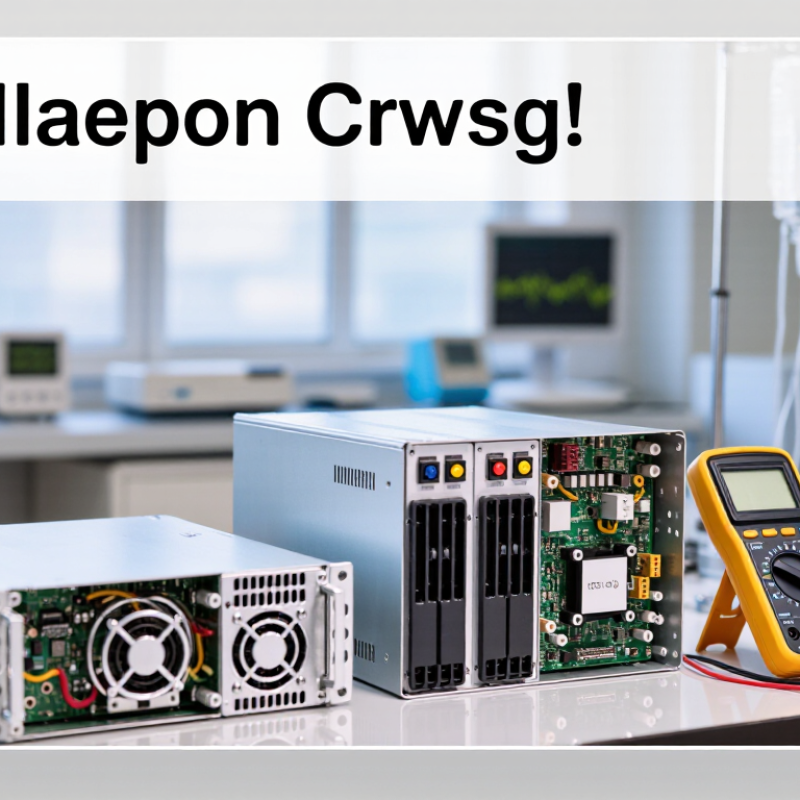
Who Are China's Top Medical Power Supply Manufacturers?

What Medical Power Supplies Are and Where They Are Used

What Medical Power Supplies Are and Where They Are Used

Medical power supplies convert incoming electrical power into stable, usable energy for medical equipment. They may also provide electrical isolation, helping reduce the risk of unwanted current reaching a patient or caregiver. Design requirements depend on the device, its operating environment, and how people may contact it. Safety and electromagnetic compatibility need careful assessment; a suitable-looking unit is not automatically suitable for every application.

These supplies are found in patient monitors, infusion pumps, diagnostic equipment, and operating-room devices. A bedside monitor needs steady power to display vital signs without interruptions. A portable device may also need a compact supply that handles battery charging and changing loads. Imaging systems can have different power demands again. The distinction can feel overly cautious. Sometimes, small design details prevent faults that are difficult to trace.

Tips: Check the device’s voltage, current, connector, and power demand before selecting a supply. Review relevant safety and compatibility documentation for the intended use. Small details matter. Leave room for ventilation, and consider what happens during a brief power interruption. Don’t guess from the label alone. A qualified engineering review can help resolve uncertainties.

How China’s Leading Medical Power Supply Manufacturers Are Identified

Identifying China’s leading medical power supply manufacturers requires more than comparing output ratings or catalog breadth. Evidence matters. A capable supplier should explain how isolation, leakage current, dielectric strength, and electromagnetic compatibility are verified across production batches. Ask for test reports tied to the exact model, not a generic product family. Check each certificate’s scope, revision, and issuing body; a logo alone proves little.

Factory controls reveal how consistently a design is built. Review component traceability, incoming inspection records, burn-in procedures, and calibration intervals. Ask how failures are contained and reported, including corrective actions. Follow a sample unit’s path: incoming components, assembly, electrical safety tests, and final release. Small details count. A mislabeled connector or unclear revision control can complicate integration.

Compare operating temperature, load behavior, standby consumption, and output stability against the device’s real conditions. Request electromagnetic compatibility data and confirm that cable, enclosure, and grounding assumptions match your design. Supplier quality also shows in change notifications, replacement planning, and engineering response times. No checklist is perfect. Reports can be current yet miss a system-level risk, so independent verification and prototype testing remain sensible. Strong candidates make limitations visible and answer specific questions with records, not broad promises.

Who Are China's Top Medical Power Supply Manufacturers? — How China’s Leading Medical Power Supply Manufacturers Are Identified

Evaluation Dimension Verifiable Evidence What It Indicates How to Assess It
Medical-device quality management Current ISO 13485 certificate, including its scope, issuing certification body, and validity. Whether the organization operates a quality management system for medical-device-related activities within the stated scope. Confirm the certificate against the issuer’s records. Check that the certified legal entity and manufacturing site match the supplier being evaluated.
Electrical safety evidence Applicable test reports or certifications for IEC 60601-1, the general standard for basic safety and essential performance of medical electrical equipment. Evidence that the power supply has been evaluated against relevant electrical-safety requirements as part of the intended medical-device application. Check the exact model, ratings, report scope, edition, and any national deviations. Confirm that the supply is covered in the end equipment’s conformity assessment where required.
Electromagnetic compatibility Applicable EMC evaluation evidence referencing IEC 60601-1-2 for medical electrical equipment and systems. Whether electromagnetic emissions and immunity have been assessed for the relevant equipment configuration and intended environment. Review the tested configuration, operating modes, cables, and environment. A component-level report alone does not establish compliance of the finished medical device.
Risk management Documented risk-management process and product-specific risk records aligned with ISO 14971. Whether hazards associated with the power supply and its integration are systematically identified, evaluated, and controlled. Look for traceability between hazards, design controls, verification results, and residual-risk decisions; assess records for the intended use and device context.
Intended-use and environment fit Defined input range, output ratings, operating conditions, installation requirements, and applicable use-environment documentation. Whether the product is suitable for the device’s actual electrical and environmental requirements, rather than only its nominal output rating. Compare specifications with the device design, including load behavior, temperature, altitude, ingress protection, and any home-healthcare requirements. IEC 60601-1-11 may be relevant for home healthcare equipment.
Regulatory documentation and market access Product-specific declarations, certificates, test documentation, and market authorization evidence where applicable. Whether documentation is available for the destination market and the product’s intended regulatory role. Verify the applicable jurisdiction, product classification, model coverage, and document validity. Requirements differ by market and by whether the supply is a component or finished device.
Design control and change management Documented design reviews, verification and validation records, configuration control, and notification procedures for product changes. Whether product requirements and approved configurations are controlled over the design and production lifecycle. Ask how component substitutions, firmware changes, site transfers, and process changes are assessed for safety, performance, and regulatory impact.
Production consistency and traceability Production inspection records, lot or serial traceability, calibration records, and corrective-action processes. Whether manufactured units can be linked to controlled processes and relevant inspection or test results. Review sample records and traceability from finished unit to production lot and critical components. Confirm that inspection equipment is maintained and calibrated.
Reliability and qualification testing Product-specific environmental, electrical, and reliability test plans and results, with defined acceptance criteria. Whether performance has been evaluated under conditions relevant to the intended application. Check test methods, sample configuration, operating conditions, failure criteria, and corrective actions. Do not treat an unspecified “burn-in” claim as proof of overall product reliability.
Technical support and lifecycle capability Documented product specifications, integration guidance, complaint handling, warranty terms, and lifecycle or end-of-life communication processes. Whether the supplier can support evaluation, integration, and ongoing supply planning. Assess response processes and documentation availability. Confirm lead-time and continuity commitments directly; these are supplier-specific and should not be inferred from certification alone.

Note: This table presents evidence-based evaluation criteria, not a ranked list of companies. Standards applicability and conformity requirements depend on the product, intended use, destination market, and the role of the power supply in the finished medical device.

Major Chinese Manufacturers and Their Product Specialties

Who Are China’s Top Medical Power Supply Manufacturers?

Major Chinese Manufacturers and Their Product Specialties

Chinese medical power supply manufacturers often specialize by product type and application. Some focus on compact AC-DC modules for monitors, diagnostic equipment, and bedside devices. Others produce external adapters, battery chargers, or configurable power assemblies for larger systems. Their strengths may include custom output voltages, small enclosures, or designs intended for continuous operation. Capabilities vary widely, so a manufacturer’s product category alone is not proof of suitability.
Technical details matter. Check rated output, isolation specifications, leakage current, and performance under the expected load. Ask how the unit behaves during temperature changes and extended use. Request relevant test reports and confirm that the exact model has been evaluated for its intended medical application. A polished datasheet can still leave an awkward gap: sometimes connector options or operating conditions are not clearly stated. That deserves a follow-up question.

Tips: Compare complete model specifications, not broad marketing claims. Ask for sample units and clear documentation. Check lead times, customization limits, and support for design changes. A careful review takes time. It can prevent a poor fit later.

How Leading Suppliers Compare in Certifications and Technical Capabilities

China’s medical power supply suppliers are best compared by verified scope, not certificate count. ISO 13485 indicates a quality-management system; it does not certify every power supply. For product safety, buyers commonly check IEC 60601-1 and applicable national approvals. IEC 60601-1-2 addresses electromagnetic compatibility, important around monitors, pumps, and imaging equipment. Check that certificates cover the exact model and manufacturing site.

Technical differences show up under load. Compare isolation voltage, leakage current, efficiency, ripple, hold-up time, and thermal derating. Ask for test reports at minimum and maximum input voltage, plus evidence from EMC and abnormal-operation tests. Look closely at connector layouts and airflow: a compact unit may run hotter inside a sealed bedside enclosure. A datasheet alone is not enough.

Market growth raises the stakes. Fortune Business Insights reported the global medical devices market at USD 536.12 billion in 2023, with a forecast of USD 799.67 billion by 2030. This is not a power-supply market estimate, but it signals expanding equipment demand. One caveat: public certification records can be difficult to compare, and suppliers may test different configurations. Request traceable reports and clarify who controls design changes. Small details matter.

Standards and technical capability benchmarks

This chart shows the publication years of selected IEC 60601 standards relevant to medical electrical equipment. It is a standards timeline, not a ranking or certification count for individual manufacturers. When comparing suppliers, verify the specific product’s certifications and editions, medical-grade isolation and leakage-current specifications, EMC performance, and quality-system documentation.

Factors to Consider When Choosing a Chinese Medical Power Supply Manufacturer

Choosing a Chinese medical power supply manufacturer starts with evidence, not a polished catalogue. Ask for test reports covering the relevant IEC 60601 safety and electromagnetic compatibility requirements, and confirm that the reports match the exact model and configuration you plan to buy. Check isolation, leakage current, output stability, and performance under temperature changes. A sample tested inside your equipment can reveal issues a bench specification misses.

Look closely at production controls. Can the manufacturer trace components by batch, explain inspection steps, and notify you before changing a part? Request clear answers about failure analysis, warranty handling, and engineering support after delivery. A factory audit or video walkthrough may help, but it cannot replace reviewing records and testing samples.

Details matter. Communication matters too.

During technical discussions, note how quickly the team resolves specific questions, not just how quickly it replies. No checklist guarantees a smooth partnership, and even a capable supplier may have limits in customization or lead time. It is easy to overvalue a confident presentation; verify the evidence, then reassess your assumptions.

FAQS

What does a medical power supply do?

It converts incoming electricity into stable power for medical equipment. It may also provide electrical isolation. Small details matter.

Which devices use medical power supplies?

Patient monitors, infusion pumps, diagnostic equipment, and operating-room devices may use them. A bedside monitor needs steady power to display vital signs.

What should I check before choosing a power supply?

Check voltage, current, connector type, and power demand. Leave room around the unit for ventilation. Don’t guess from the label alone.

Are all medical power supplies suitable for every device?

No. Requirements vary by device, operating conditions, and how people may contact it. A suitable-looking unit may still be a poor fit.

What technical documents should I request?

Request test reports for the exact model and configuration. Review isolation, leakage current, output stability, and relevant safety and compatibility results. Not always obvious.

How can I assess a manufacturer’s production controls?

Ask about batch tracking, inspection steps, and advance notice of component changes. Request details on failure analysis and support after delivery.

Can a sample test reveal problems?

Yes. Testing a sample inside your equipment can expose issues that a bench specification misses. Connectors or operating conditions may need clarification.

What else should I consider when comparing suppliers?

Compare lead times, customization limits, and engineering support. Notice how clearly the team answers specific questions. I might be overchecking, but confident replies are not evidence.

Conclusion

Medical Power Supplies provide stable, reliable electrical power for equipment used in settings such as hospitals, clinics, laboratories, and home care. This article explains their role and the key factors used to assess manufacturers in China, including product range, engineering expertise, quality controls, production consistency, and experience serving medical applications. It also outlines how suppliers may specialize in different power needs, from compact units for portable devices to higher-capacity solutions for more demanding equipment.

A comparison of leading suppliers should consider relevant safety and quality certifications, electrical performance, isolation design, efficiency, thermal management, and support for customization and testing. When choosing a manufacturer, buyers should match the power supply’s specifications to the equipment’s requirements, verify documentation and quality processes, assess production and delivery capabilities, and review technical support and long-term service. Careful evaluation can help organizations select a dependable supplier and ensure that the chosen solution is appropriate for its intended medical application.

Olivia

Olivia

Olivia is a dedicated marketing professional with a strong understanding of the company’s products, customers, and industry trends. With a thoughtful, research-driven approach, she transforms complex product information into clear, practical, and engaging content that helps readers make informed......