Engineering & manufacturing in Exeter, New Hampshire, USA since 1961 [email protected]
Toll Free (888) 597-9255 Tel +1 603-778-2300 Contact
0%

Choosing the best High Power Enclosed Power Supplies from China takes more than comparing wattage and price. A unit may look suitable on a product page, yet still fall short under continuous load. This guide explains how to assess options using practical details: output voltage, rated current, ripple, cooling, enclosure size, and connection terminals. A clear datasheet matters. So does a supplier’s ability to answer technical questions with specific, consistent information.

The comparison focuses on matching a power supply to its real operating conditions. Consider the equipment’s startup demand, ambient temperature, ventilation, and available mounting space. Check whether the stated output applies across the full input range, and review any load derating notes. Certification documents and warranty terms deserve careful review, too. Specifications can vary between product listings and revisions. That is easy to miss. The guide will outline questions to ask Chinese manufacturers and distributors, from sample availability to production consistency and after-sales support. It will not treat country of origin as proof of quality or poor performance. A low price can be attractive, but it is not a reliability test. Some judgments still require independent verification, and this guide has limits. Use its criteria to build a shortlist, then confirm critical details against the manufacturer’s current documentation before purchase.
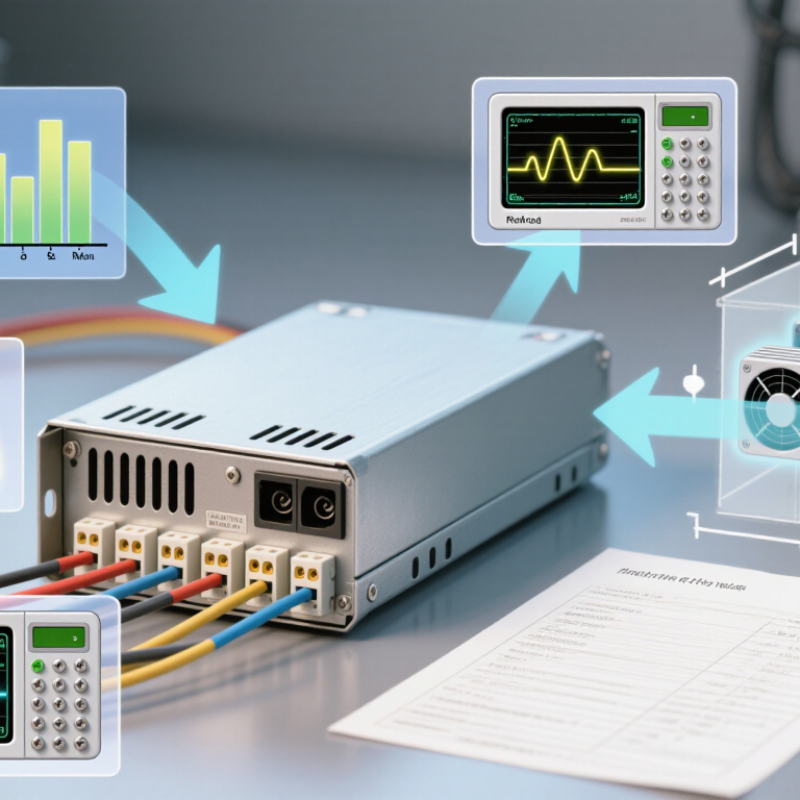
Best High Power Enclosed Power Supplies from China?

What Defines a High-Power Enclosed Power Supply?

A high-power enclosed power supply is defined by more than its wattage label. It must deliver its rated output reliably under specified input, temperature, and load conditions. Check the continuous output rating, not only a peak figure that may last briefly. A unit supplying 1,000 watts in a cool test room may need to be derated inside a warm, crowded cabinet.

Thermal design is critical. Look for clear airflow paths, suitable heat sinks, and temperature limits in the technical data. Heat is the test. Protection against overcurrent, overvoltage, and overheating helps prevent a fault from damaging connected equipment. Isolation and grounding details also matter, especially when the supply serves sensitive controls or industrial loads. Details matter.

A robust enclosure should protect internal components and provide practical mounting and wiring access. Check terminal spacing, ventilation openings, and the stated operating environment before installation. For a real project, compare efficiency and ripple figures at the expected load, then confirm them against the datasheet or test report. Ratings can be misunderstood, and even careful specifications do not replace checking performance in the final cabinet.

Key Specifications for Comparing Enclosed Power Supplies

Best High Power Enclosed Power Supplies from China?

Key Specifications for Comparing Enclosed Power Supplies

For high-power enclosed supplies, compare rated output at the intended ambient temperature, not just the headline wattage. Check the output voltage and current, then review the derating curve. A unit rated for 1,000 watts may deliver less inside a warm cabinet. Heat matters. Confirm the operating temperature range, cooling method, and required clearance around the case. Also compare efficiency, ripple and noise, hold-up time, and protection features such as overvoltage and overcurrent shutdown. These details affect performance in real equipment.

Tips: Ask for a full datasheet and test conditions. Check whether measurements cover your actual input voltage and load. A neat specification table can still leave gaps.

Mechanical and installation details matter too. Measure the enclosure, mounting points, terminal spacing, and cable access before ordering. For large loads, verify that the supply can handle startup surges without dropping output. Review isolation ratings and relevant safety documentation for the intended application. When assessing suppliers in China, request traceable test reports and clarify how production units are checked. One point is easy to miss: a high efficiency figure does not guarantee low operating temperature in a poorly ventilated cabinet. Compare specifications, but leave room for practical validation.

Common Applications and Power Requirements

Enclosed high-power supplies often serve factory control cabinets, LED display systems, telecom equipment, and laboratory instruments. Each application places a different demand on the output. A 24-volt control system may need steady current for sensors and relays, while a motor-driven machine can draw a sharp surge at startup.

That matters.

Check both continuous load and peak demand, rather than choosing a supply by wattage alone.

For example, a 24-volt, 20-amp unit provides 480 watts under its rated conditions. If connected equipment draws 16 amps continuously, the remaining capacity offers useful headroom, but it does not guarantee safe operation in a hot cabinet. Review the manufacturer’s derating curve, ambient-temperature limits, and required airflow.

Heat changes everything.

Also match output voltage, ripple tolerance, isolation, and protection features to the equipment. In practice, load estimates are easy to get wrong when accessories or future devices are overlooked. Measure actual current where possible, and allow space around the enclosure for cooling and service access. A compact installation may look neat, yet restricted ventilation can shorten component life.

How to Evaluate Chinese Manufacturers and Product Quality

When evaluating Chinese manufacturers of high-power enclosed power supplies, look beyond catalog ratings. Ask how output power changes with ambient temperature, input voltage, and airflow. A unit rated for 1,000 watts may need substantial derating inside a warm, sealed cabinet. Request the derating curve and test conditions, not just a headline figure. The details matter.

Review sample test reports for efficiency, ripple, load regulation, and temperature rise. Check whether measurements identify the instruments, test setup, and operating conditions. During a factory visit or independent inspection, look for calibrated equipment, organized production records, and consistent assembly. Inspect solder joints, wiring clearance, labels, and enclosure grounding. Small signs can reveal process discipline. No checklist is perfect.

Ask how the manufacturer handles component substitutions, failed units, and serial-number traceability. Verify that certificates and reports match the exact model and configuration you plan to buy. A certificate for a related product is not enough. Request a pilot batch, then test units under your real load and cooling conditions. I would not treat a short burn-in as proof of long-term reliability; it offers only limited evidence. Even well-documented factories can make mistakes, so agree on acceptance criteria and keep records of sample results before placing a larger order.

Safety Standards, Certifications, and Installation Considerations

For high-power enclosed supplies sourced from China, assess safety evidence by exact model, not seller claims. IEC/UL 62368-1 addresses electrical, fire, and energy hazards in applicable ICT and AV equipment. Ask for a current certificate, test report, and matching nameplate photos. EMC requirements matter too: IEC 61000-3-2 sets harmonic-current limits for applicable equipment, while IEC 61000-4-5 covers surge-immunity testing. A certificate alone cannot guarantee safe installation.

Heat deserves equal attention. A 2024 Lawrence Berkeley National Laboratory report estimated that US data centers used 176 terawatt-hours of electricity in 2023, about 4.4% of national consumption. High power density makes airflow and derating practical concerns. Check the manufacturer’s derating curve, ambient-temperature rating, required clearance, protective-earth connection, overcurrent protection, wire gauge, and terminal torque. Confirm the input voltage and fuse match the site supply. Small details matter. A certificate can still leave installation risks unaddressed.

Tips: Request the complete test report, not just a certificate image. Before commissioning, have a qualified technician verify grounding and measure temperatures under representative load. Record any mismatch between the manual and the installed unit; it should not be ignored.

FAQS

What defines a high-power enclosed power supply?

It delivers rated output continuously under stated input, load, and temperature conditions. Peak wattage alone can mislead. Heat changes the result.

Why should I check the derating curve?

A 1,000-watt unit may provide less power in a warm cabinet. Compare its curve with your expected temperature and airflow. The cabinet matters.

Which electrical specifications should I compare?

Review output voltage and current, efficiency, ripple and noise, hold-up time, and protection features. Check overcurrent and overvoltage behavior. Numbers need context.

What thermal and installation details matter?

Check cooling method, heat sinks, ventilation openings, and required clearance. Measure mounting points, terminal spacing, and cable access before ordering. Small gaps count.

How can I assess product quality?

Request test reports for efficiency, ripple, regulation, and temperature rise. Reports should list instruments, setup, input voltage, and load. A table is not enough.

What should I inspect during a factory visit?

Look for calibrated test equipment, clear production records, tidy wiring, sound solder joints, and proper enclosure grounding. No checklist catches everything.

How do I verify documents and traceability?

Confirm that reports and certificates match the exact model and configuration. Ask about component substitutions, serial numbers, and failed-unit handling. Paper can be wrong.

Does a short burn-in test prove long-term reliability?

No. It offers limited evidence, not a guarantee. Test a pilot batch under your real load and cooling conditions, then record acceptance results. Even careful buyers can miss something.

Conclusion

High Power Enclosed Power Supplies are designed to deliver substantial, stable electrical output in a compact, protected enclosure. Choosing the right unit involves comparing rated power, output voltage and current, efficiency, cooling method, operating temperature range, and protection features such as overload, overvoltage, and short-circuit protection. These specifications should match the needs of the intended equipment, whether used in industrial machinery, automation systems, communications equipment, or other demanding applications.

When evaluating manufacturers in China, consider documented quality-control processes, technical support, product testing, and clear, verifiable specifications rather than relying on price alone. Check that relevant safety certifications apply to the exact product and intended market, and confirm that installation follows the manufacturer’s instructions. Adequate ventilation, correct wiring, grounding, and suitable environmental protection help support safe, reliable operation and extend the service life of the power supply.

Ethan

Ethan

Ethan is a professional marketing specialist dedicated to helping businesses better understand, present, and apply innovative products and solutions. With a strong knowledge of the company’s product portfolio, market trends, customer needs, and industry developments, he creates clear, practical,......