 Power Conversion Engineering
Talk to an engineer (888) 597-9255
Products Power Conversion Engineering The 2026 market for High Voltage Input DC DC Converters is becoming more demanding. Electric vehicles, battery storage systems, industrial automation, and renewable-energy equipment now require stable power from high-voltage sources. A converter may receive 400V or 800V DC, then deliver a controlled 12V, 24V, or 48V output.
Robert W. Erickson, a respected power-electronics researcher, wrote, “Power electronics is the application of solid-state electronics for the control and conversion of electrical energy.” This principle remains central when comparing suppliers. Engineering quality matters more than catalogue size. Buyers should examine input range, isolation design, switching efficiency, thermal performance, electromagnetic compatibility, protection functions, and lifetime testing. Real operating details matter. A converter installed inside a sealed cabinet faces heat, vibration, dust, and limited airflow.
This supplier overview considers manufacturers with proven technical capabilities, transparent documentation, and responsive application support. It also reviews reference projects, production consistency, customization options, and compliance evidence. Marketing language is not enough. A claimed 98% efficiency may depend on load, temperature, and switching conditions. That is easy to overlook.
Some supplier rankings remain imperfect. Public data can be incomplete, and regional availability changes quickly. Therefore, this guide should support technical evaluation, not replace laboratory validation. Engineers should request test reports, derating curves, sample units, and failure-analysis procedures before making a final decision. The strongest suppliers explain limitations clearly. That builds trust.
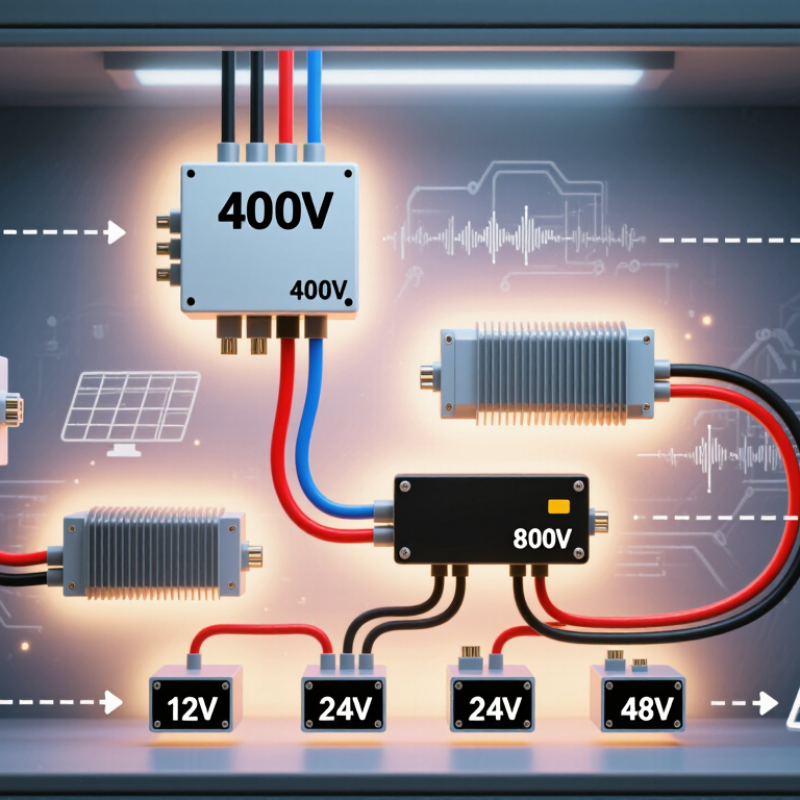
High voltage input DC-DC converters are power electronic modules that manage elevated direct-current power. They accept a high DC input and convert it into a stable lower or different DC output. The circuit may also provide galvanic isolation between input and output. That barrier matters. It can protect sensitive control boards and simplify system grounding. High voltage input does not have one universal threshold. In practice, engineers may describe 100 V, 400 V, or higher DC systems this way. The real definition depends on the equipment and its operating environment.
A reliable converter must handle normal voltage, startup surges, switching noise, and sudden load changes. Engineers should check input range, output accuracy, efficiency, thermal limits, insulation strength, creepage, and clearance. Protection features may include overvoltage, overcurrent, short-circuit, and overtemperature control. In practical testing, a converter rated for 400 VDC may still fail when wiring inductance creates a brief spike. Small details matter. Heat also moves through the enclosure, mounting surface, and airflow path, not only through the circuit board. A neat datasheet can hide installation problems. I would test the complete power path, although this step is sometimes rushed. For industrial controllers, battery systems, charging equipment, and transportation electronics, stable conversion depends on both the module and its surrounding design.
High-voltage-input DC-DC converters transform one direct-current voltage level into another while providing regulated output, electrical isolation when required, and protection against abnormal operating conditions. The following table summarizes common converter categories and objective purchasing dimensions without listing company or brand names.
| Converter Category | Typical DC Input Range | Common Output Range | Typical Power Range | Isolation | Typical Peak Efficiency | Typical Applications |
|---|---|---|---|---|---|---|
| Telecom and 48 VDC Bus Converters | 18–75 VDC | 5, 12, 24 or 48 VDC | 150 W–1 kW | Usually isolated | 90–96% | Telecom equipment, networking systems, industrial controls |
| Industrial Battery and Vehicle Auxiliary Converters | 36–160 VDC | 12, 24, 48 or 72 VDC | 100 W–1.5 kW | Isolated or non-isolated | 88–95% | Battery systems, mobile machinery, transportation auxiliaries |
| High-Voltage DC Bus to Low-Voltage Auxiliary Converters | 200–400 VDC | 12, 24 or 48 VDC | 250 W–1.5 kW | Normally isolated | 90–97% | Energy storage, charging infrastructure, automation systems |
| Electric Vehicle and Energy Storage Converters | 400–800 VDC | 12, 24 or 48 VDC | 500 W–3 kW | Isolated | 92–97% | Electric vehicles, battery energy storage, fast-charging systems |
| Railway and Heavy-Transport Converters | 600–1,500 VDC | 24, 48, 72 or 110 VDC | 1–10 kW | Normally isolated | 90–96% | Rail vehicles, traction auxiliaries, signaling and transportation infrastructure |
| Photovoltaic and High-Voltage Renewable-Energy Converters | 600–1,500 VDC | 200–800 VDC or isolated auxiliary outputs | 1–20 kW | Application-dependent | 94–99% | Solar power conversion, microgrids, hydrogen and energy-storage systems |
| High-Voltage Laboratory and Industrial Power Modules | 1,000–3,000 VDC | 24–800 VDC | 500 W–50 kW | Isolated or non-isolated | 85–97% | Test systems, semiconductor equipment, plasma and industrial processing |
| Evaluation Dimension | Important Technical Criteria | Recommended Verification Evidence |
|---|---|---|
| Input Voltage Capability | Continuous operating range, start-up voltage, surge withstand and reverse-polarity protection | Electrical datasheet, input-transient test report and qualification records |
| Isolation and Safety | Isolation voltage, insulation system, creepage, clearance and insulation resistance | Dielectric-strength test results and insulation-coordination design documentation |
| Efficiency and Thermal Performance | Peak efficiency, efficiency at partial load, thermal derating and cooling method | Efficiency curves, thermal test data and operating-temperature limits |
| Protection Functions | Overvoltage, overcurrent, short-circuit, overtemperature and input undervoltage lockout | Protection threshold table and fault-recovery test results |
| EMI and EMC Performance | Conducted and radiated emissions, immunity, switching-frequency control and filtering | EMC laboratory reports and installation guidance |
| Environmental Suitability | Operating temperature, humidity, vibration, shock, altitude and ingress protection | Environmental qualification reports and derating curves |
| Compliance and Reliability | Applicable safety and EMC standards, mean time between failures, service life and traceability | Declarations of conformity, reliability calculations, quality certificates and change-control procedures |
Note: The ranges shown are representative industry values rather than universal limits. Final selection should be based on the converter’s verified datasheet, system insulation requirements, transient profile, thermal conditions and applicable regional standards.
It reduces 400–800 volt battery power to stable 12 or 48 volt rails. These rails operate sensors, lights, pumps, and control units.
They support electric vehicles, charging equipment, energy storage, servers, and industrial machinery. Each application has different cooling and reliability demands.
Isolation separates high-voltage circuits from low-voltage controls. It helps protect monitoring circuits and improves system safety.
Request efficiency curves across real load conditions. Also check ripple, transient response, overload behavior, and the complete input range.
Limited enclosure space can trap heat around the converter. A compact design may become a maintenance problem later.
Review component traceability, inspection records, accelerated-life testing, and failure data from similar applications. Predicted lifetime figures alone are insufficient.
Vehicle and industrial systems may face vibration, dust, rapid load changes, and restricted airflow. Laboratory performance may not represent field conditions.
The supplier should analyze startup surges, enclosure temperature, cable effects, and customized firmware needs. Documented change control also matters.
Compare efficiency across the full operating profile, not only at one peak point. Real loads are uneven and sometimes surprisingly harsh.
Confirm production consistency, inspection methods, service response, and future technical support. A polished datasheet cannot answer every concern.
High Voltage Input DC DC Converters are power conversion devices designed to accept elevated DC input levels and deliver a stable, regulated output for sensitive electronic systems. When comparing these converters, buyers should evaluate input voltage range, output accuracy, efficiency, isolation, power density, thermal performance, protection features, operating temperature, reliability, and compliance with applicable safety requirements. These specifications help determine whether a converter can provide consistent performance under demanding electrical and environmental conditions.
In 2026, leading suppliers are expected to focus on compact designs, improved energy efficiency, enhanced monitoring, and flexible configurations for industrial automation, renewable energy systems, transportation equipment, telecommunications, medical electronics, and other advanced applications. Selecting a reliable supplier requires reviewing technical documentation, production quality controls, testing procedures, customization capabilities, delivery stability, warranty terms, and responsive engineering support. A dependable partner should offer transparent specifications and solutions that match the system’s voltage, power, safety, and lifecycle requirements.
